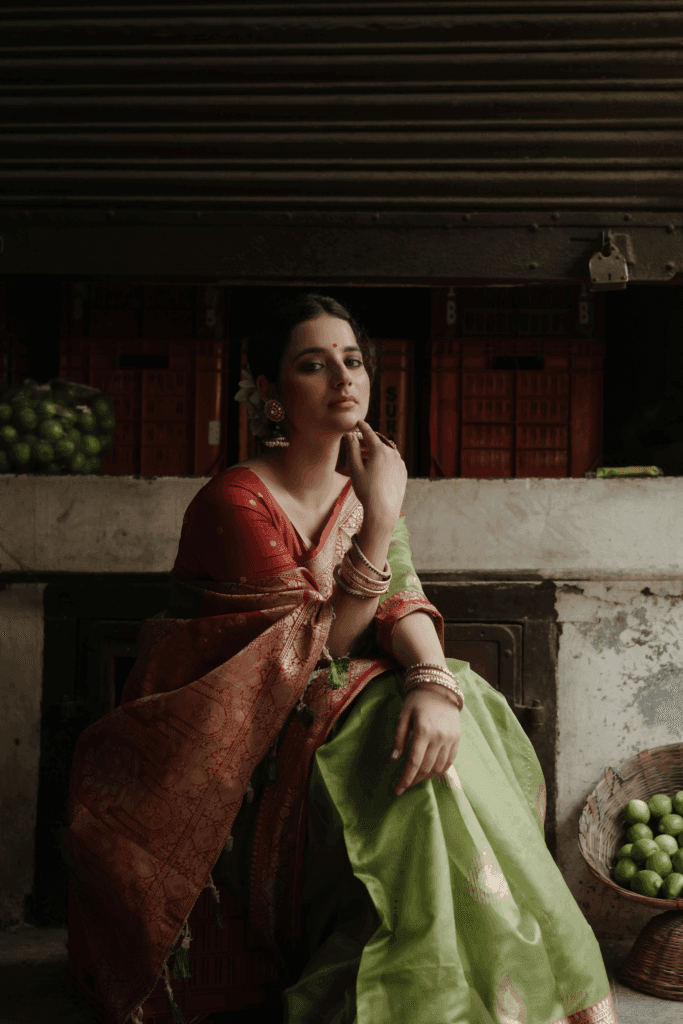
Some sarees are far too special to stay folded in a wardrobe. A silk drape, a delicate chiffon or a Banarasi passed down by your mother carries memories that no new outfit can replace. Yet wearing it exactly as it was worn decades ago may not suit your taste today. The good news is that you don’t have to choose between honouring tradition and embracing contemporary style. With a fresh blouse, a creative drape or a thoughtful redesign, an heirloom saree can become the most distinctive piece in your wardrobe. Here are 15 ways fresh and stylish mother’s saree styling ideas to give it a new life while keeping the memories woven into it.
15 Stylish Ways To Wear Your Mother’s Saree
1. Pair It with a Contemporary Statement Blouse
Replacing the original blouse is the easiest way to modernise an old saree. A structured corset, square-neck, sleeveless or halter-neck design can make a traditional silk look strikingly current, while lighter sarees suit off-shoulder cuts or sweetheart necklines. Try a Kanjeevaram with a fitted, minimal blouse in a contrasting jewel tone.
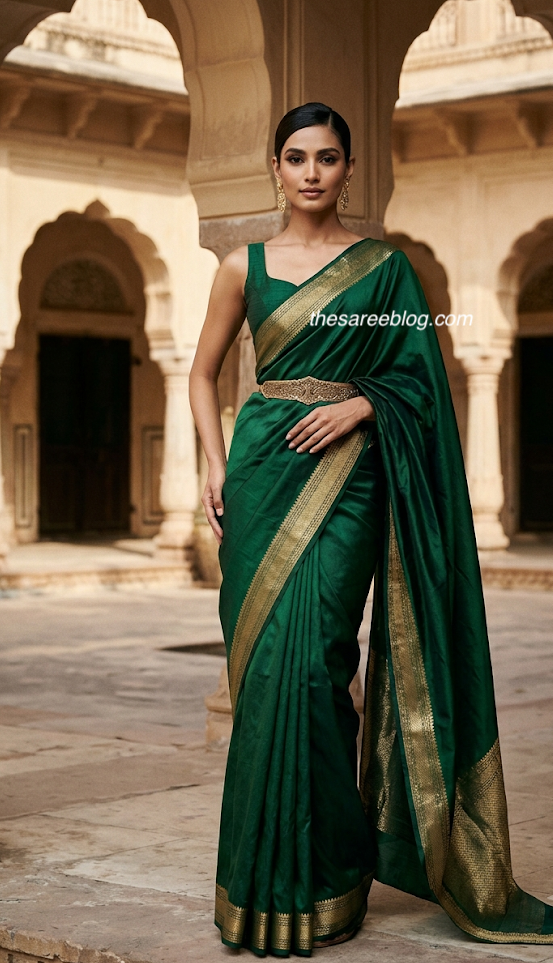
Styling tip: If the saree has elaborate zari work, keep the blouse understated and let the weave take centre stage.
2. Add a Belt for Instant Structure
A saree belt defines the waist and creates a sleek silhouette without any permanent alteration. Try a metallic belt with silk, a statement kamarbandh with a Banarasi, or a slim leather belt with cotton or linen. Wear the pallu neatly over one shoulder for a polished, fashion-forward finish that suits weddings and evening events.
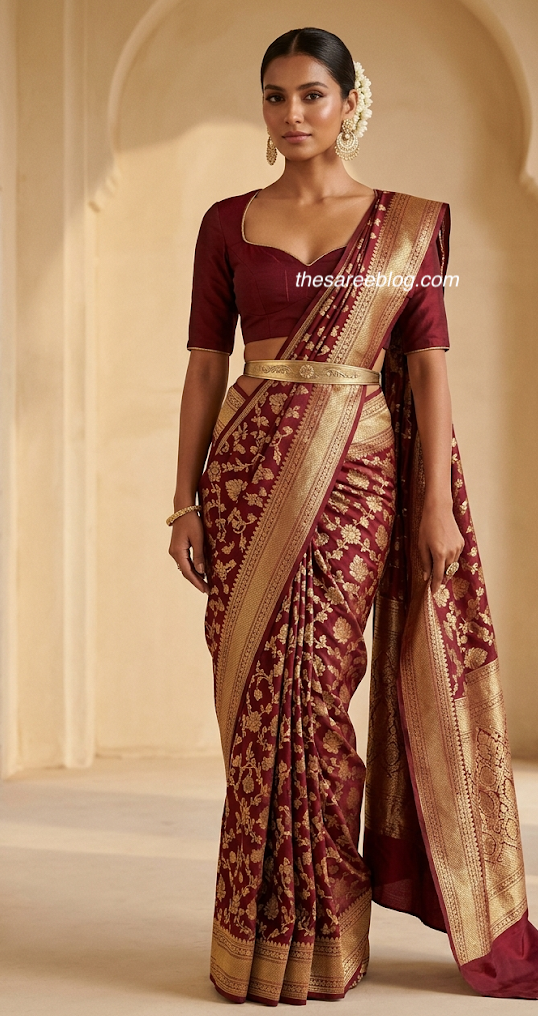
Styling tip: Choose a belt that complements the saree’s colour and embellishments rather than competing with them.
3. Layer with a Cape or Jacket
Layering gives an old saree a completely different personality. A sheer embroidered cape can make a vintage chiffon feel occasion-ready, while a sleeveless silk jacket works beautifully over a handloom drape. For understated elegance, choose a lightweight open-front jacket in a complementary shade. This is especially useful when the saree has a lovely body but a simple border.
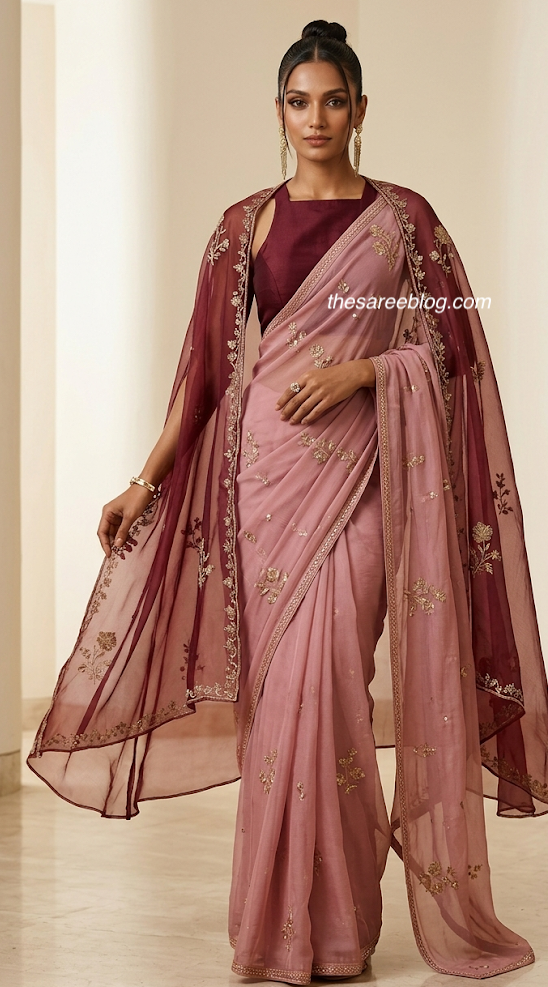
Styling tip: Skip heavy layering if the saree already features dense embroidery or zari.
4. Go Indo-Western with a Corset Blouse
The corset blouse has become a favourite alternative to the conventional choli. Its structured shape adds a defined waistline and a modern edge to traditional fabrics. A black corset looks striking with an old printed saree, while a matching brocade corset elevates a classic silk drape. It is ideal for cocktail parties, receptions and festive evenings.
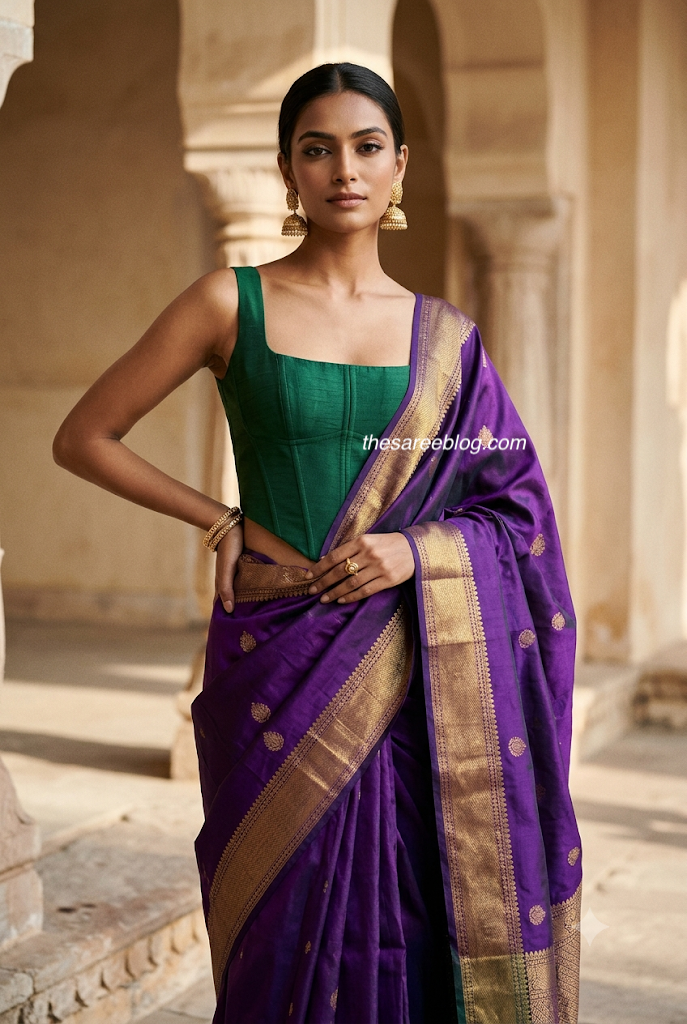
Styling tip: Prioritise a comfortable, well-supported fit over elaborate detailing.
5. Drape It Differently
Sometimes the saree needs no change at all, only a new drape. Move beyond the Nivi style and try a front-pallu drape, a seedha pallu, a dhoti-inspired look or a pre-pleated finish. A neatly pleated pallu gives silk a polished look, while a dhoti drape makes lighter fabrics feel contemporary. New drapes also let borders and details shine in unexpected ways.
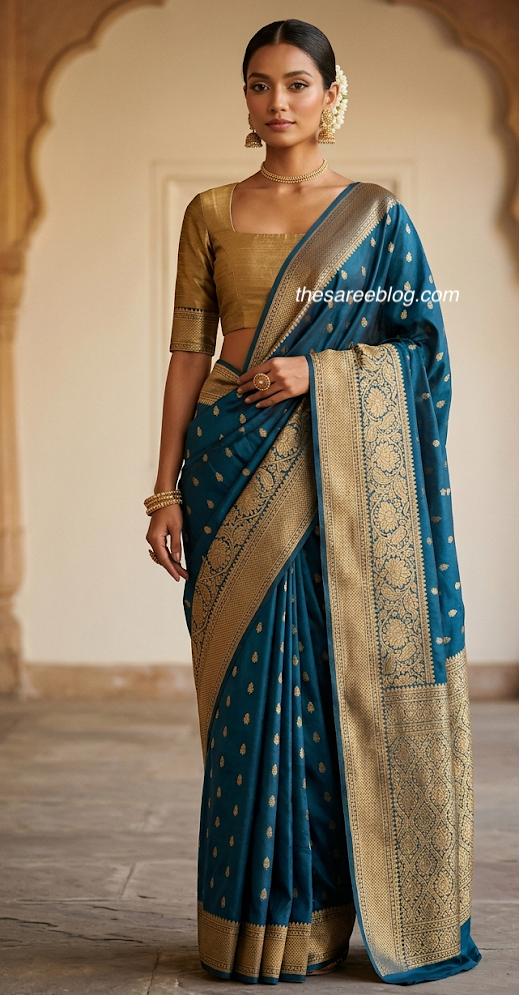
Styling tip: Match the draping technique to the fabric, length and border placement.
6. Turn It into a Saree Gown
If the saree is sentimental but difficult to wear, a saree gown is a lovely option. A skilled tailor can combine a fitted bodice, flowing skirt, pleats and an attached pallu into one elegant piece. Rich Banarasi and Kanjeevaram fabrics work especially well, and lightweight silk or georgette makes a graceful formal gown.
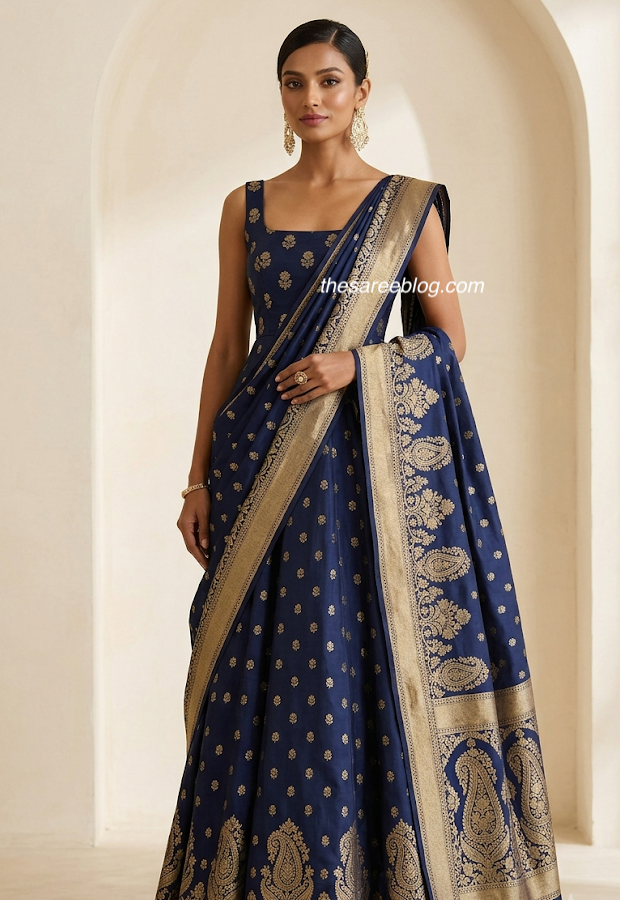
Styling tip: Discuss the design in detail before any cutting, and preserve distinctive motifs and borders.
7. Pair It with a Crisp Shirt
For an effortlessly chic fusion look, swap the blouse for a shirt. A fitted white shirt contrasts beautifully with a colourful silk saree, and striped, denim or tailored black shirts add variety. Tuck it in, secure the pleats and drape the pallu over one shoulder, or leave it loose for a relaxed feel. It suits casual celebrations and creative gatherings.
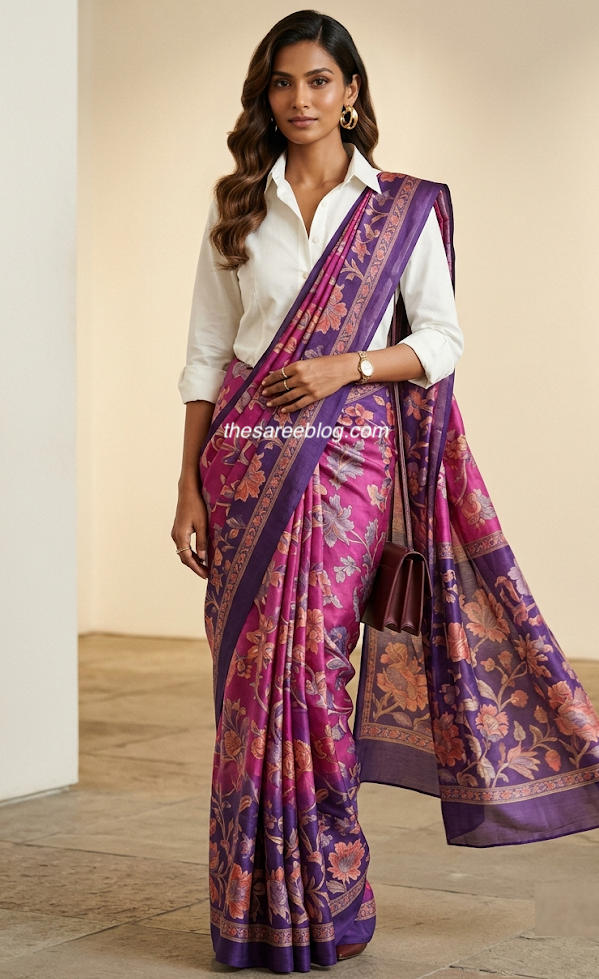
Styling tip: Choose a well-fitted shirt to avoid bulk around the waist.
8. Transform It into a Lehenga
Sarees with beautiful borders, rich zari or woven motifs make stunning lehengas. The fabric becomes a flared skirt, paired with a coordinating blouse, while the original pallu can be turned into a dupatta so its details stay visible. A Banarasi can become a traditional bridal-style lehenga, and an embroidered silk a contemporary festive ensemble.
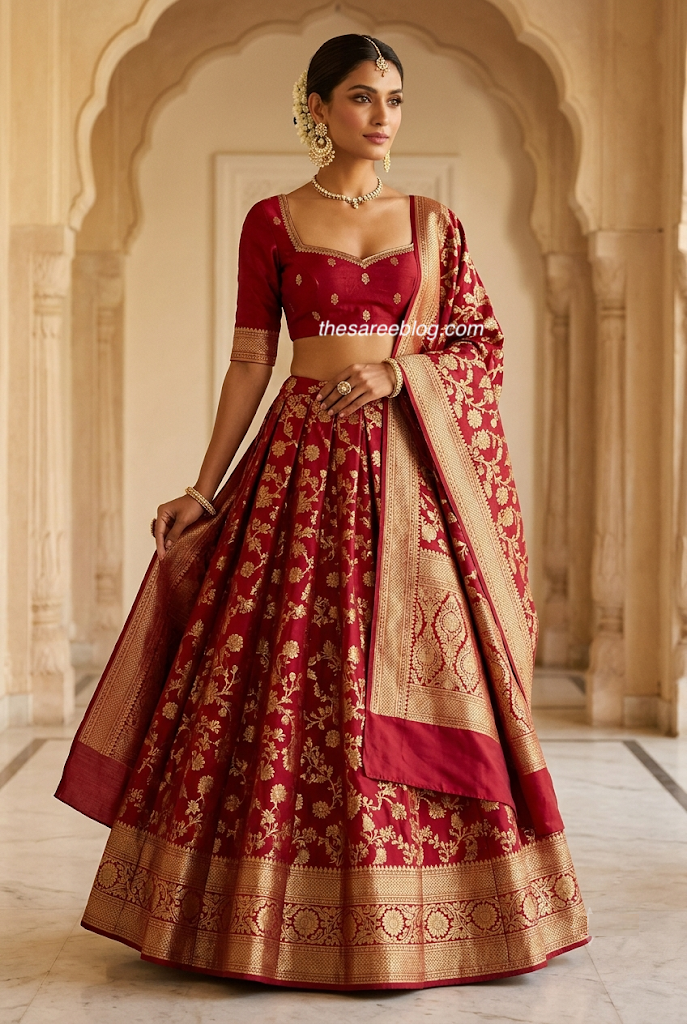
Styling tip: Ask the tailor to keep the original border along the hemline for authenticity.
9. Wear It with a Long Ethnic Jacket
A long jacket reinvents a saree without altering it permanently. Layer an embroidered or open-front silk jacket over a simple blouse for a dramatic festive look, or choose a light printed jacket for everyday occasions. This works particularly well with plain cotton, silk and lightweight woven sarees.
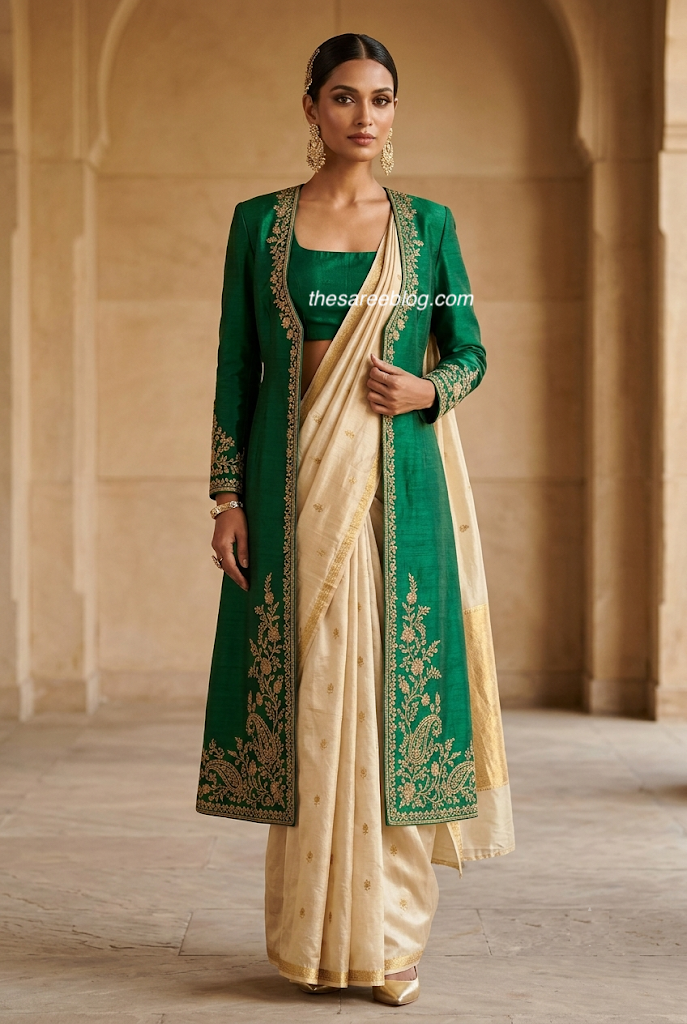
Styling tip: Keep the jacket length in proportion to the drape for a balanced silhouette.
10. Convert It into a Skirt
If parts of the saree are damaged or it has become hard to drape, a long flared skirt is a practical choice. Pair it with a crop top, fitted blouse or simple shirt. The border can run along the hem and the pallu can become a decorative panel. It is a wonderful way to reuse sarees with beautiful sections that can’t be worn in their original form.
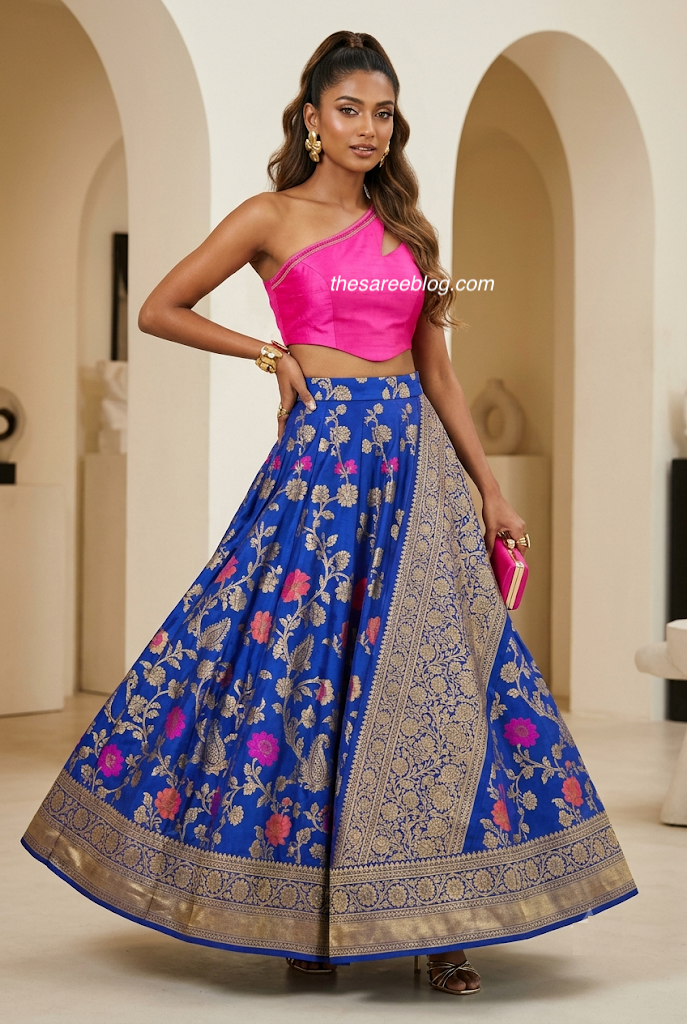
Styling tip: Stiffer silks suit structured skirts, while softer fabrics create lovely movement.
11. Create a Contemporary Co-Ord Set
Depending on the fabric available, a tailor can make a matching top and skirt, a blouse with wide-leg trousers, or a short kurta with palazzos. Silk, cotton and printed sarees all work well. A cropped blouse with high-waisted trousers feels modern and festive, while a matching long skirt and top makes a polished occasion outfit.
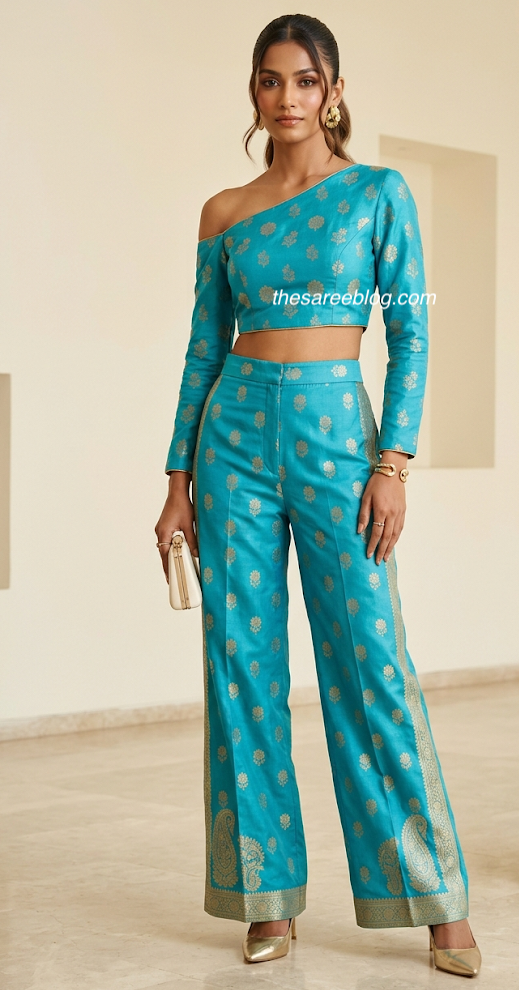
Styling tip: Use the original border as a sleeve detail, neckline accent or trouser hem.
12. Mix It with Contemporary Accessories
Accessories can change the mood of a saree without touching the garment. Try sculptural earrings, a cuff bracelet, a structured handbag or statement footwear. A vintage cotton saree looks modern with oxidised silver jewellery, while a silk drape pairs well with sleek gold and a structured clutch.
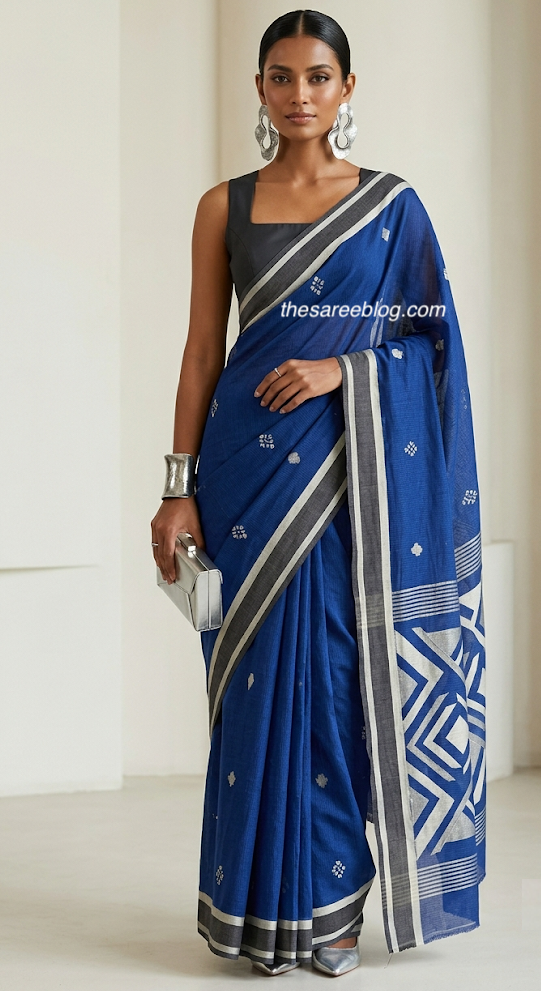
Styling tip: Choose one standout accessory rather than several elaborate ones, guided by the saree’s own colours.
13. Try a Crop Top Fusion Look
A crop top is an easy alternative to a traditional blouse, especially with lightweight or printed sarees. A fitted black crop adds a modern edge to a colourful vintage drape, a structured sleeveless top gives a clean line, and an embroidered one makes the outfit more festive. It works well for festive lunches and informal evenings.
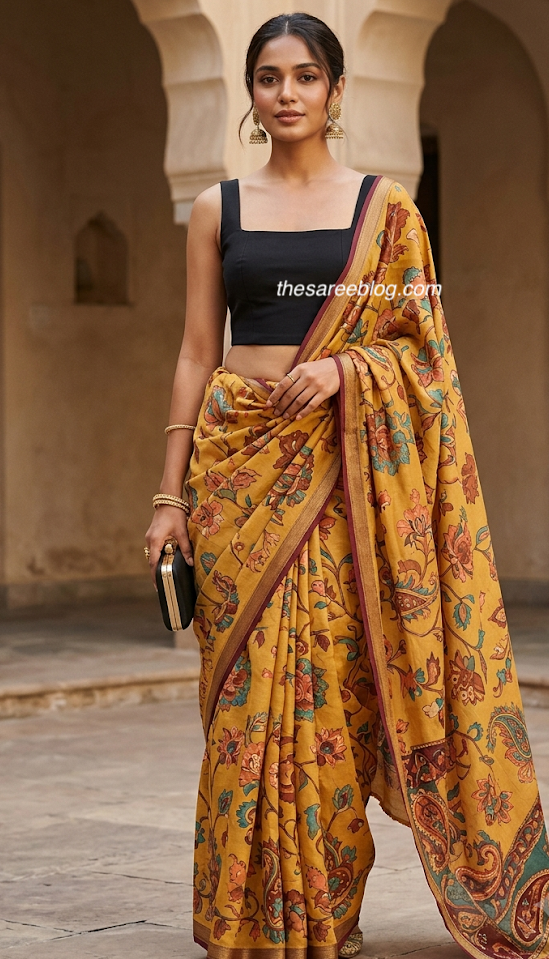
Styling tip: Check the neckline and length so the saree drapes comfortably at the waist.
14. Repurpose It as a Dupatta or Shawl
Not every saree needs to be worn whole. Silk, chiffon or embroidered sarees can become dupattas to pair with a simple kurta set, anarkali or sharara, and richer silks can be turned into festive shawls. This is ideal when the saree is fragile or damaged but its pallu and border are still beautiful.
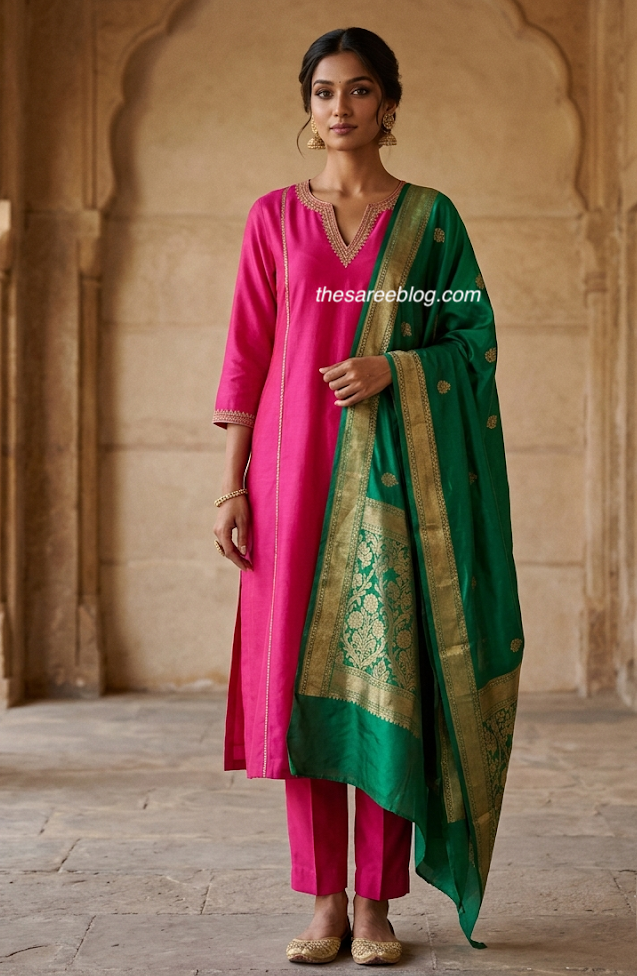
Styling tip: Preserve the original pallu and border, as they often hold the finest craftsmanship.
15. Update the Footwear and Bag
The smallest changes can make the biggest difference. Metallic block heels, minimal strappy sandals, pointed-toe pumps or stylish juttis, together with a structured mini bag or modern clutch, instantly make a familiar saree feel current. The contrast between traditional fabric and modern accessories makes the outfit feel personal rather than conventional.
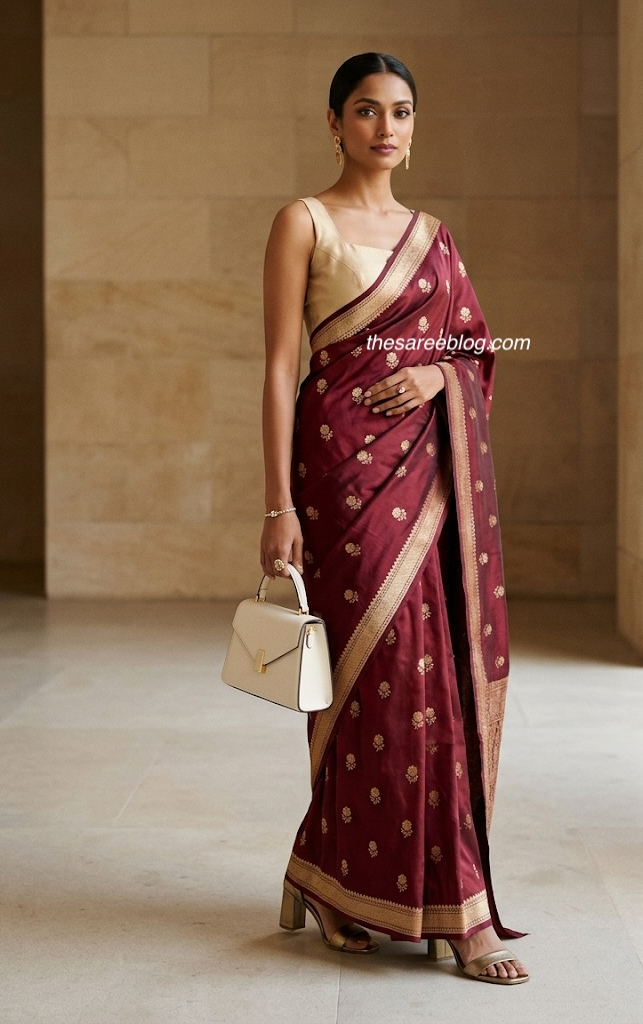
Styling tip: Consider the occasion and choose comfortable footwear that suits the saree’s character.
Things to Consider Before Restyling
Before experimenting, take time to understand the saree’s fabric, condition and craftsmanship.
- Check the fabric: Look for tears, discolouration, weakened threads or damaged zari. Delicate vintage fabrics may need professional care.
- Identify the weave: Banarasi, Kanjeevaram, Chanderi and other traditional fabrics may need specialised handling.
- Preserve special details: Avoid cutting through distinctive motifs, woven borders or decorative pallus without considering alternatives.
- Choose the right tailor: Gowns, lehengas and co-ord sets need someone experienced with traditional fabrics.
- Think about reversibility: For very sentimental sarees, choose styling that involves no cutting at all.
Most importantly, don’t feel pressured to transform a precious saree simply because it is old. Sometimes a fresh blouse and a different drape are all it needs.
Final Thoughts
A mother’s old saree is more than beautiful fabric. It carries memories, craftsmanship and a connection to another generation. Giving it a fresh identity keeps those memories alive while making traditional fashion relevant to today’s wardrobe.
From statement blouses and belts to fusion outfits, lehengas and saree gowns, there is no single right way to style an old saree. The best transformation respects the original fabric while reflecting your own style. After all, the most beautiful way to wear your mother’s old saree is to make it feel like your own.