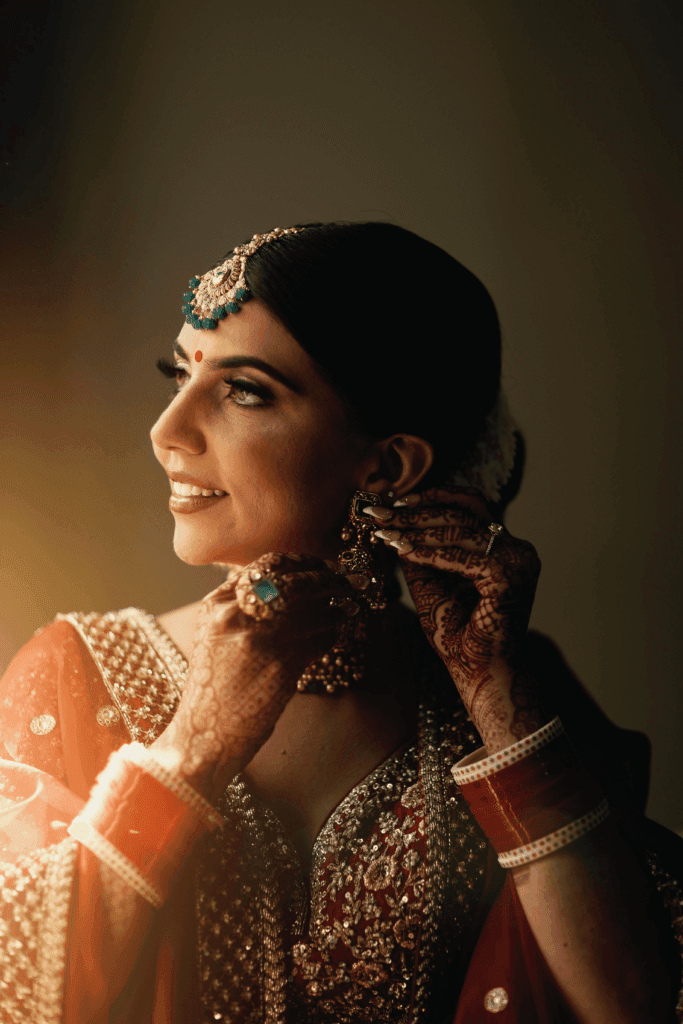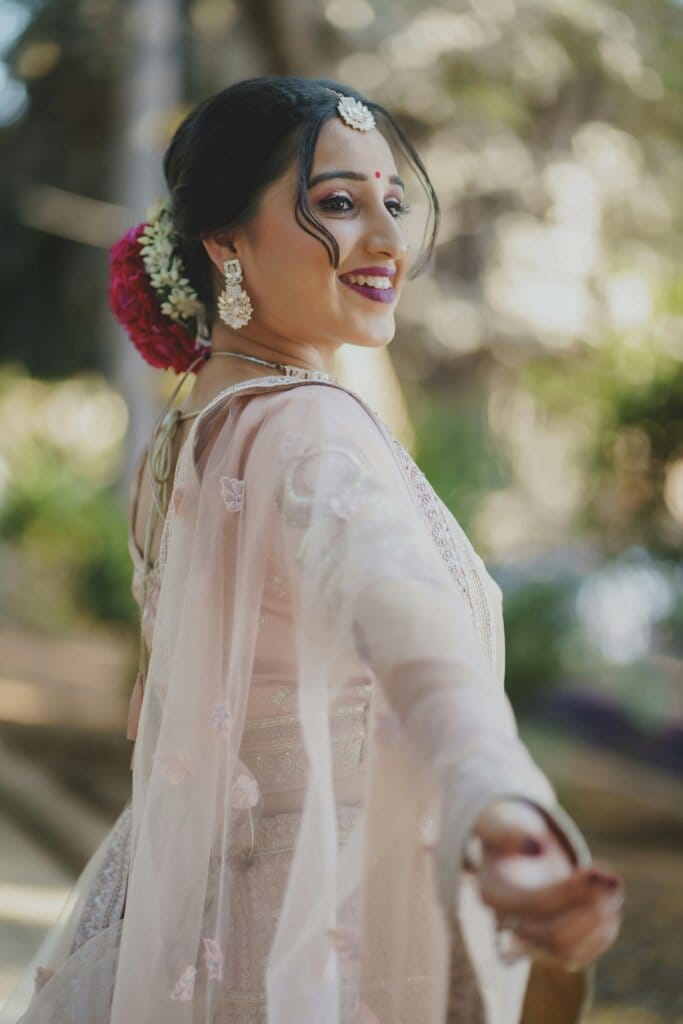
From rich jewel tones to dreamy pastels and unexpected contrasts, these festive colour combinations will make your ethnic wardrobe feel fresh, fashionable, and effortlessly elegant.
Festive fashion in India has always been a celebration of colour. The richness of a red Banarasi saree, the elegance of an emerald green silk suit, the glow of golden embroidery, and the charm of a vibrant pink dupatta—every shade tells a story.
But festive dressing isn’t just about choosing a beautiful colour. Sometimes, it’s the combination of two unexpected shades that transforms an ordinary outfit into something unforgettable.
While traditional pairings like red and gold or pink and green will always have their place, modern Indian festive fashion is embracing more adventurous palettes. Think wine with powder blue, chocolate brown with champagne gold, or lavender with lime green.
Whether you’re styling a treasured silk saree, putting together a contemporary lehenga look, or refreshing a simple kurta set, these 12 festive colour combinations offer plenty of inspiration.
12 Trending Festive Colour Combinations for Ethnic Wear
1. Rani Pink + Orange: The Ultimate Festive Statement
Nothing captures the joy of Indian festivities quite like the vibrant pairing of rani pink and orange.
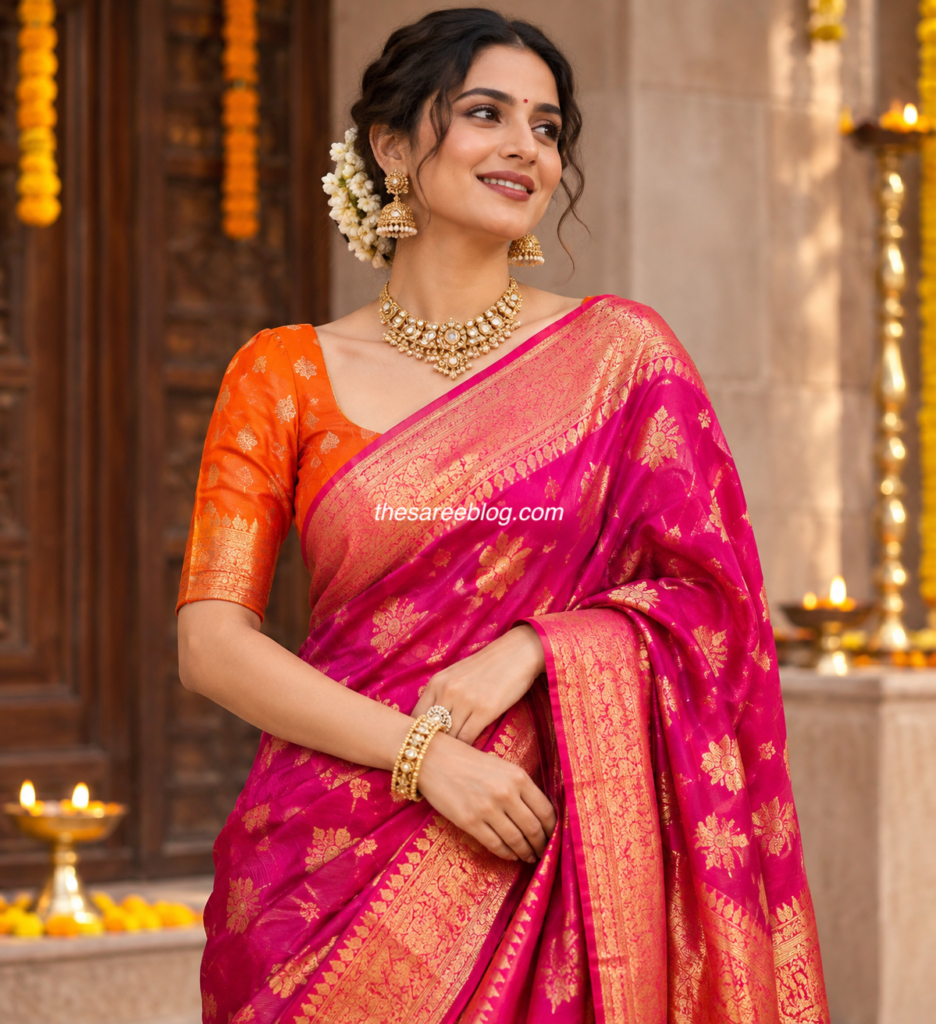
This unapologetically bold combination feels celebratory, energetic, and beautifully rooted in Indian textile traditions. It is especially striking in Bandhani, Patola-inspired patterns, Banarasi silks, and festive lehengas.
How to style it:
Pair a rani pink silk saree with a bright orange blouse, or reverse the combination with an orange lehenga and a fuchsia dupatta. Gold jewellery brings warmth and ties the two shades together.
The Saree Blog styling tip: Let one colour dominate while the other acts as an accent. A 70:30 balance can make even the boldest combination feel intentional.
Best for: Diwali celebrations, weddings, Garba nights, and family festivities.
2. Emerald Green + Champagne Gold: Quiet Royalty
Some colour combinations don’t need to shout to make an impression.
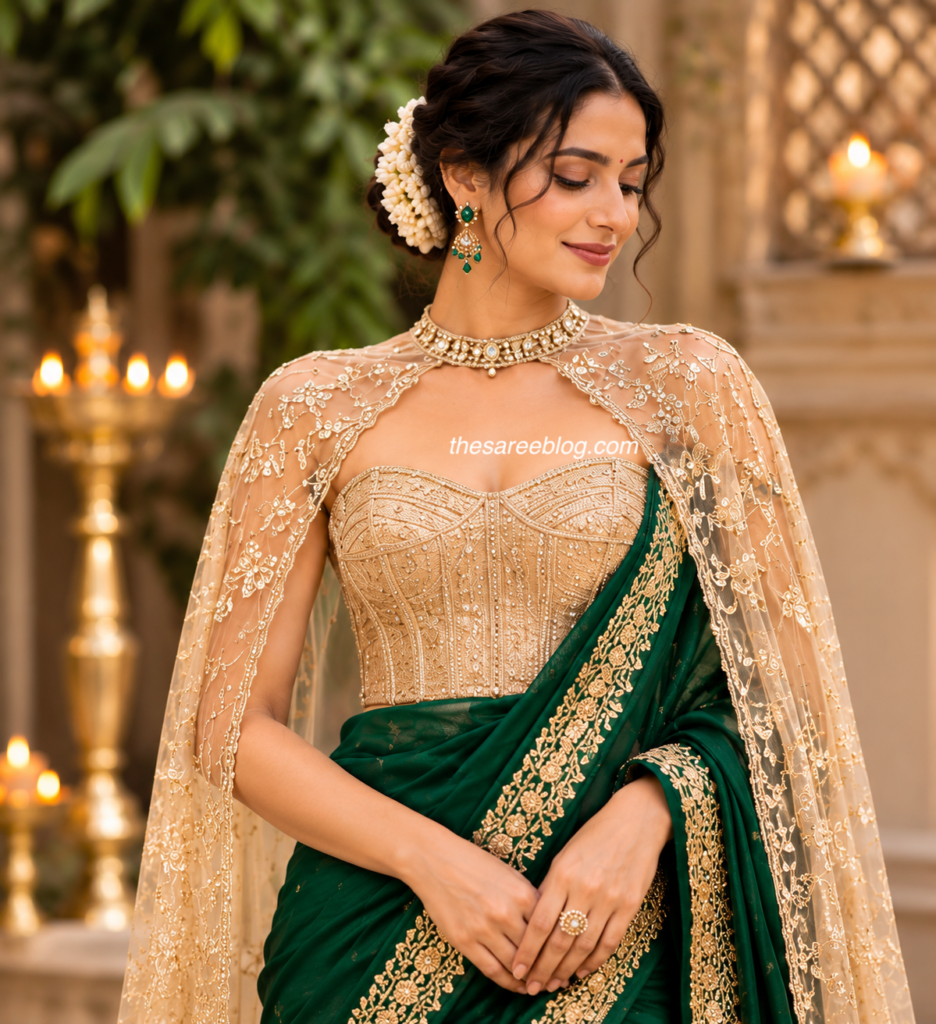
Emerald green paired with champagne gold is one of them.
The depth of emerald creates a luxurious foundation, while champagne gold introduces a softer, more refined glow than traditional yellow gold.
The result? A festive look that feels regal without appearing overly embellished.
How to style it:
Choose an emerald green saree with a champagne-gold blouse, or style a green Anarkali with a delicately embroidered gold dupatta.
Complete the look with kundan earrings, a sleek bun, and a subtle golden clutch.
The Saree Blog styling tip: Champagne gold works particularly well with velvet, tissue, silk, and organza. Mixing these textures can make a monochromatic-looking outfit more interesting.
Best for: Evening pujas, festive dinners, wedding receptions, and elegant Diwali parties.
3. Wine + Powder Blue: An Unexpected Festive Romance
Who says festive dressing must always revolve around bright colours?
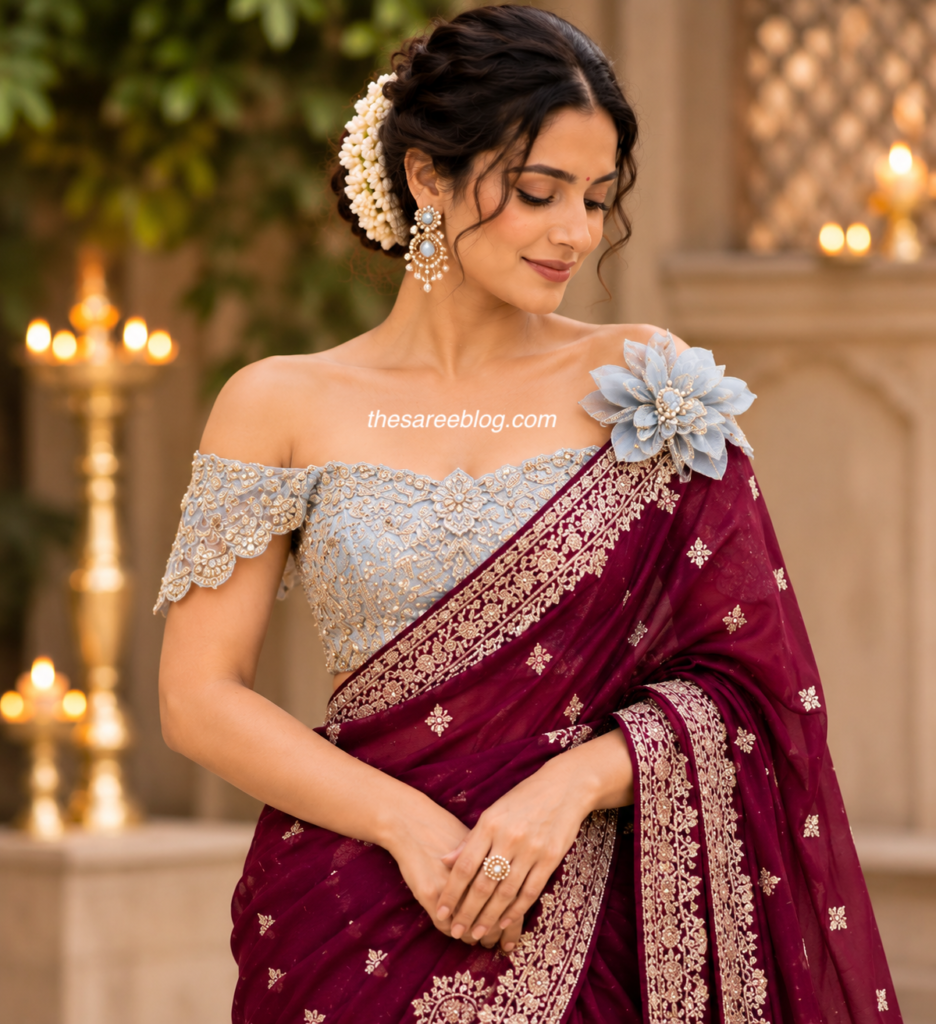
Wine and powder blue create an unexpectedly sophisticated contrast. The richness of wine balances the airy softness of blue, resulting in a palette that feels contemporary yet festive.
It’s an especially beautiful option for anyone who loves experimenting with colour without going overboard.
How to style it:
Imagine a wine-coloured silk saree paired with a powder-blue blouse. Or a powder-blue lehenga complemented by a richly embroidered wine dupatta.
Silver, pearl, or antique-finish jewellery can work beautifully depending on the outfit’s embellishments.
The Saree Blog styling tip: Repeat the secondary colour in a small detail—perhaps a potli bag, bangles, or embroidered border—to make the contrast feel cohesive.
Best for: Festive evening gatherings, cocktail functions, and intimate wedding celebrations.
4. Mustard Yellow + Deep Purple: A Heritage-Inspired Contrast
Yellow and purple sit opposite each other on the colour wheel, making them a naturally striking pair.
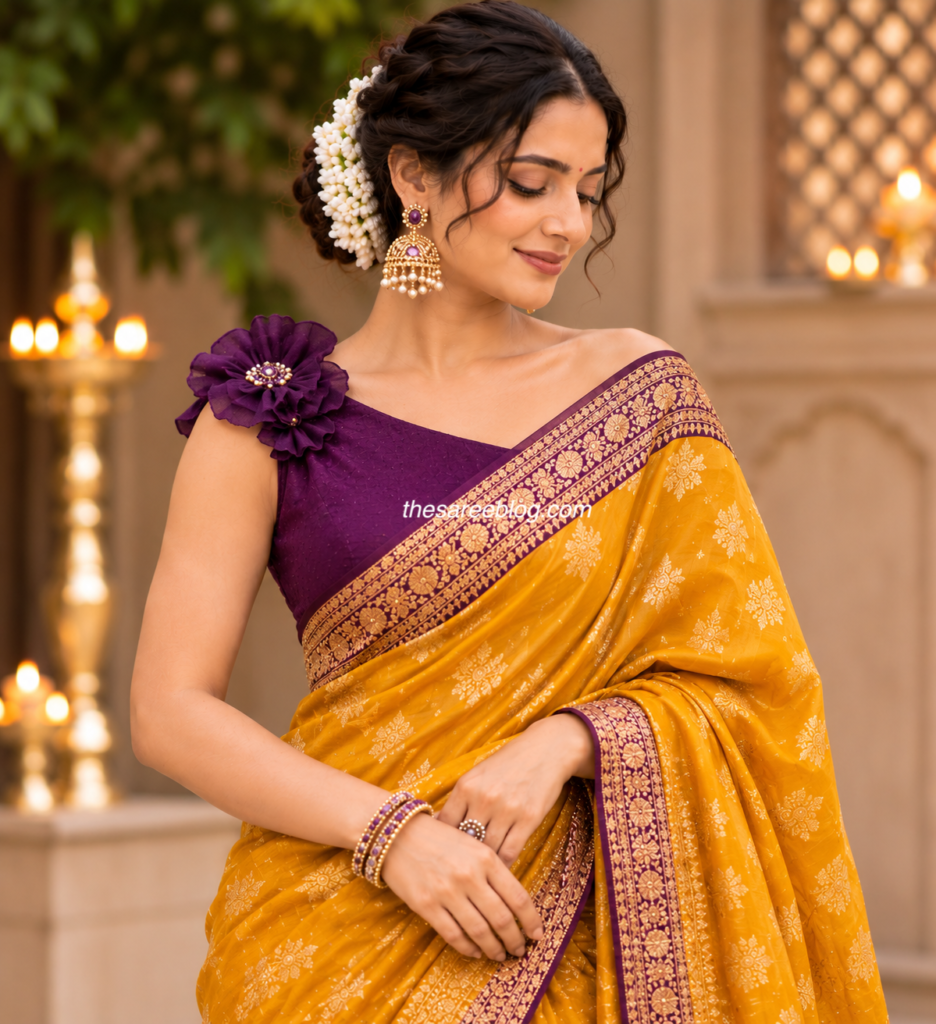
But for festive ethnicwear, swapping bright yellow for mustard and violet for deep purple creates a richer, more wearable interpretation.
The combination has a wonderful old-world charm, particularly when used in handloom textiles and traditional weaves.
How to style it:
Try a mustard yellow Chanderi saree with a deep purple blouse, or a purple silk kurta set with a mustard Banarasi dupatta.
Oxidised silver jewellery gives the look an earthy, artisanal feel, while antique gold adds a more traditional finish.
The Saree Blog styling tip: Choose matte or textured fabrics if you want the colours to stand out without competing with excessive shine.
Best for: Daytime festivities, traditional ceremonies, Navratri celebrations, and cultural events.
5. Chocolate Brown + Champagne Gold: The New Festive Neutral
Brown might not be the first colour that comes to mind when planning a festive outfit, but rich chocolate tones can look remarkably luxurious.
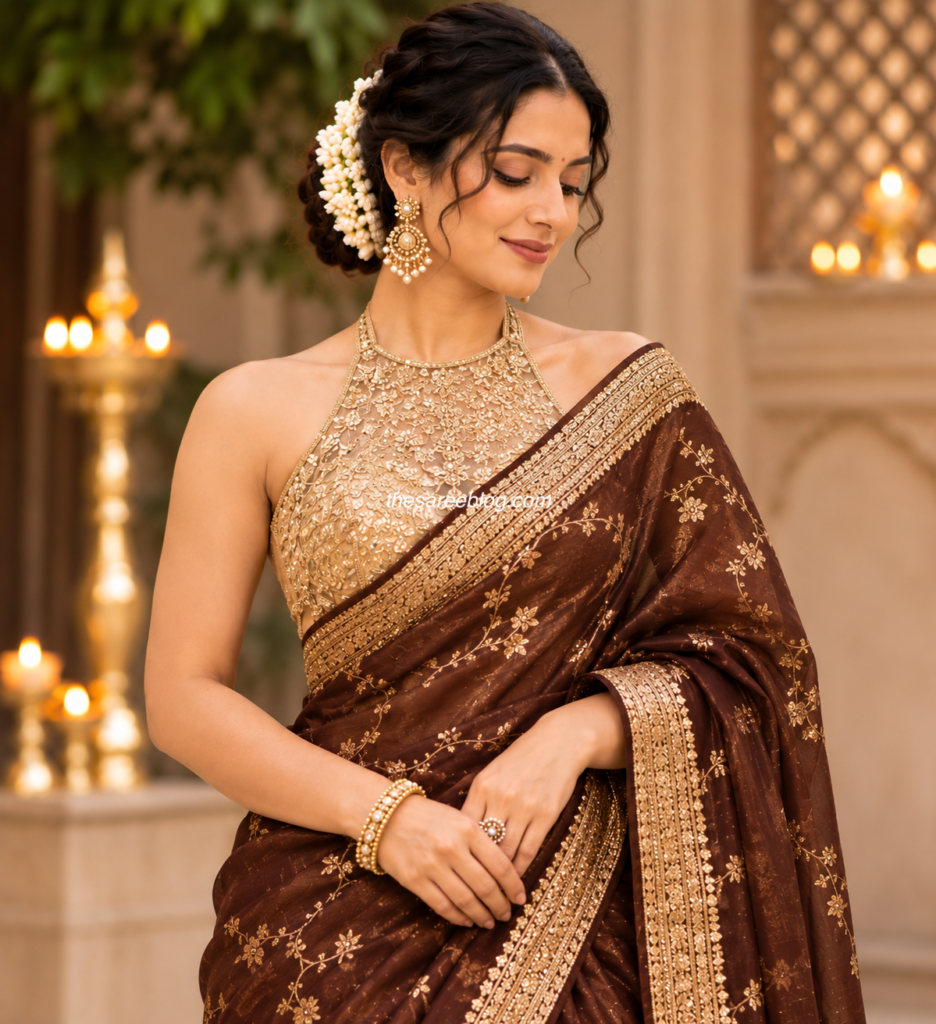
Paired with champagne gold, chocolate brown feels warm, understated, and sophisticated.
It’s an excellent alternative to black for festive occasions when you want something dark and elegant.
How to style it:
A chocolate brown tissue saree with a champagne-gold blouse can make a beautiful evening ensemble.
For a more contemporary look, try a brown satin kurta set with gold accessories and a sheer dupatta.
The Saree Blog styling tip: Focus on texture. Tissue, brocade, velvet, and satin can bring this subdued palette to life.
Best for: Diwali dinners, intimate celebrations, evening parties, and festive office events.
6. Lavender + Lime Green: Playful, Fresh, and Unexpected
For those who love softer colours but still want a little drama, lavender and lime green offer the perfect balance.
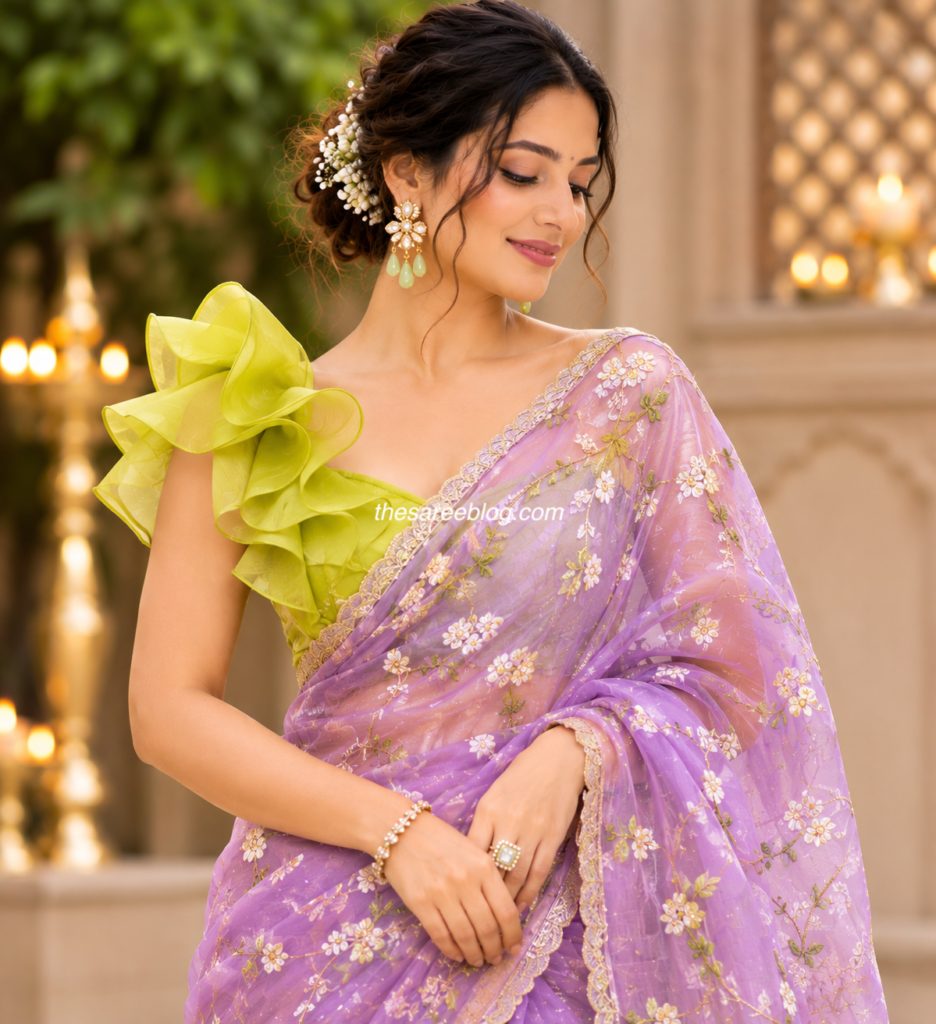
Lavender brings a dreamy, romantic quality, while lime green introduces freshness and energy.
Together, they create a youthful festive palette that feels particularly beautiful in lightweight fabrics.
How to style it:
Pair a lavender organza saree with a lime-green blouse, or add a lime-green dupatta to a lavender sharara set.
Keep the jewellery delicate and let the colours take centre stage.
The Saree Blog styling tip: Use lime green as a smaller accent if you’re experimenting with the combination for the first time.
Best for: Daytime festivities, Mehendi functions, festive brunches, and intimate celebrations.
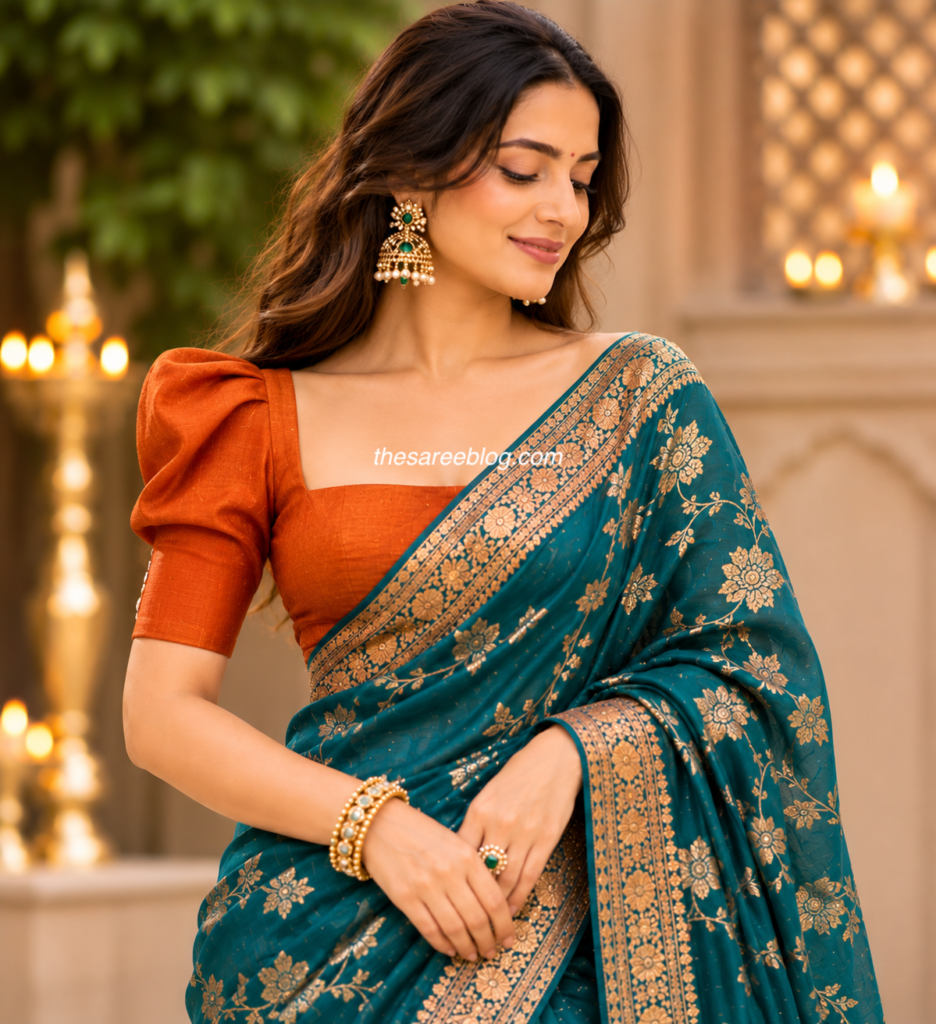
7. Teal Blue + Burnt Orange: The Art of Beautiful Contrast
Teal blue and burnt orange bring together two equally captivating shades.
The cool depth of teal beautifully offsets the earthy warmth of burnt orange, making this combination especially striking in traditional Indian textiles.
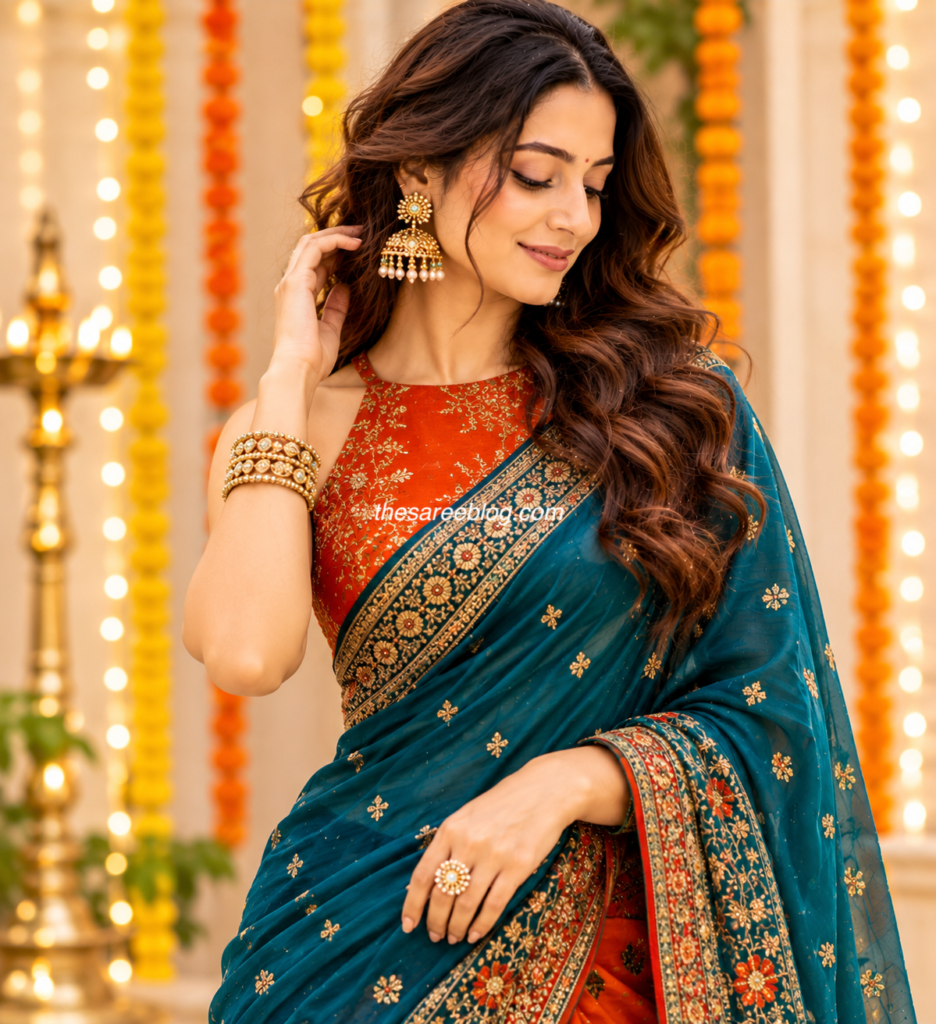
It feels rich, artistic, and slightly unconventional.
How to style it:
Choose a teal silk saree with a burnt-orange blouse, or pair a teal lehenga with an orange dupatta featuring antique-gold detailing.
Temple jewellery or antique gold accessories can enhance the traditional character of the look.
The Saree Blog styling tip: If both shades are saturated, choose a relatively simple silhouette and keep the embellishment controlled.
Best for: Navratri, Diwali, wedding festivities, and traditional evening functions.
8. Ivory + Vermilion Red: Timeless Festive Elegance
Few combinations feel as effortlessly graceful as ivory and vermilion red.
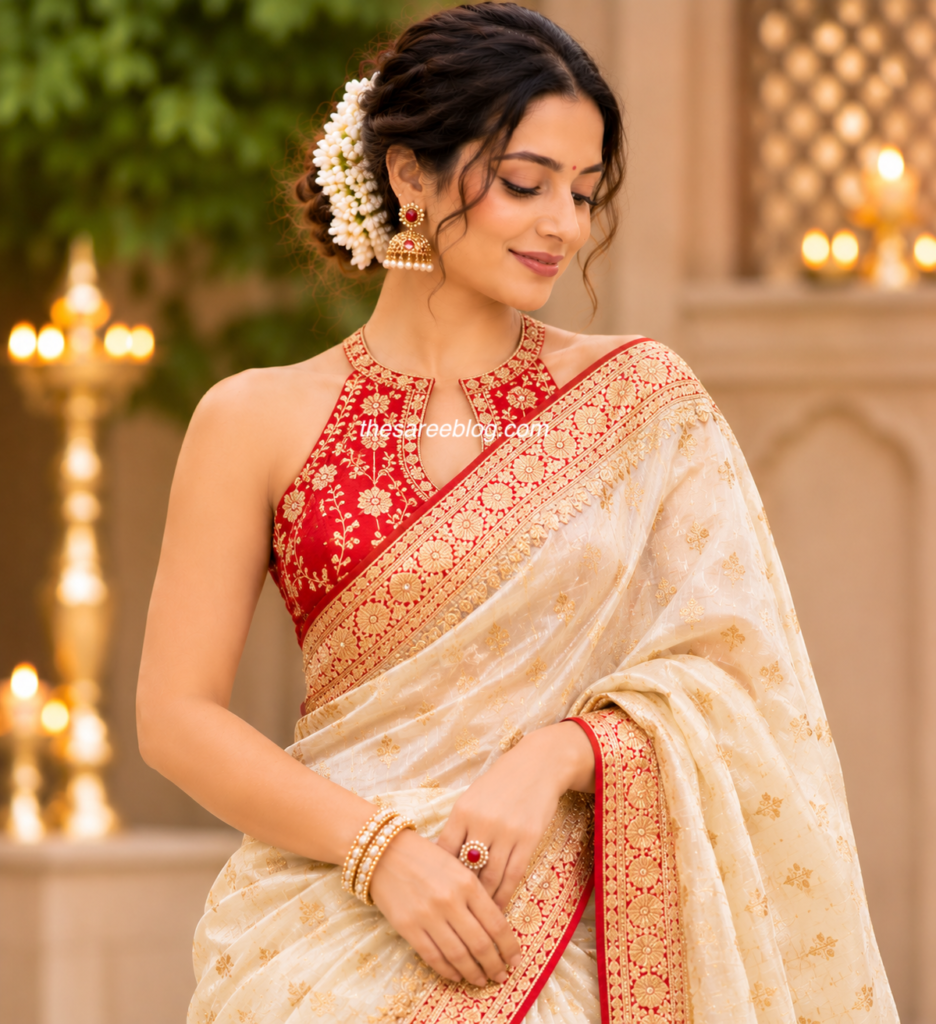
The softness of ivory allows the intensity of red to shine, creating a look that is both minimal and festive.
This palette also has strong associations with traditional Indian dressing, especially in certain regional textile and ceremonial styles.
How to style it:
Try an ivory saree with a bold red blouse, or an ivory kurta set with a vermilion-red dupatta.
A red bindi, gold jhumkas, and a classic bun can complete the look beautifully.
The Saree Blog styling tip: Even a simple ivory cotton or silk saree can become festive with a contrasting red blouse and carefully chosen jewellery.
Best for: Traditional pujas, Durga Puja celebrations, family gatherings, and daytime festive occasions.
9. Cobalt Blue + Silver: Modern Festive Glamour
If gold dominates your festive wardrobe, consider giving silver a moment.
Cobalt blue and silver create a dramatic, polished combination that feels glamorous without relying on conventional festive colours.
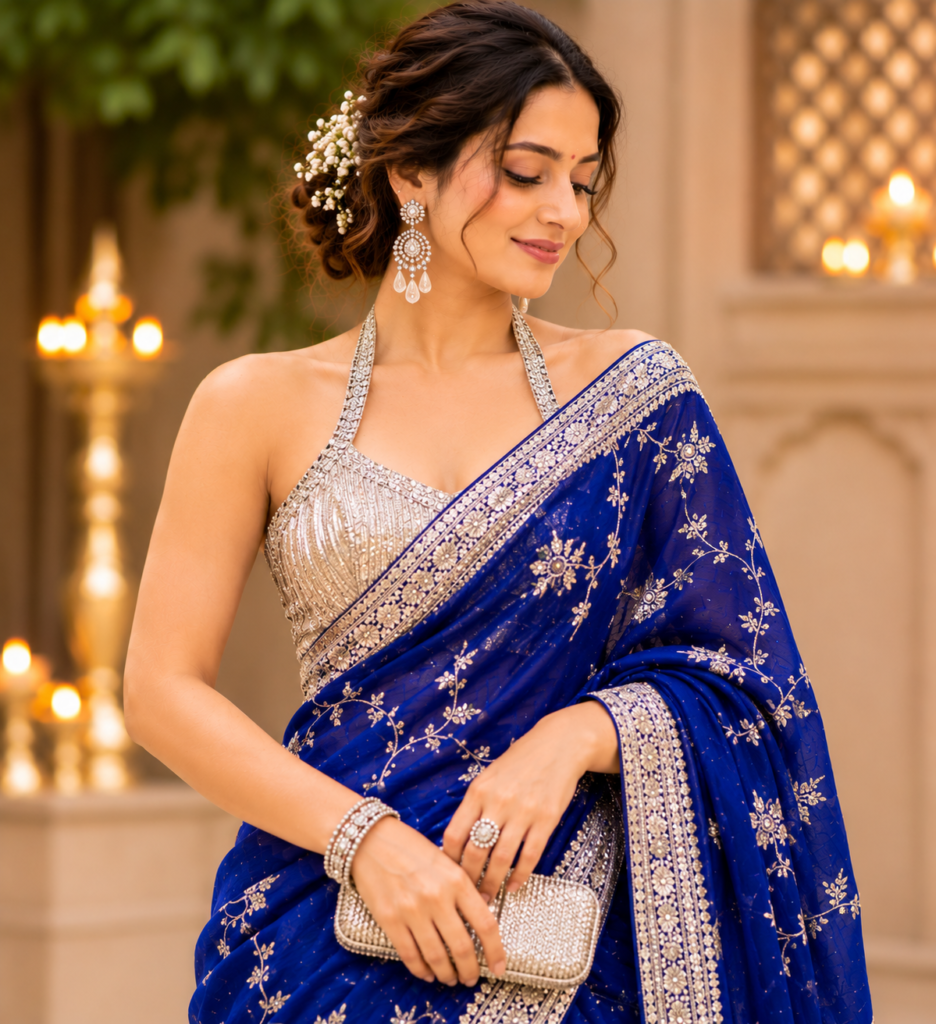
The brilliance of cobalt works particularly well with metallic embroidery, sequins, and reflective fabrics.
How to style it:
Style a cobalt blue saree with a silver blouse, or choose a blue lehenga with delicate silver embellishments.
Diamond-look jewellery, silver heels, and a metallic clutch can complete the ensemble.
The Saree Blog styling tip: Keep makeup balanced. Soft nude lips and defined eyes allow the striking blue to remain the highlight.
Best for: Festive parties, Sangeet nights, wedding receptions, and evening celebrations.
10. Peach + Pistachio Green: Soft Festive Charm
Not every festive outfit needs intense jewel tones.
Peach and pistachio green offer a refreshing alternative for those who prefer understated elegance.
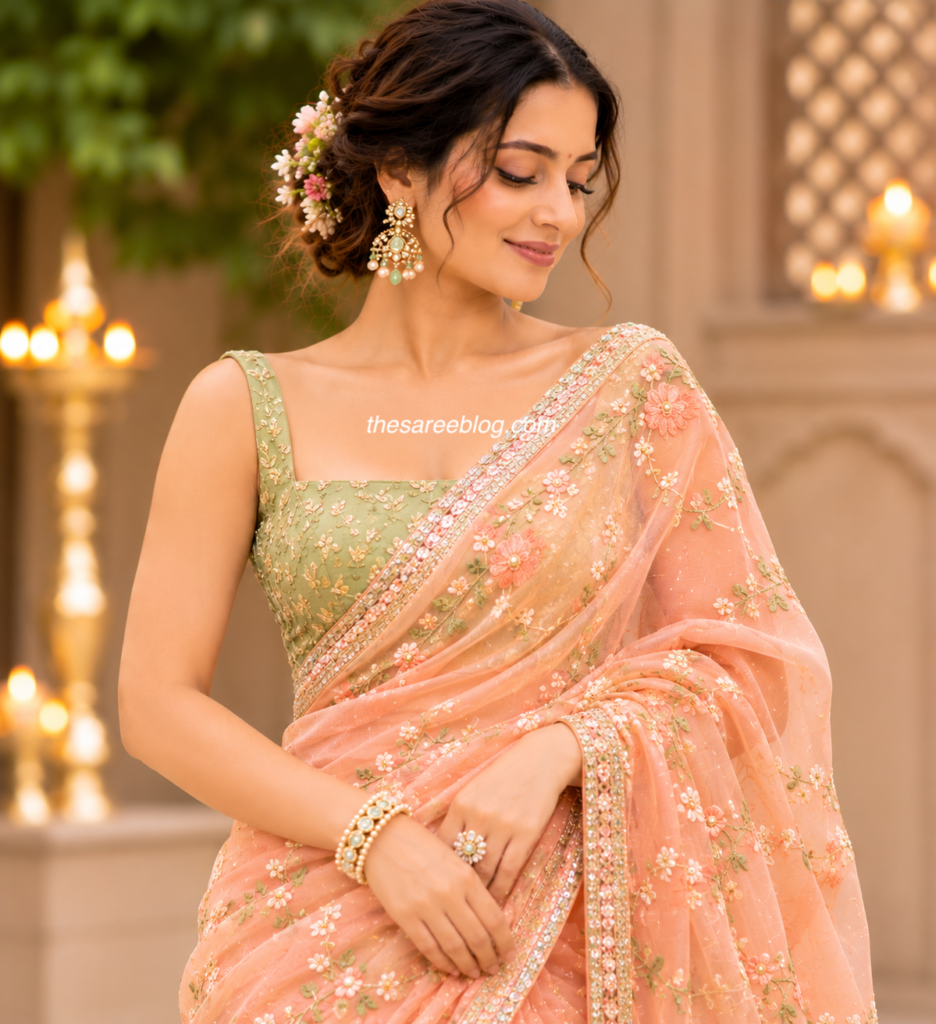
The warmth of peach blends beautifully with the muted freshness of pistachio, creating a gentle, romantic palette.
How to style it:
Try a peach organza saree with a pistachio-green blouse, or a pastel green Anarkali with a peach dupatta.
Pearls, delicate kundan jewellery, and soft golden accessories complement this combination particularly well.
The Saree Blog styling tip: Look for subtle embroidery, delicate floral motifs, and sheer fabrics to enhance the softness of the palette.
Best for: Daytime weddings, festive lunches, Mehendi functions, and family gatherings.
11. Burgundy + Blush Pink: Romantic Meets Regal
Burgundy and blush pink create a beautiful interplay between richness and softness.
While burgundy lends depth and drama, blush pink adds a romantic, feminine touch.
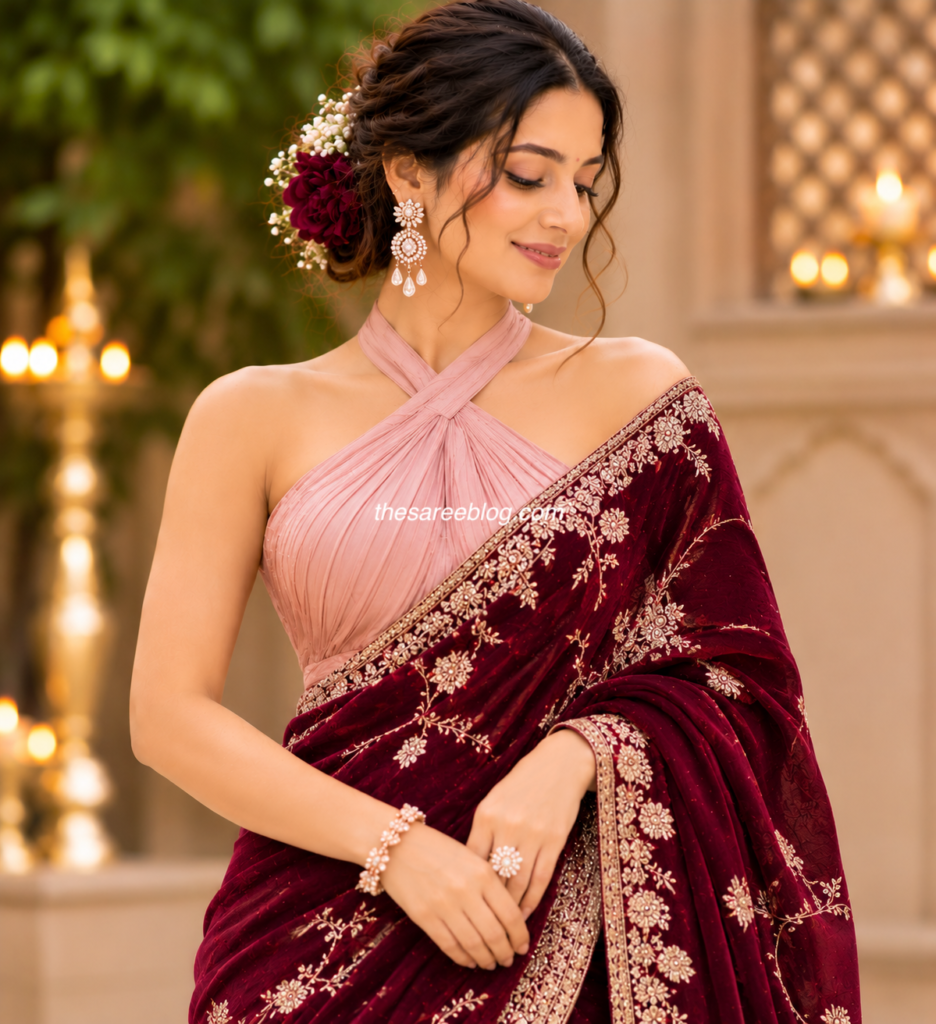
The combination works especially well when you want a festive look that feels sophisticated rather than overly colourful.
How to style it:
Pair a burgundy Banarasi saree with a blush-pink blouse, or wear a blush lehenga with a burgundy velvet dupatta.
Rose-gold jewellery, pearls, and antique gold accessories can all work, depending on the fabric and embroidery.
The Saree Blog styling tip: Use blush pink close to the face if you want a softer overall look, and reserve burgundy for the saree, skirt, or dupatta.
Best for: Wedding functions, festive dinners, engagement ceremonies, and evening celebrations.
12. Turquoise + Coral: A Celebration of Colour
Bright, joyful, and full of personality, turquoise and coral make a festive pairing that’s difficult to ignore.
Turquoise brings a refreshing coolness, while coral introduces warmth and vibrancy.
Together, they create a lively palette that looks particularly beautiful in Bandhani, Leheriya, printed silks, and contemporary festive ensembles.
How to style it:
Pair a turquoise saree with a coral blouse, or style a coral kurta set with a turquoise dupatta.
Gold jewellery can warm up the combination, while oxidised silver offers a more bohemian interpretation.
The Saree Blog styling tip: Introduce a neutral element—such as an ivory potli or understated footwear—if you want to balance the brightness.
Best for: Garba nights, festive daytime events, Mehendi celebrations, and colourful family gatherings.
How to Choose the Right Festive Colour Combinations
With so many beautiful palettes to explore, choosing the right one can feel overwhelming. But festive styling becomes easier when you focus on a few simple principles.
1. Balance Bold Colours with Softer Shades
If you’re wearing a bright saree, consider pairing it with a softer or deeper blouse colour rather than another equally intense shade.
For example, cobalt blue with silver feels polished, while wine with powder blue creates a more subtle contrast.
2. Let the Fabric Influence Your Colour Choices
The same combination can look completely different across fabrics.
A lavender and lime-green pairing may feel playful in organza, while emerald and champagne gold can appear luxurious in velvet or silk.
Colour and texture should work together.
3. Consider the Time of Day
Soft combinations like peach and pistachio or ivory and red can look beautiful in natural daylight.
Deeper palettes like burgundy and blush, emerald and gold, or cobalt and silver often create a dramatic effect under evening lighting.
These are styling suggestions, not rules—wear whichever colours make you feel your best.
4. Use Accessories to Connect Contrasting Colours
When wearing two contrasting shades, repeat one colour through your accessories.
For example, a teal saree with an orange blouse can be complemented by a potli featuring orange embroidery.
Even small details can make an outfit look thoughtfully coordinated.
5. Experiment with What You Already Own
You don’t need a completely new festive wardrobe to try these combinations.
A contrasting blouse, an old Banarasi dupatta, a statement potli, or a different jewellery finish can transform a familiar outfit.
Sometimes, the most exciting festive look is simply a new way of wearing something you already love.
Final Thoughts: This Festive Season, Let Colour Tell Your Story
Indian festive fashion has never been afraid of colour. From vibrant Bandhani textiles to rich Banarasi silks and delicate pastel organzas, our wardrobes are filled with endless possibilities.
This festive season, look beyond the predictable.
Pair your favourite saree with an unexpected blouse. Mix a traditional jewel tone with a contemporary pastel. Experiment with textures, contrasts, and accessories.
Because the most memorable festive outfits aren’t necessarily the most expensive or elaborate.
They’re the ones that reflect your personality.
Which colour combination would you love to try this festive season? Tell us your favourite—and explore more saree styling ideas, textile stories, and ethnicwear inspiration at The Saree Blog.
Celebrate colour. Celebrate tradition. Celebrate your own style.