- 1. Get the Saree Pleats Neat and Well-Defined
- 2. Pay Attention to the Pallu Placement
- 3. Choose a Blouse That Complements the Saree
- 4. Get the Saree Length and Footwear Right
- 5. Use Accessories to Complement, Not Compete
- 6. Choose Fabrics According to the Occasion and Weather
- 7. Create Balanced Proportions With Your Blouse and Drape
- 8. Experiment With Belts for a Contemporary Look
- 9. Pay Attention to the Petticoat or Saree Shapewear
- 10. Coordinate Your Handbag With the Saree
- 11. Choose the Right Hairstyle and Makeup
- 12. Finish With the Little Details That Make a Difference
- How to Look Stylish in a Saree: 5 Mistakes to Avoid
- Final Thoughts
A beautiful saree does not always need heavy embroidery, expensive fabric or elaborate jewellery to make an impression. Sometimes, the difference between an ordinary saree outfit and a beautifully styled look comes down to a few thoughtful details. The way the pleats fall, how the pallu is arranged, the fit of the blouse and even the choice of footwear can completely change the overall appearance. Learning a few practical saree styling tricks can help make everyday sarees look more refined and occasion wear feel effortlessly elegant.
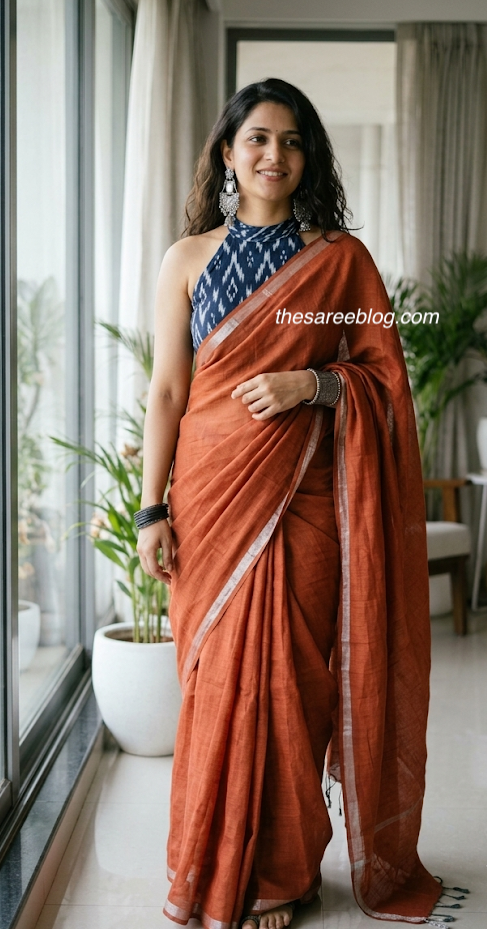
Whether it is a simple cotton saree for a daytime outing, a graceful chiffon drape for a family gathering or a rich silk saree for a wedding, the right styling choices can bring the entire outfit together.
The secret is not to add more accessories or follow every fashion trend. It is to understand proportions, choose details that complement the saree and pay attention to the little things that make an outfit look finished.
Here are 12 saree styling tips that can help create a polished, flattering and stylish look without making the process complicated.
1. Get the Saree Pleats Neat and Well-Defined
Well-arranged pleats are one of the simplest ways to make a saree look polished. Even an inexpensive saree can look beautifully put together when the front pleats are neat, evenly spaced and fall naturally.
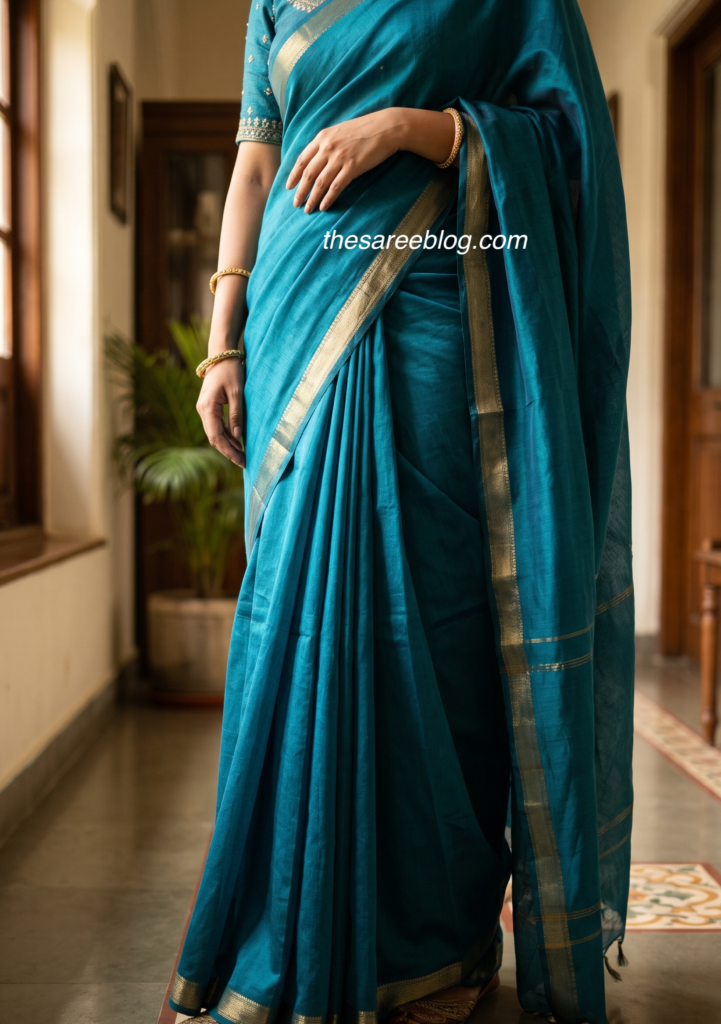
Uneven pleats, excessive fabric around the waist or pleats that spread out while walking can make the drape look untidy. A little attention during draping can prevent these problems.
Try these tips:
- Keep the pleats approximately equal in width.
- Align the pleats neatly at the waistband rather than allowing them to spread out.
- Ensure the bottom edges fall at a similar length.
- Use a discreet safety pin inside the pleats if they tend to open.
- Avoid making the pleats too bulky, particularly with thicker silk and brocade sarees.
For lightweight sarees such as chiffon, georgette and crepe, slightly narrower pleats can create a fluid appearance. Cotton and silk sarees generally benefit from structured, well-defined pleats.
The goal is to create a clean front silhouette without making the saree look stiff.
2. Pay Attention to the Pallu Placement
The pallu is one of the most noticeable parts of a saree outfit. Its placement can influence the entire silhouette, making the look appear structured, relaxed, dramatic or understated.
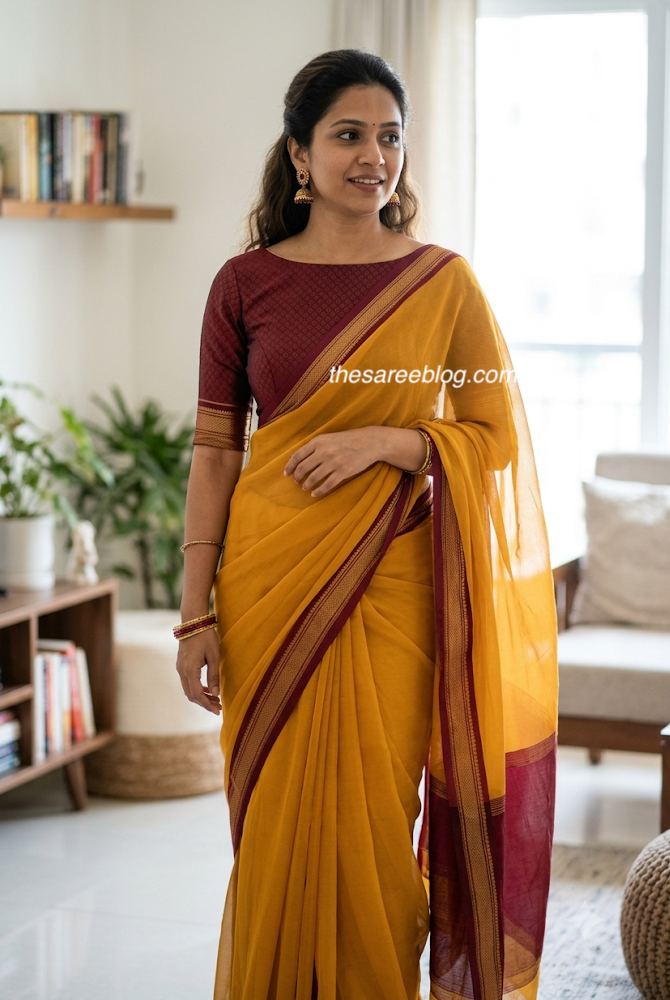
A neatly pleated pallu creates a clean and organised appearance, while an open pallu adds movement and showcases beautiful borders, prints and embroidery.
The trick is to choose a style that complements the saree rather than automatically following the same draping technique every time.
A few styling ideas:
- Neatly pleated pallu: Ideal for formal occasions, office wear and silk sarees.
- Open pallu: Works beautifully with lightweight sarees and statement borders.
- Front-pinned pallu: A practical option for weddings and occasions when you want to keep your hands free.
- Shoulder-falling pallu: Creates a relaxed, graceful look for casual gatherings.
Make sure the pallu does not hang too low or drag behind you. If you want to highlight an embroidered border, arrange it so that the detailing remains visible.
A well-positioned pallu can make even a simple saree look thoughtfully styled.
3. Choose a Blouse That Complements the Saree
A blouse can make or break a saree outfit. Even the most beautiful saree may not create the desired effect if the blouse is poorly fitted, uncomfortable or visually disconnected from the drape.
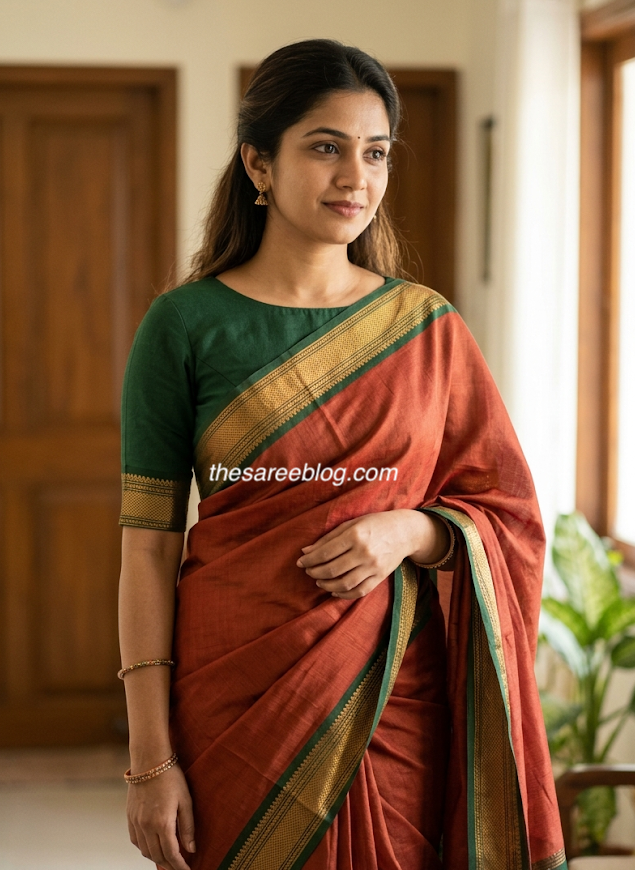
Instead of choosing a blouse only because it is fashionable, consider its neckline, sleeve length, fabric and overall fit.
A few combinations worth trying include:
- Classic silk saree: A fitted blouse with elbow-length sleeves or a traditional round neckline.
- Plain chiffon saree: A statement blouse with embroidery, interesting sleeves or a contemporary neckline.
- Printed saree: A solid-coloured blouse that picks up one of the colours in the print.
- Heavy festive saree: A relatively simple blouse that allows the saree’s detailing to stand out.
Fit matters more than elaborate design. The shoulder seams should sit correctly, the sleeves should not dig into the arms and the blouse should provide comfortable support.
Also, pay attention to blouse length. A well-proportioned blouse that sits comfortably at the waist creates a balanced appearance.
For a coordinated outfit, match the blouse colour to the saree border or choose a carefully selected contrast shade.
4. Get the Saree Length and Footwear Right
One of the most overlooked saree styling details is footwear. The wrong heel height can change the way the saree falls, affect the length of the pleats and make walking uncomfortable.
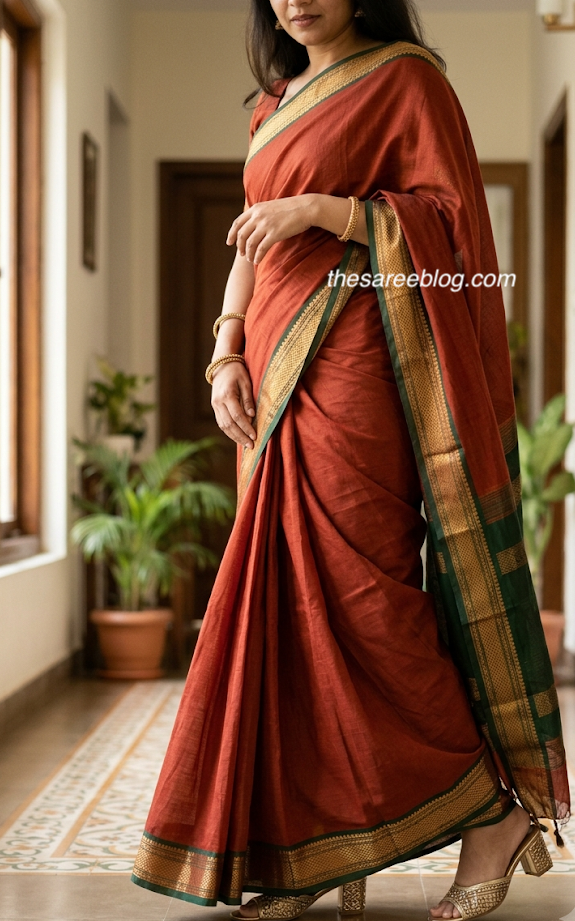
Ideally, decide on your footwear before draping the saree. This allows the hemline to be adjusted correctly.
The saree should fall close to the floor without dragging or making walking difficult. The front hem should also allow you to move comfortably without constantly lifting the fabric.
Footwear options to consider:
- Block heels: Comfortable and practical for weddings and long events.
- Kitten heels: A subtle way to add height without making the outfit feel uncomfortable.
- Traditional embellished sandals: Beautiful with festive and ethnic sarees.
- Wedges: Useful when you want additional height and stability.
- Flats: Perfectly suitable for casual sarees and relaxed daytime looks.
The footwear does not have to match the saree exactly. Metallic gold, silver, nude and neutral shades can complement a wide range of outfits.
The most important rule is to prioritise comfort alongside appearance. Constantly adjusting your saree because of uncomfortable footwear can take away from an otherwise beautiful look.
5. Use Accessories to Complement, Not Compete
Accessories can elevate a saree outfit, but adding too many statement pieces can make the overall look feel crowded.
A polished outfit usually has a clear focal point. It could be a pair of statement earrings, an elaborate necklace, a beautiful belt or an interesting blouse design.
Choose accessories according to the saree’s fabric, colour, occa
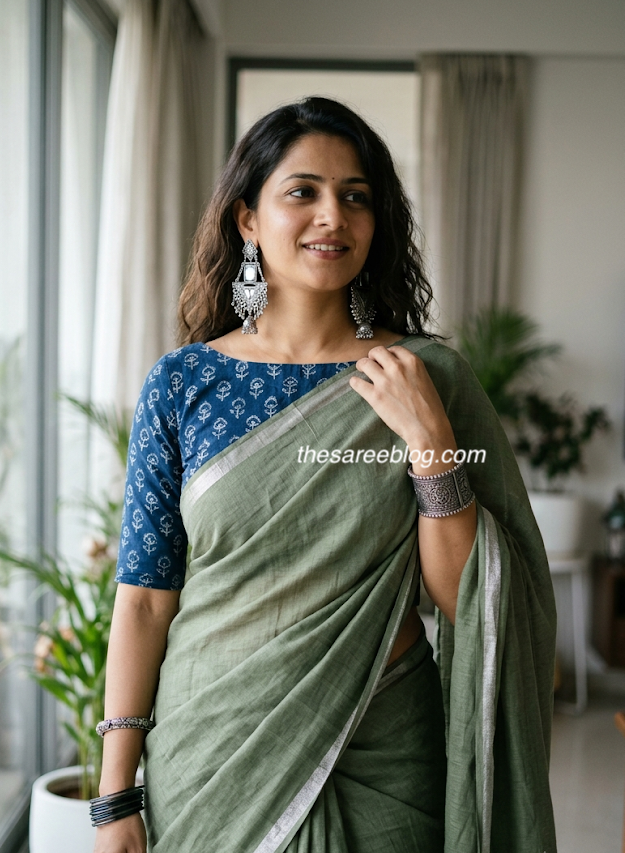
sion and level of detailing.
For example:
- heavily embroidered saree, opt for relatively understated jewellery.
- plain saree, experiment with statement earrings or a striking necklace.
- traditional silk saree, temple jewellery, gold bangles or a classic necklace can work beautifully.
- contemporary saree, try geometric earrings, delicate layered necklaces or modern cuffs.
Pay attention to the neckline of the blouse when selecting necklaces. A high neckline may look better with statement earrings, while a deeper neckline can accommodate a necklace.
You do not need to wear a complete jewellery set every time. Sometimes, a single well-chosen accessory creates a more sophisticated result.
6. Choose Fabrics According to the Occasion and Weather
Fabric influences how a saree falls, how much volume it creates and how comfortable it feels throughout the day.
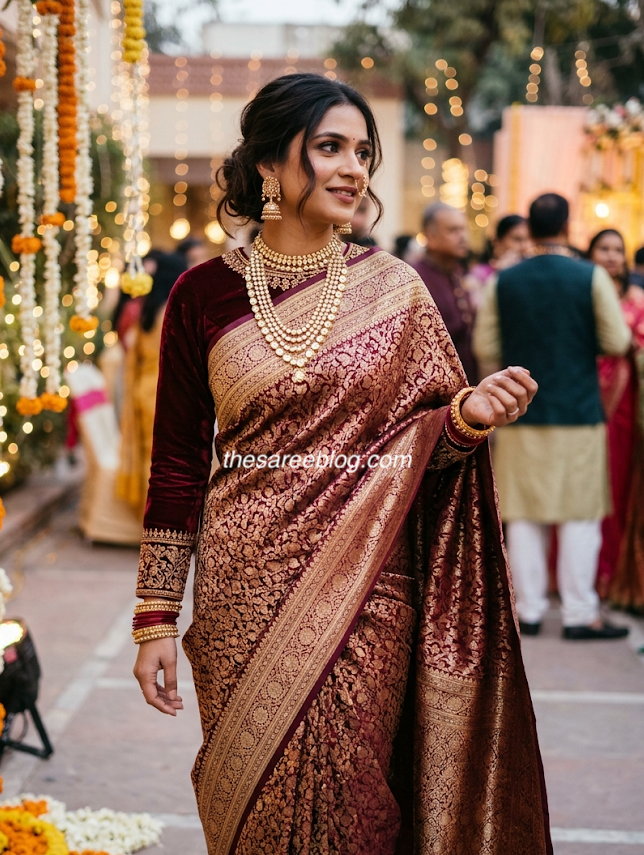
Understanding different fabrics can make saree styling considerably easier.
For example, silk and brocade sarees generally have more structure and create a rich, traditional appearance. Chiffon and georgette sarees have a softer fall and work well for fluid, contemporary looks. Cotton sarees offer a crisp finish, making them suitable for daytime occasions.
Consider these combinations:
| Occasion | Fabrics Worth Considering |
|---|---|
| Everyday wear | Cotton, linen, lightweight blends |
| Office wear | Cotton silk, linen, crepe |
| Daytime celebrations | Chiffon, organza, soft silk |
| Evening parties | Satin, georgette, crepe |
| Weddings | Banarasi silk, Kanjivaram, brocade, velvet |
Also consider the weather. Heavy fabrics may feel uncomfortable in warm and humid conditions, while lighter fabrics can be easier to manage during summer celebrations.
For winter weddings, richer fabrics such as velvet, silk and brocade can create a luxurious appearance. A full-sleeved blouse or a beautifully tailored jacket blouse can add another layer of style.
The right fabric makes the outfit easier to carry and helps the saree look appropriate for the occasion.
7. Create Balanced Proportions With Your Blouse and Drape
Good saree styling is not about following strict body-type rules. It is about creating proportions that feel balanced and comfortable.
The blouse, pallu, pleats and saree border all contribute to the overall silhouette. When these elements work together, the outfit looks more cohesive.
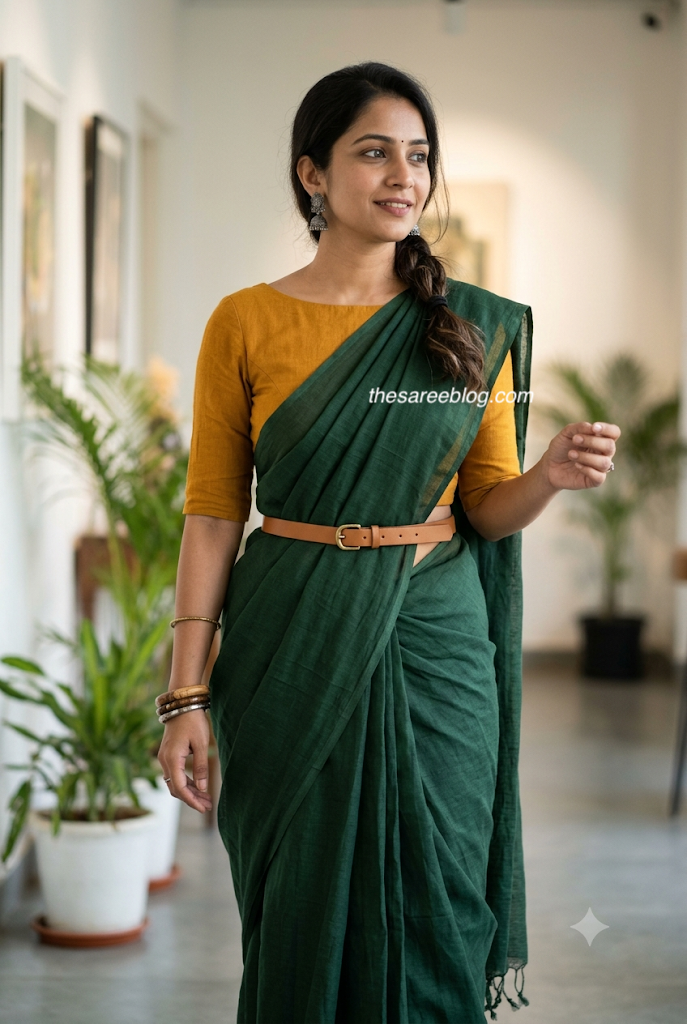
A few practical adjustments can make a noticeable difference:
- Pair a voluminous or heavily embellished saree with a more streamlined blouse.
- Try a slightly longer blouse with contemporary saree drapes for a modern silhouette.
- Choose sleeve lengths that complement the blouse neckline and overall design.
- Avoid excessive fabric gathering around the waist.
- Experiment with different pallu placements to see which creates the most balanced appearance.
If the saree has a broad border, consider how it sits along the lower edge. A beautifully displayed border can become an important part of the overall look.
Rather than trying to conceal particular features, focus on creating an outfit in which every element feels intentional.
8. Experiment With Belts for a Contemporary Look
A saree belt is an easy way to introduce a contemporary element into traditional draping.
From traditional kamarbandhs to slim metallic belts and fabric waist belts, there are several options to experiment with.
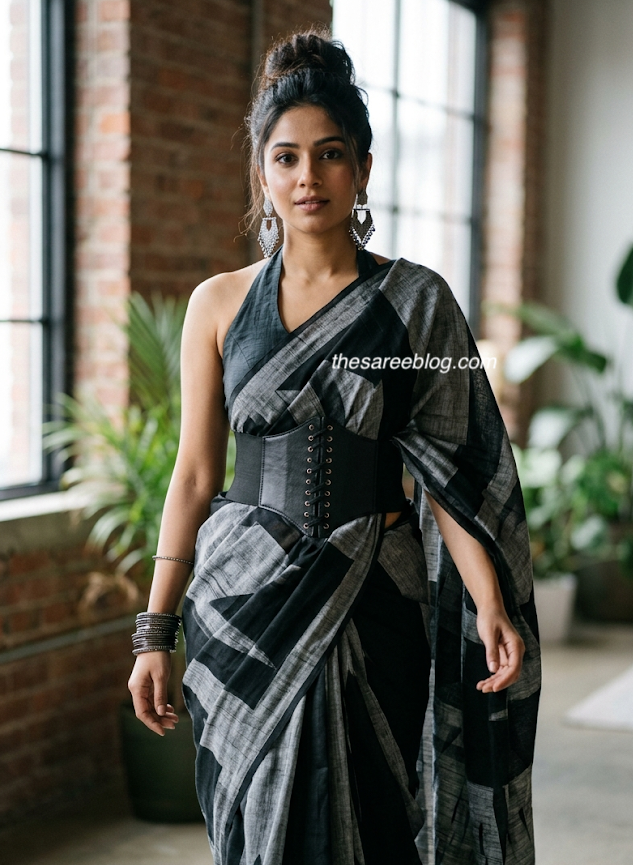
A belt can help secure the drape, define the waist and create a more structured silhouette. It can also add an interesting detail to an otherwise simple saree.
How to style a saree belt:
- Pair a traditional gold kamarbandh with a silk saree.
- Try a slim metallic belt with a plain chiffon or satin saree.
- Use a fabric belt that matches the blouse for a coordinated appearance.
- Experiment with embellished belts for festive occasions.
However, belts are not necessary for every saree. A heavily embroidered saree with an elaborate border may look better without additional detailing around the waist.
The key is to choose a belt that complements the outfit instead of competing with its existing embellishments.
9. Pay Attention to the Petticoat or Saree Shapewear
The foundation underneath a saree can influence how smoothly the fabric falls.
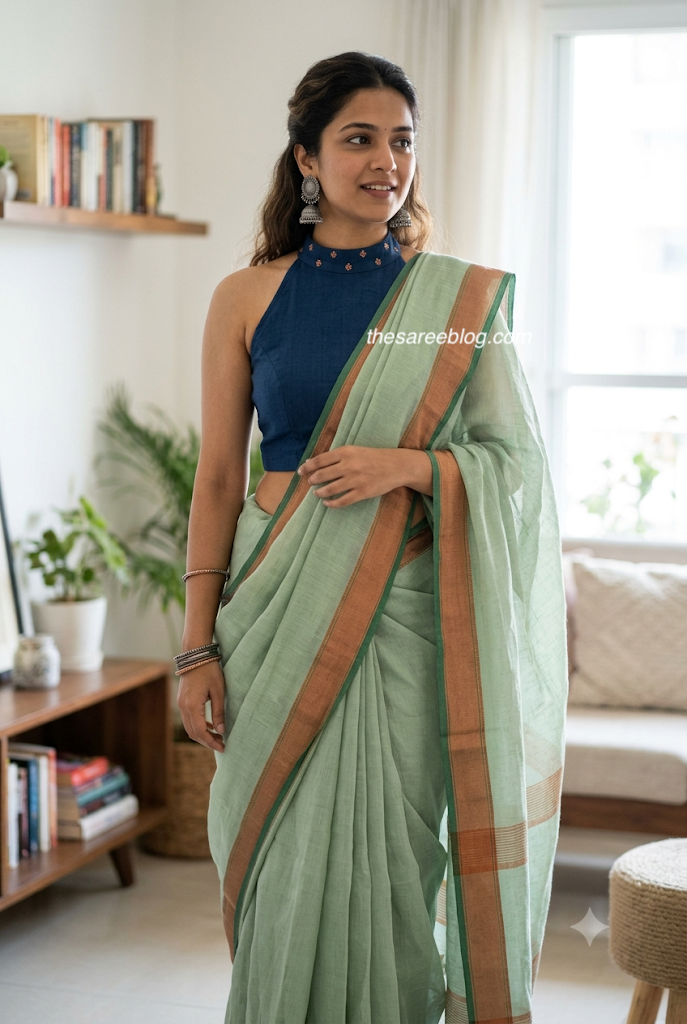
A poorly fitted petticoat can create unnecessary bulk, visible creases or uneven gathering around the waist. The right foundation garment helps the saree sit comfortably and maintain its shape.
Traditional cotton petticoats remain a practical choice for many sarees, while fitted saree shapewear can provide a more streamlined finish.
When selecting one, consider:
- The fabric and weight of the saree.
- The level of support and comfort required.
- The fit around the waist and hips.
- Whether the garment allows comfortable walking and sitting.
- The length of the saree and how it falls over the bottom edge.
Avoid choosing shapewear that is excessively tight. It should support the drape without restricting movement or causing discomfort.
For sheer fabrics such as chiffon and georgette, pay particular attention to the colour and finish of the underlayer. A well-matched foundation helps create a cleaner overall appearance.
10. Coordinate Your Handbag With the Saree
A handbag may seem like a small detail, but it can complete the entire outfit.
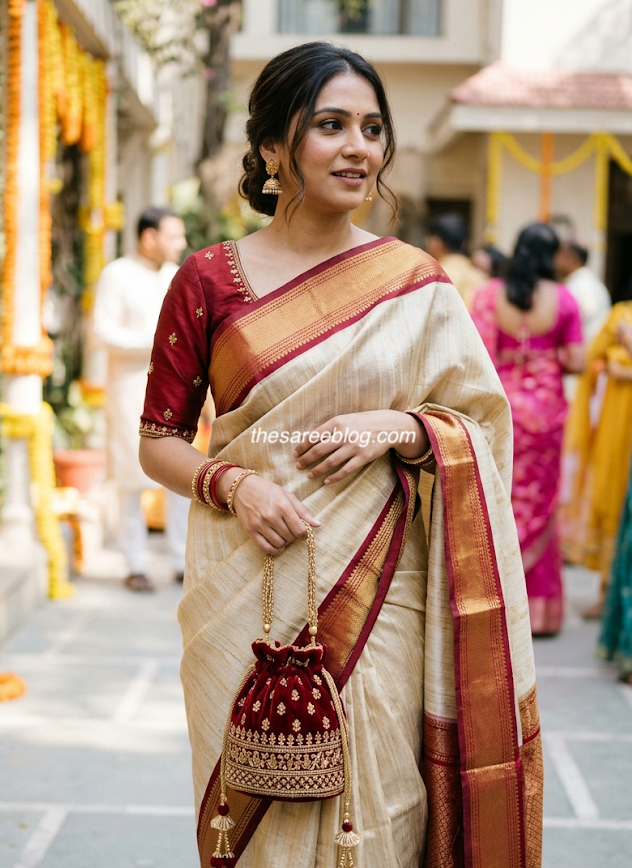
A large everyday handbag may look out of place with a formal silk saree, while a beautifully chosen potli or clutch can make the ensemble feel more coordinated.
Some useful combinations include:
- Silk sarees: Traditional potli bags, embroidered clutches or structured ethnic bags.
- Chiffon and georgette sarees: Minimal metallic clutches or compact evening bags.
- Printed cotton sarees: Small sling bags or understated structured handbags.
- Contemporary sarees: Sleek clutches and geometric evening bags.
Gold and silver accessories are versatile choices, but you can also pick a handbag in a contrasting colour that complements the saree.
For weddings and festive occasions, embellished potli bags are particularly attractive. For everyday styling, however, a simple and functional handbag is often the better choice.
Remember that the bag should complement the outfit while remaining practical enough to carry your essentials.
11. Choose the Right Hairstyle and Makeup
A beautifully styled saree outfit feels incomplete when the hairstyle and makeup are treated as afterthoughts.
They do not need to be elaborate. The idea is to create a cohesive appearance in which the beauty look complements the saree and the occasion.
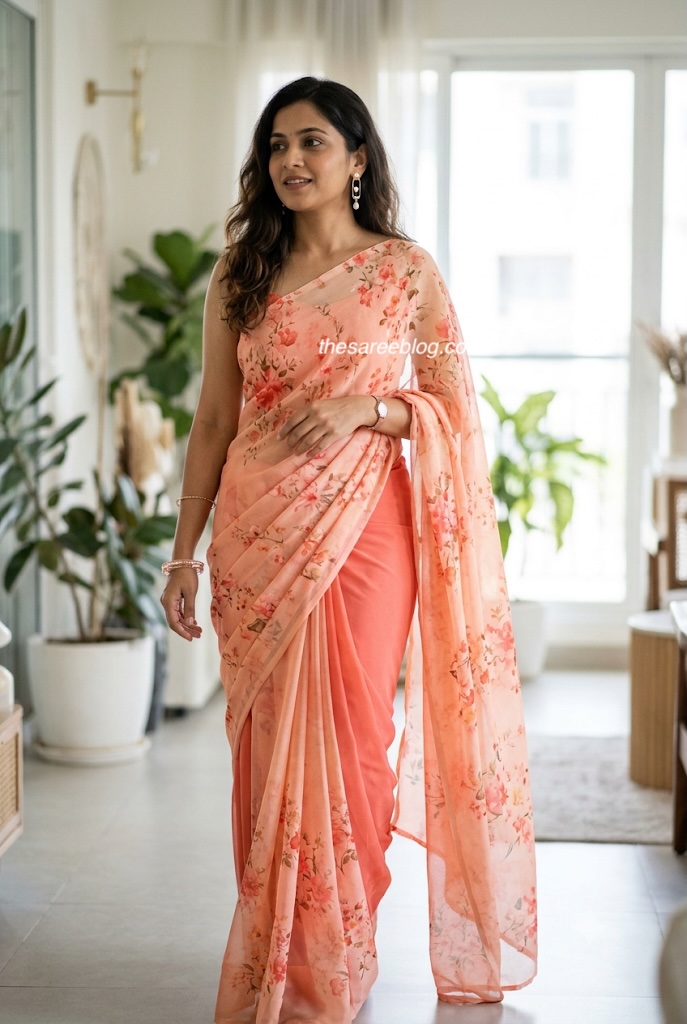
Hairstyles to consider:
- Sleek low bun: A classic choice for silk sarees and traditional jewellery.
- Soft waves: Beautiful with chiffon, georgette and contemporary sarees.
- Low ponytail: A modern and relatively effortless option.
- Traditional braid: Works particularly well with festive and South Indian saree looks.
- Half-up hairstyle: A relaxed option for daytime occasions.
For traditional outfits, a small bindi can add a beautiful finishing touch. Fresh flowers or a subtle gajra can also complement a bun or braid.
When it comes to makeup, consider the overall colour palette. A soft neutral look works beautifully with heavily embellished sarees, while a bold lip can add character to a relatively simple outfit.
Avoid trying to make every element stand out simultaneously. If the jewellery is elaborate, keep the makeup balanced. If the saree is minimal, you can experiment with a slightly more dramatic beauty look.
12. Finish With the Little Details That Make a Difference
Sometimes, the difference between a good saree outfit and a truly polished one lies in details that are easy to overlook.
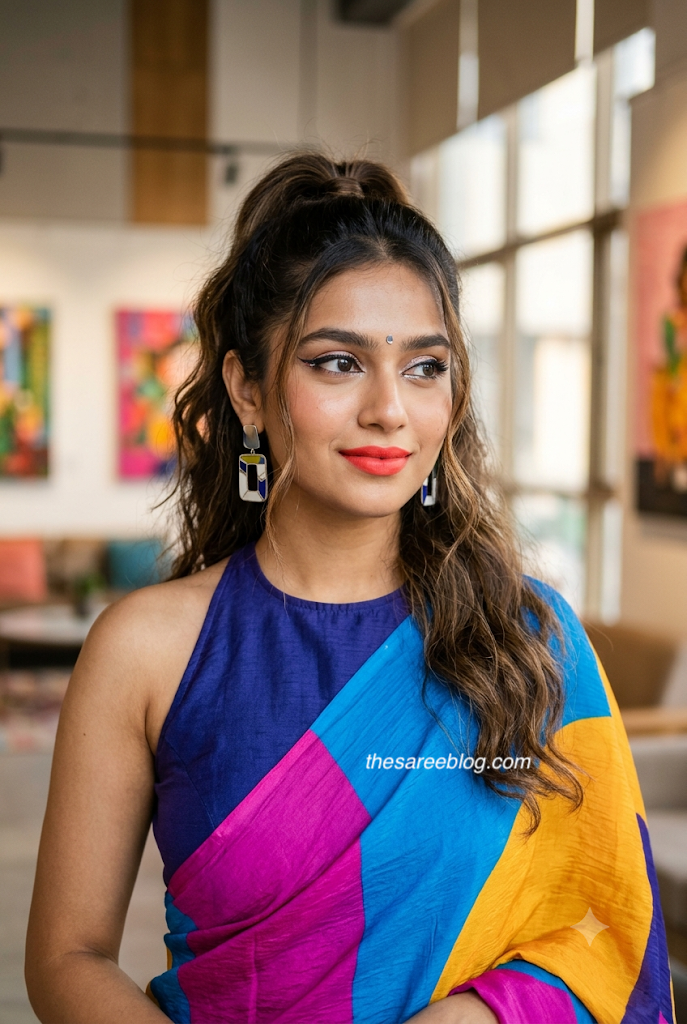
A beautifully draped saree can lose its appeal if the pallu keeps slipping, the blouse has visible gaps or the pleats become untidy after a few minutes.
Before stepping out, take a moment to check the entire outfit.
Your final saree styling checklist:
- Make sure the pleats are secure and evenly arranged.
- Check that the pallu sits comfortably on the shoulder.
- Use discreet pins where necessary.
- Ensure the blouse fits properly without pulling or gaping.
- Check that the saree length works with your footwear.
- Remove loose threads and check for visible fabric creases.
- Make sure jewellery clasps and hooks are secure.
- Carry a few spare safety pins for emergencies.
- Check that your handbag and footwear complement the outfit.
Another important detail is posture. Standing comfortably, walking naturally and carrying the saree with confidence can make a considerable difference to the overall appearance.
You do not need a complicated styling routine. A few minutes spent checking these details can help the entire outfit look more refined.
How to Look Stylish in a Saree: 5 Mistakes to Avoid
Even beautiful sarees can look less appealing when small styling mistakes distract from the outfit. Here are five common things to watch out for.
1. Wearing the wrong footwear: Deciding on footwear after draping can affect the saree length and make the hemline uneven.
2. Over-accessorising: Too many statement pieces can compete with one another. Choose one or two elements to highlight.
3. Ignoring blouse fit: An uncomfortable or poorly fitted blouse can affect the appearance of the entire outfit.
4. Overcomplicating the drape: Not every saree needs an elaborate draping technique. A clean, comfortable drape is often more effective.
5. Choosing trends over personal style: A trendy belt, blouse or jewellery design may not necessarily complement every saree. Select details that work with the outfit and feel comfortable to wear.
Final Thoughts
Looking polished in a saree is less about wearing expensive clothes and more about understanding how different elements work together. Neat pleats, a well-positioned pallu, a flattering blouse, suitable footwear and thoughtfully selected accessories can transform even a simple saree into a beautiful outfit.
The best saree styling tips are the ones that make getting dressed easier while allowing personal style to shine through.
Experiment with different draping techniques, explore interesting blouse designs and do not hesitate to mix traditional elements with contemporary accessories. Whether dressing for a wedding, a festive celebration or an ordinary day, the goal is to feel comfortable, confident and effortlessly stylish.
After all, a saree does not need an elaborate makeover to look beautiful. Sometimes, all it needs is the right attention to detail.