- Why Skin Tone Alone Is Not Enough
- First, Know Your Undertone
- Fair Skin with Warm Undertones: Best Saree Shades
- Fair Skin with Cool Undertones: Best Saree Shades
- Shades to Be Careful With (Not “Wrong”)
- Styling Makes or Breaks the Look
- Universal Saree Shades That Suit Most Skin Tones
- Common Saree Colour Mistakes to Avoid
- Fabric and Colour: An Important Relationship
- Confidence Is the Final Layer
- Final Thoughts
Choosing the right saree shade is often misunderstood. Most styling advice still revolves around labels like fair, wheatish, or dusky.
But saree styling is far more nuanced than that. It’s not that simple. It is not your skin tone alone that decides the colours that flatter you. It is actually your undertone. Once undertones are properly understood, saree shopping becomes simple. Colours start glowing on your skin. Styling feels natural instead of being forced. This saree colour guide breaks the process down step by step, so colour choices feel confident, not confusing.

Why Skin Tone Alone Is Not Enough
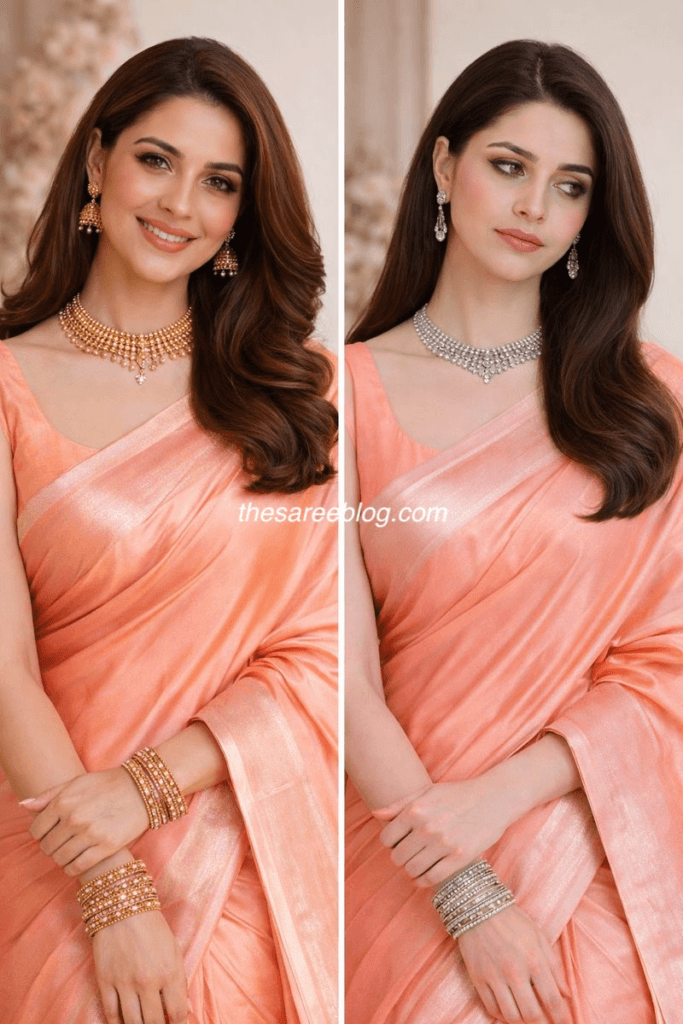
Two women may both be described as “fair.” Yet the same saree can look radiant on one and dull on the other.
Why does this happen?
Because skin tone only describes depth — light, medium, or deep. It does not explain how colour interacts with the skin. That role is played by undertones.
Undertones describe temperature:
- Warm
- Cool
- Neutral
Unlike skin tone, undertones remain constant. They do not change with tanning, lighting, or seasons. This is why someone may tan deeply yet still suit the same colour family. And this is why fairness alone is an unreliable guide. Understanding undertones is the foundation of elegant saree styling. This is what elevates your look from ‘okay’ to awesome.
First, Know Your Undertone
Most Indian skin tones fall into three undertone categories. Identifying yours simplifies your colour decisions for sarees, blouses, jewellery, and makeup.
1. Warm Undertones
Skin carries subtle hints of:
- Golden
- Yellow
- Peach
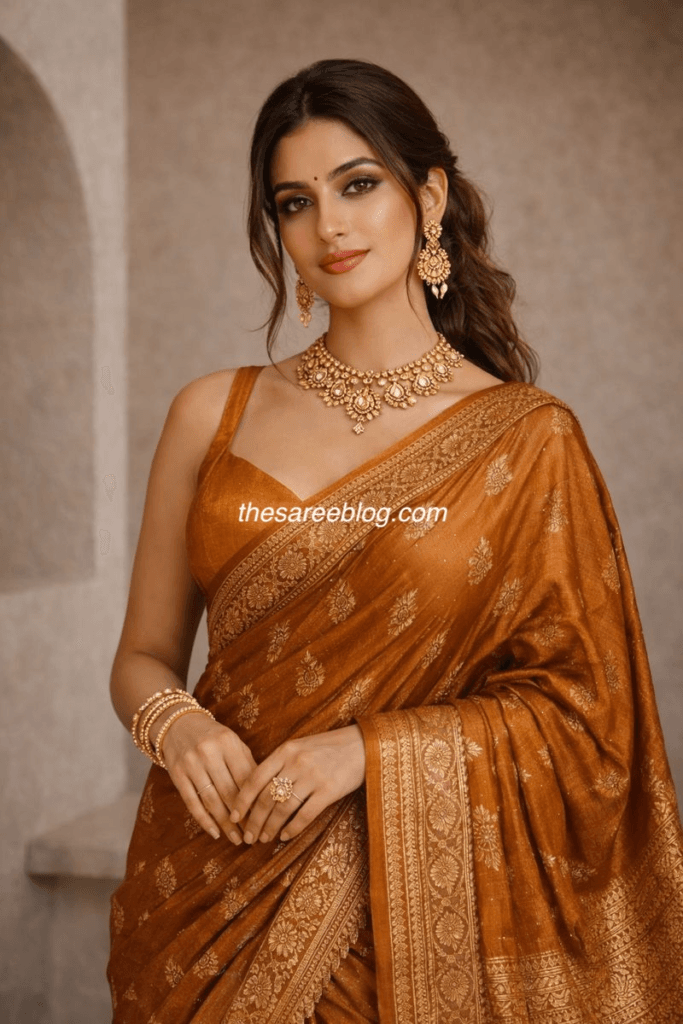
Warm undertones often look healthiest in earthy and sun-kissed colours. Gold jewellery blends seamlessly with this skin type. If warm colours make your skin look fresh rather than heavy, chances are you belong here.
2. Cool Undertones
Skin carries hints of:
- Pink
- Rosy
- Bluish

Cool undertones benefit from clarity and contrast. Silver jewellery usually looks brighter and more flattering than gold. If deep jewel tones instantly elevate your look, cool undertones are likely your match.
3. Neutral Undertones
Neutral undertones are balanced. They sit comfortably between warm and cool. Both gold and silver jewellery tend to suit neutral undertones equally well. This category enjoys the widest colour flexibility.
Understanding this foundation changes everything about saree colour selection.
Fair Skin with Warm Undertones: Best Saree Shades
Fair skin with warm undertones benefits from colours that add warmth without overpowering.
Best Picks
- Peach
- Coral
- Soft gold
- Warm pink
- Champagne beige

Why These Shades Work
Very light skin can appear washed out in cold or overly pale colours. Warm shades counter this by introducing softness and glow.
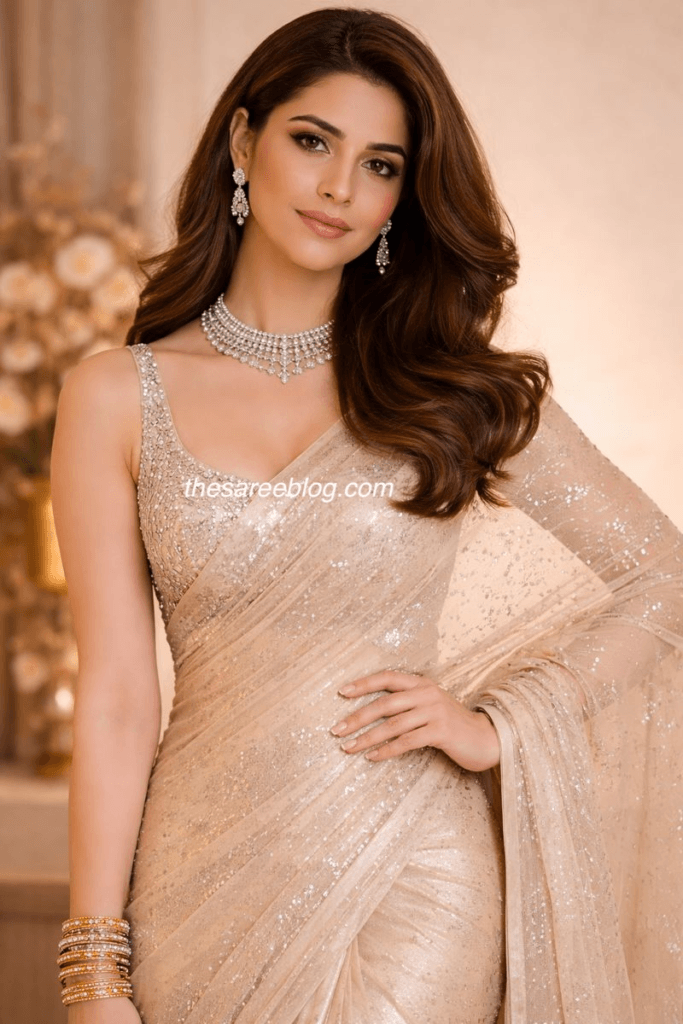
These colours enhance the skin’s natural warmth rather than competing with it. They create a harmonious look, especially in daylight and festive settings.
Styling Tip
Pair light sarees with:
- Slightly darker blouses for definition
- Gold-toned or antique jewellery
- Soft, warm makeup shades
The goal is balance, not contrast overload.
Fair Skin with Cool Undertones: Best Saree Shades
Cool undertones require contrast to appear vibrant.
Best Picks
- Emerald green
- Royal blue
- Lilac
- Wine
- Deep red

Why These Shades Work
Cool undertones shine when paired with jewel tones. These colours add depth and prevent the skin from appearing flat or overly pale.

While pastels can work, they need careful balancing through borders, blouses, or accessories.
Styling Tip
Choose:
- Structured blouses
- Defined borders or weaves
- Silver, diamond, or white-gold jewellery
Cool undertones thrive on clarity and clean colour definition.
Shades to Be Careful With (Not “Wrong”)
Some saree colours are often labelled as “unflattering. That label is misleading.
These shades are not wrong. They simply need proper styling.

1. Pure White
Pure white can:
- Look harsh on warm undertones
- Wash out very fair skin
Fix:
Introduce contrast through:
- Bold blouses
- Statement jewellery
- Defined borders or textures
White works best when styled, not left plain.
2. Neon Shades
Neons overpower most Indian skin tones.
Fix:
Use neon shades sparingly:
- As borders
- In blouses
- Through accessories
When balanced well, neon becomes accent, not distraction.
3. Very Pale Nude Tones
Nude shades close to skin colour may disappear visually.
Fix:
Add texture:
- Embroidery
- Prints
- Jewellery with depth and dimension
Texture brings life back to subtle colours.
Styling Makes or Breaks the Look
Colour alone does not create impact. Styling completes the story.
1. Contrast Your Blouse
A blouse defines the upper frame.
Light saree? Choose a deeper blouse.
Dark saree? A softer blouse can balance it.
This contrast shapes the silhouette and adds polish.
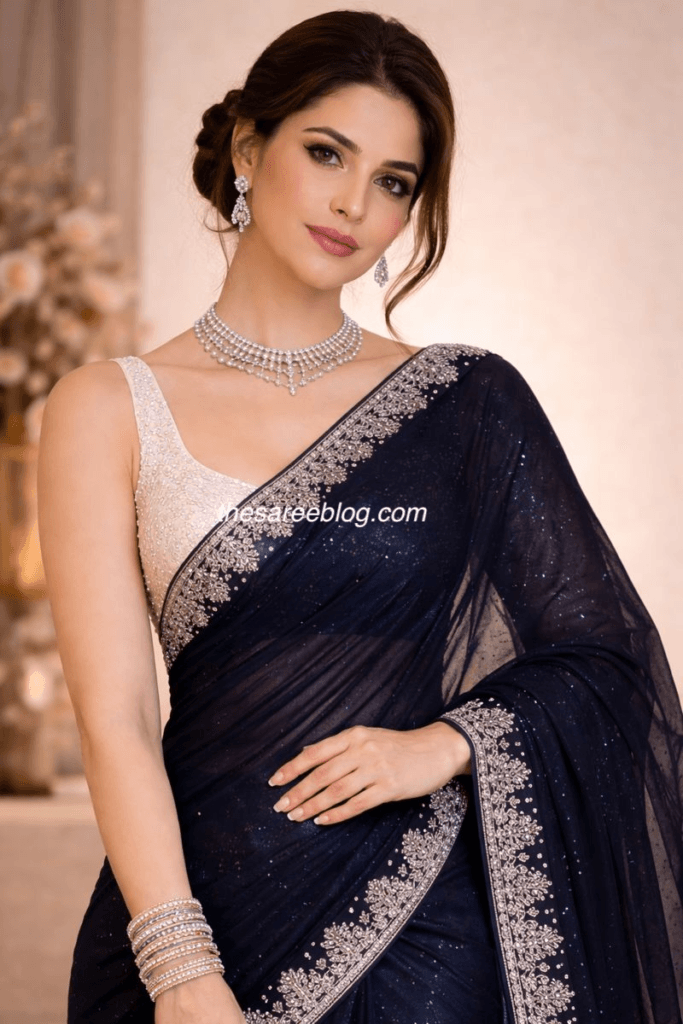
2. Choose the Right Metal
Jewellery should enhance undertones, not fight them.
- Warm undertones → gold, antique gold, rose gold
- Cool undertones → silver, diamonds, white gold
- Neutral undertones → both work beautifully
Metal choice subtly elevates the entire look.
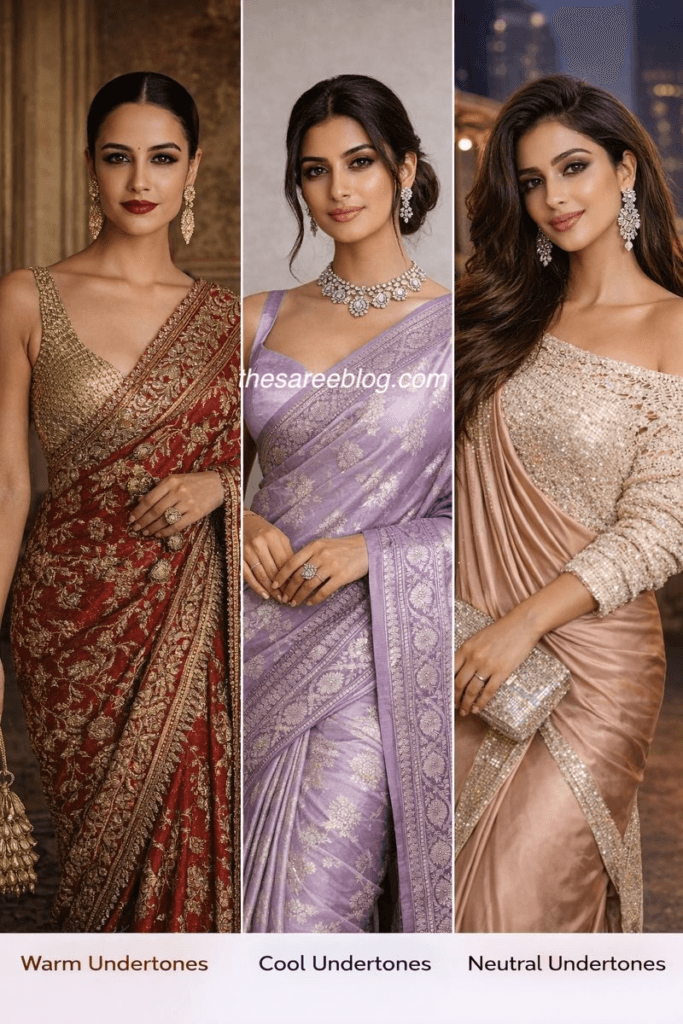
3. Match Lip Colour to Saree Tone
Lip colour should belong to the same colour family as the saree.
- Warm sarees → warm lip shades
- Cool sarees → cool lip shades

This creates visual harmony and a refined finish.
Universal Saree Shades That Suit Most Skin Tones
Some saree colours remain timeless for a reason. They flatter a wide range of undertones when styled well.
Universal Best Picks
- Classic red
- Navy blue
- Bottle green
- Black
- Ivory (with contrast)
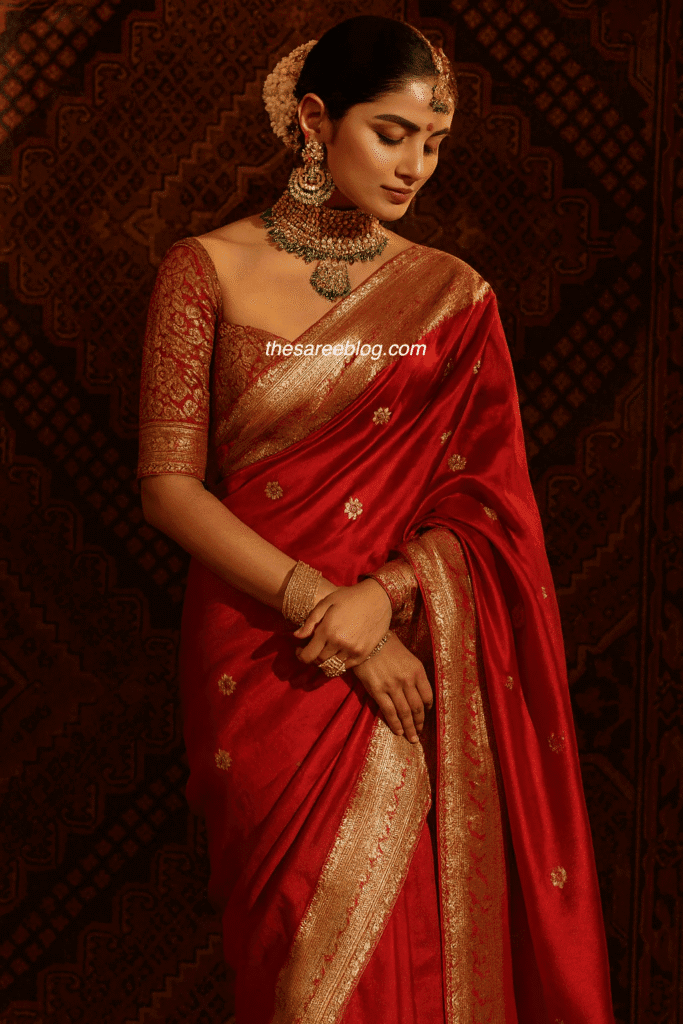
These shades adapt beautifully across fabrics, occasions, and age groups.
Common Saree Colour Mistakes to Avoid
Many styling errors come from habits, not lack of options.
Avoid:
- Choosing shades only because they are trending
- Ignoring the impact of blouse colour
- Overmatching jewellery and saree colour
- Applying the same colour logic to every fabric
Awareness reduces mistakes instantly.
Fabric and Colour: An Important Relationship
The same colour behaves differently on different fabrics.
- Silk intensifies colour
- Cotton softens colour
- Organza lightens colour
- Velvet deepens colour
Always judge colour on the fabric, not in isolation. Fabric weight and texture influence how a shade appears on the body.
Confidence Is the Final Layer
No colour rule is absolute. No shade is truly forbidden. When a saree is worn with confidence:
- Posture improves
- Styling looks ieffortless
- The drape feels natural
Confidence completes the look more than any shade ever can.
Final Thoughts
Choosing the right saree shade is not about fairness. It is about understanding undertones. It is about balance, contrast, and thoughtful styling. Once this knowledge is applied:
- Shopping becomes easier
- Mistakes reduce
- Personal style becomes clearer
A well-chosen saree does not shout loud. It simply glows. With this bundle of information try choosing your saree based on your undertone and change your saree game forever. Stay tuned for “The Undertone guide – Part 2′.