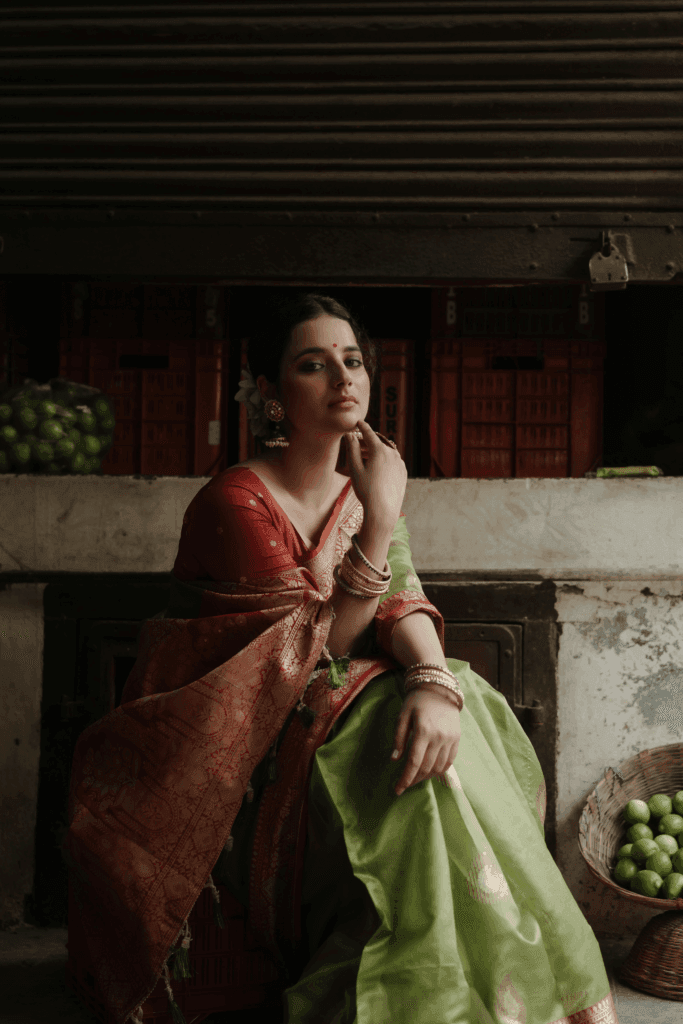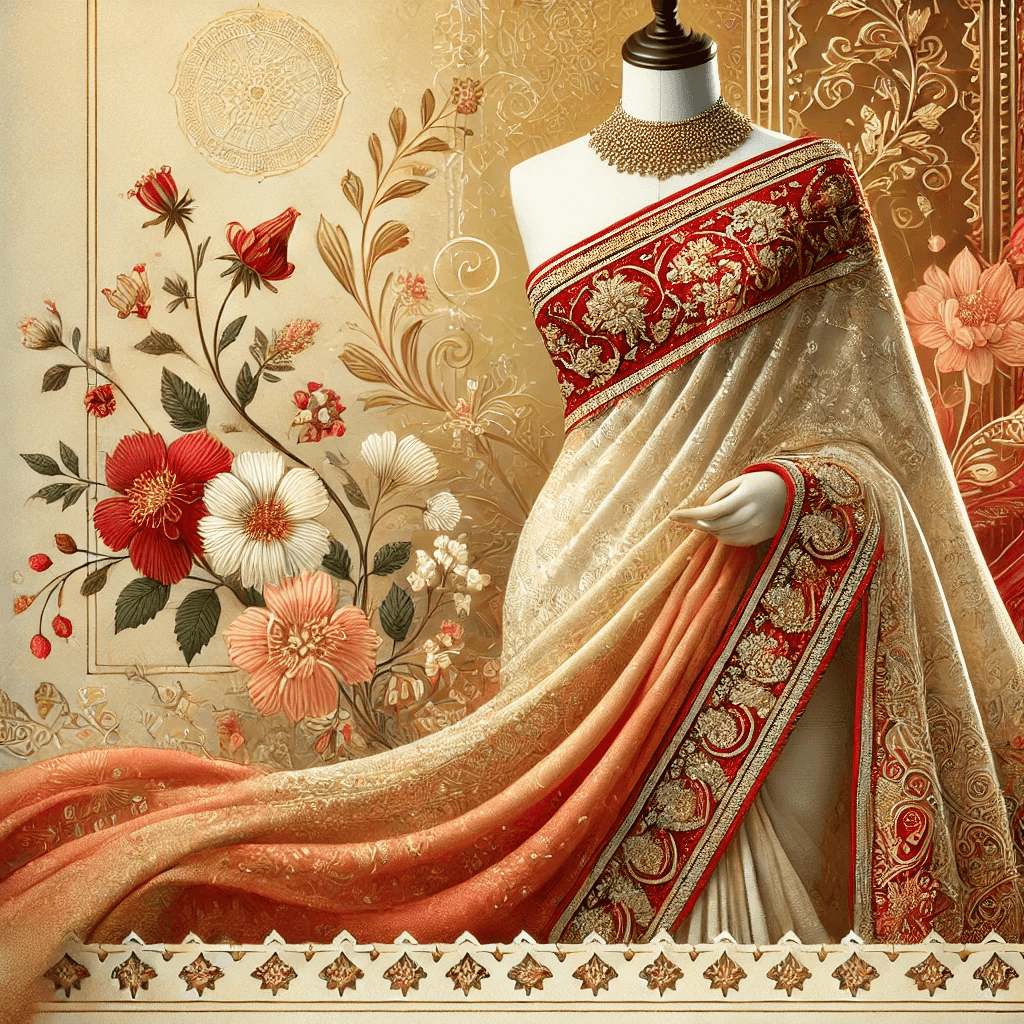
India is a treasure trove of crafts with varied handicrafts, textiles, embroidery styles and what not. Each art-form speaks of generations of mastery, heritage and legendary fashion, something that’s rare to find elsewhere. Yes! that’s the beauty of this nation. Each region with it’s own identity, craft and creative language that the world today is still unravelling. Every state in India has its own iconic stictch and embroidery that reflects its culture, history, heriatge and geography.
Quite interestingly, embroideries aren’t just adornments but story tellers. The Indian craftsmen were skilled enough to know how to tell tales without speaking a word and that’s how embroidered masterpieces were created. Let’s take a peek into the rich saree embroidery styles of various states in India. Let’s get embroidery educated!
State-Wise Famous Saree Embroidery of India
This little guide will take you across India, state by state, exploring the most celebrated embroideries. Let’s dive in!
1. Gujarat: Mirror Work, Kutch Embroidery & Suf Bharat
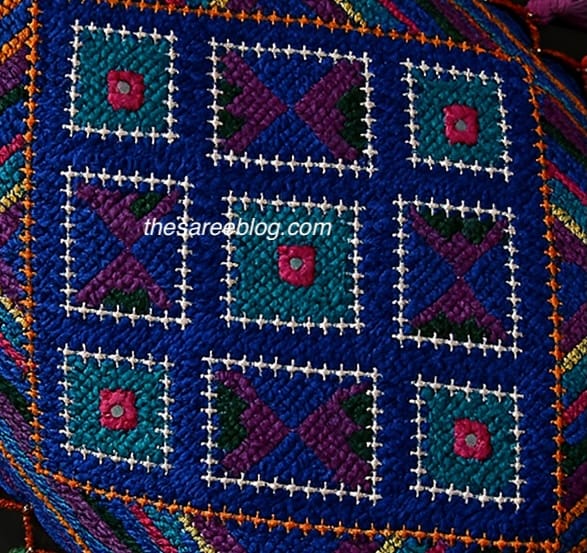
Gujarat is a treasure house of needlecraft, especially the vibrant Kutchi embroidery known for bold colours, dense threadwork, mirrors, and geometric motifs. Artisans from the Rabari, Ahir, and Mutwa communities have elevated this craft to global fame.
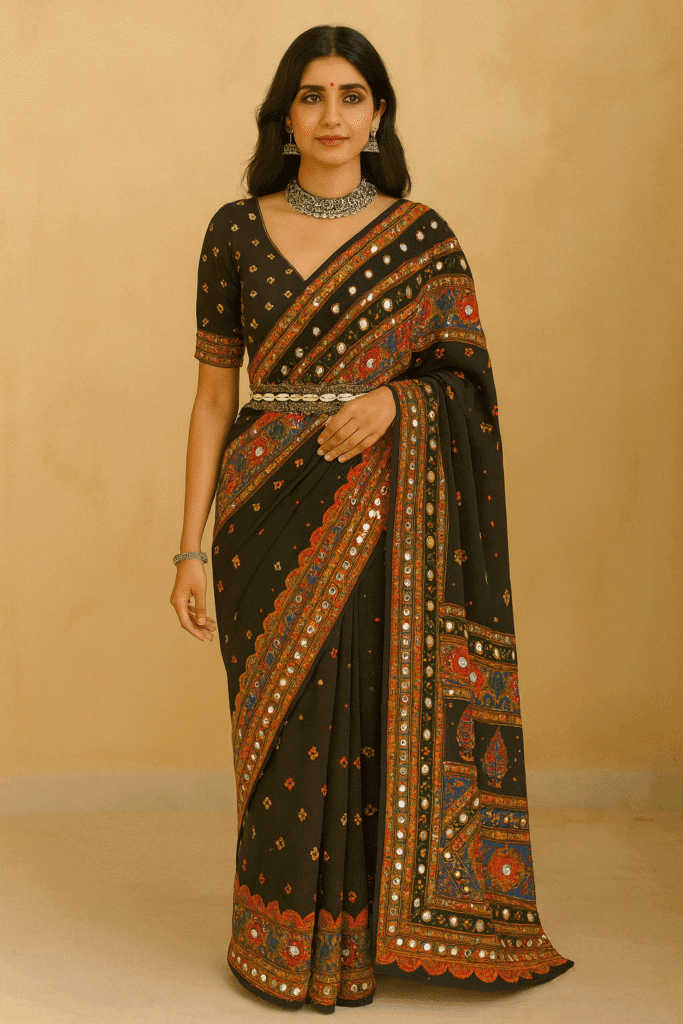
Features:
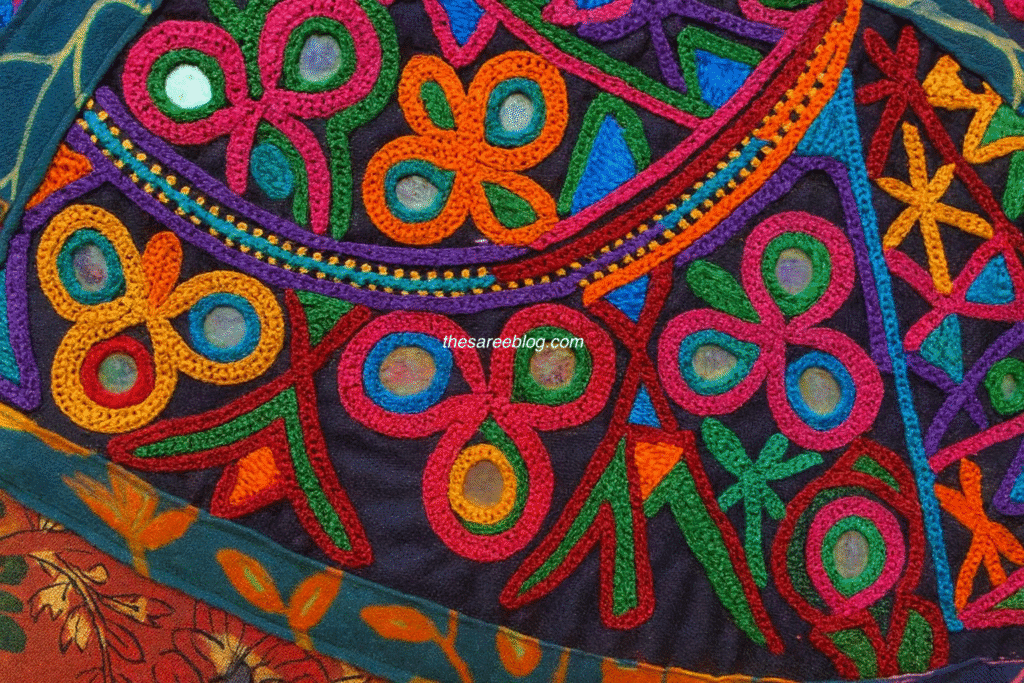
- Bright threads in red, orange, yellow
- Mirrors (abhla) in circular or square shapes
- Geometric motifs, animals, and floral patterns
- Dense filling stitches
Other regional styles:
- Suf embroidery: Intricate geometric patterns stitched using a counting technique.
- Rabari embroidery: Heavy mirrors, bold motifs, strong tribal aesthetic.
Where it’s seen: Sarees, blouses, dupattas, jackets, bags, and home décor.
2. Rajasthan: Gota Patti, Zari, and Heavily Embellished Saree Embroidery
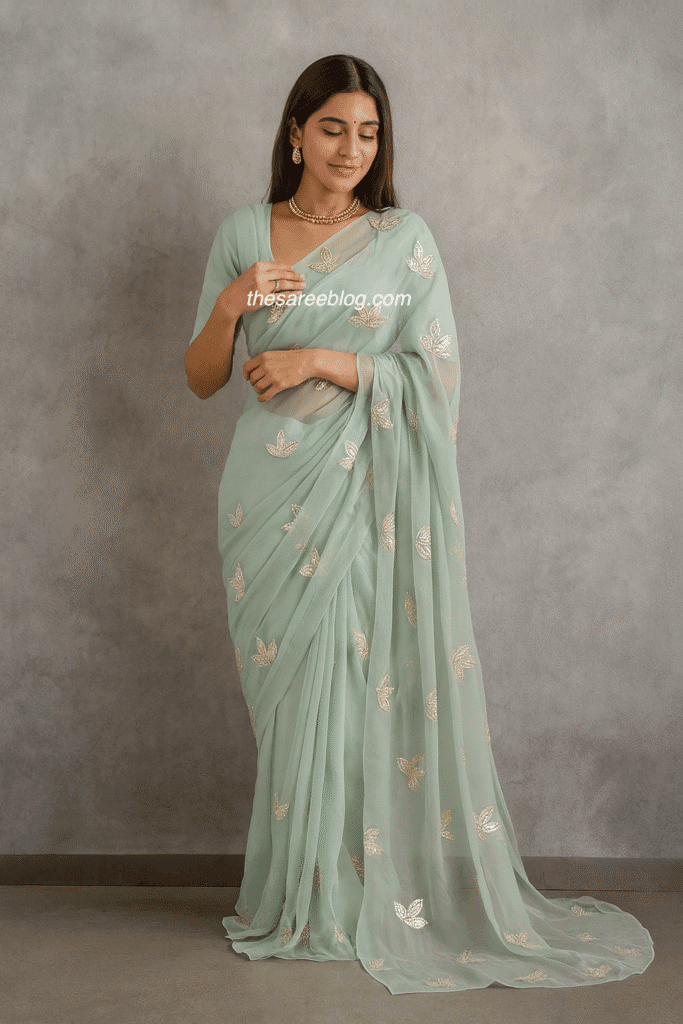
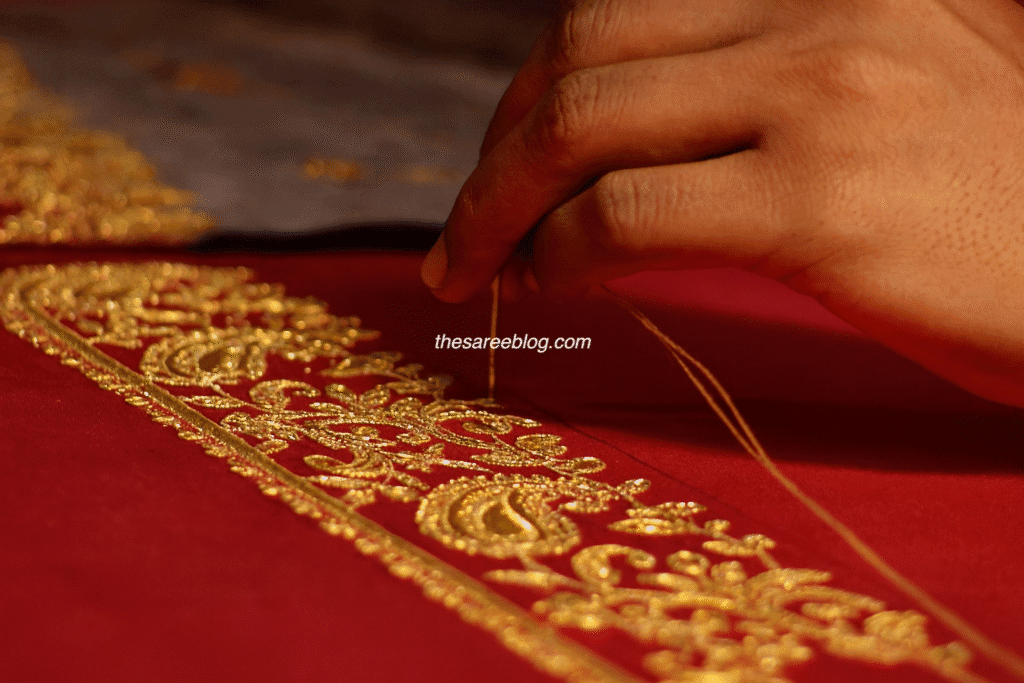
Rajasthan is synonymous with Gota Patti embroidery, a festive favourite. Thin metallic ribbons (gota) are folded into shapes—flowers, leaves, and paisleys—and hand-appliquéd onto fabrics.
Features:
- Gold and silver ribbons
- Floral and paisley motifs
- Light in weight yet festive in appearance
- Works beautifully on georgette, chiffon, organza, silk
Other embroideries:
- Zari and zardozi in Jaipur
- Danka work in Udaipur
- Leheriya + Gota fusion for modern festive looks
Where it’s seen: Wedding sarees, lehengas, dupattas, kurta sets.
3. Punjab: Phulkari & Bagh Work
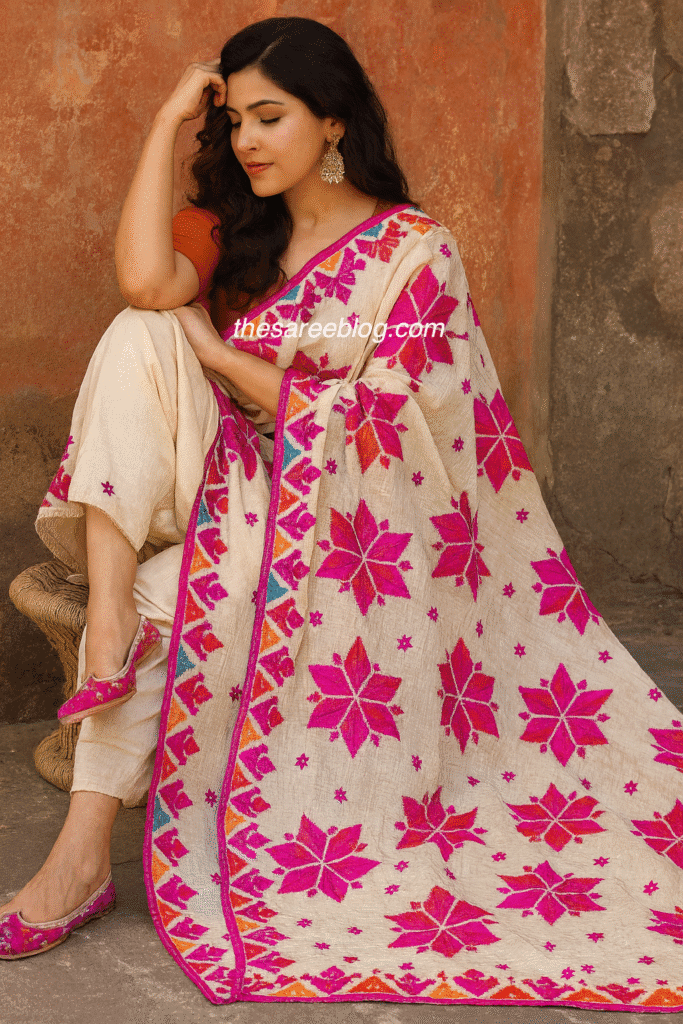
Punjab’s iconic Phulkari celebrates flowers (“phul”) embroidered across shawls, odhnis, and suits. The technique uses long and short darn stitches worked from the reverse side.
Features:
- Bright colours—mustard, orange, fuchsia
- Geometric floral arrangements
- Heavy versions known as Bagh, where the base fabric is fully covered
- Symbol of blessings and celebration
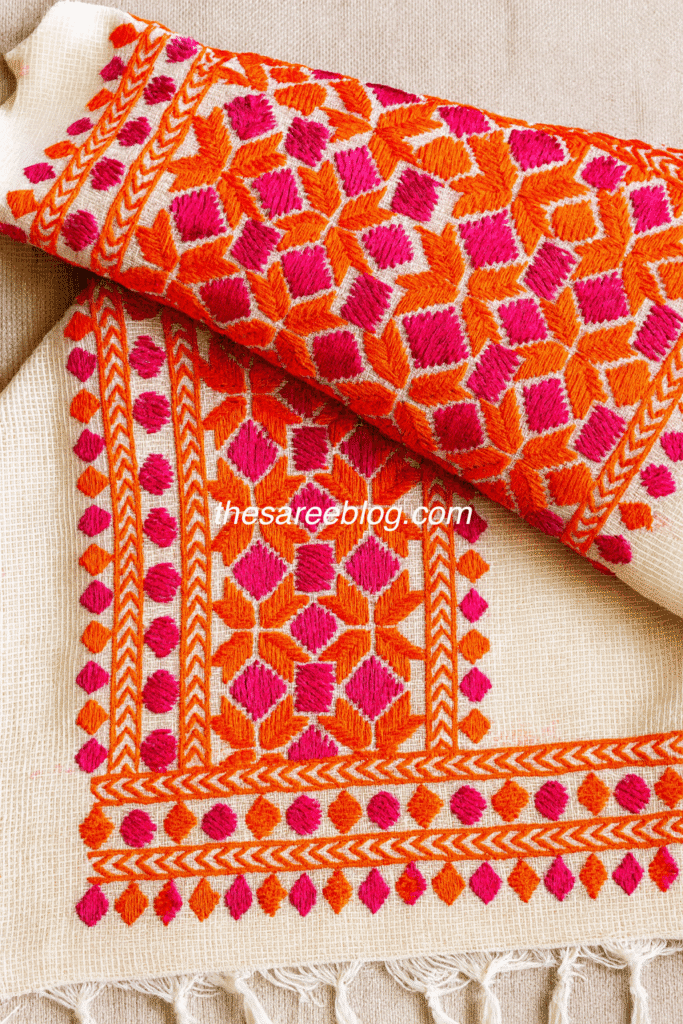
Where it’s seen: Dupattas, suits, jackets, festive sarees.
4. Uttar Pradesh: Chikankari of Lucknow
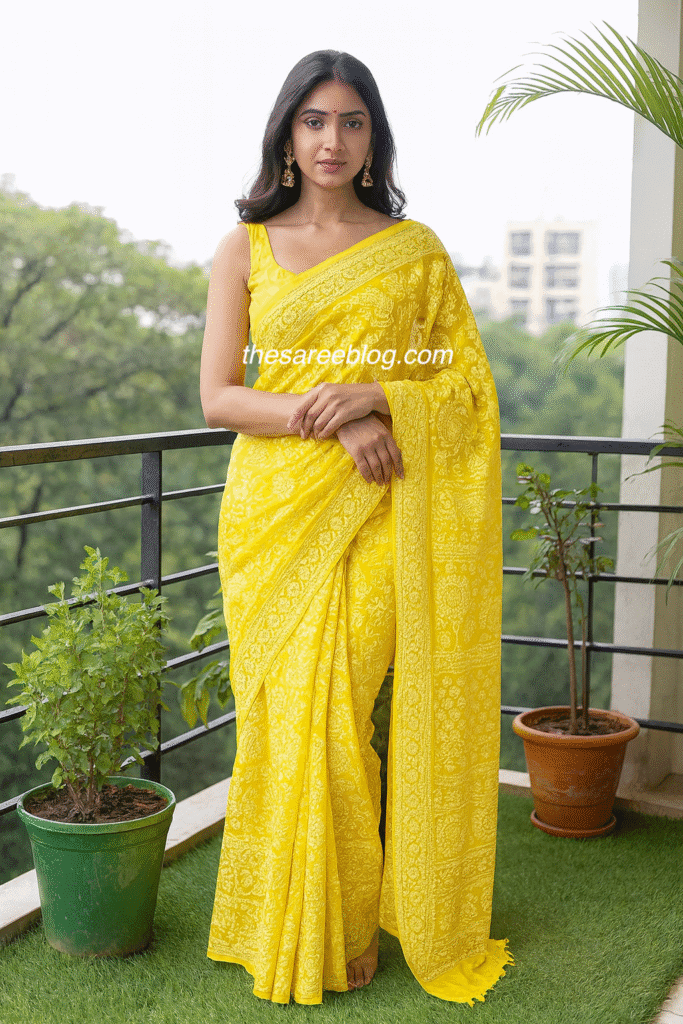
The ethereal Chikankari from Lucknow is arguably India’s most elegant embroidery. Inspired by Mughal aesthetics, this craft uses white thread on pastel or white fabric, though coloured variations are popular now.
Features:
- Delicate stitches such as bakhiya, murri, phanda, jaali
- Pastel colour palette
- Soft, breathable fabrics—mulmul, georgette, chiffon, organza
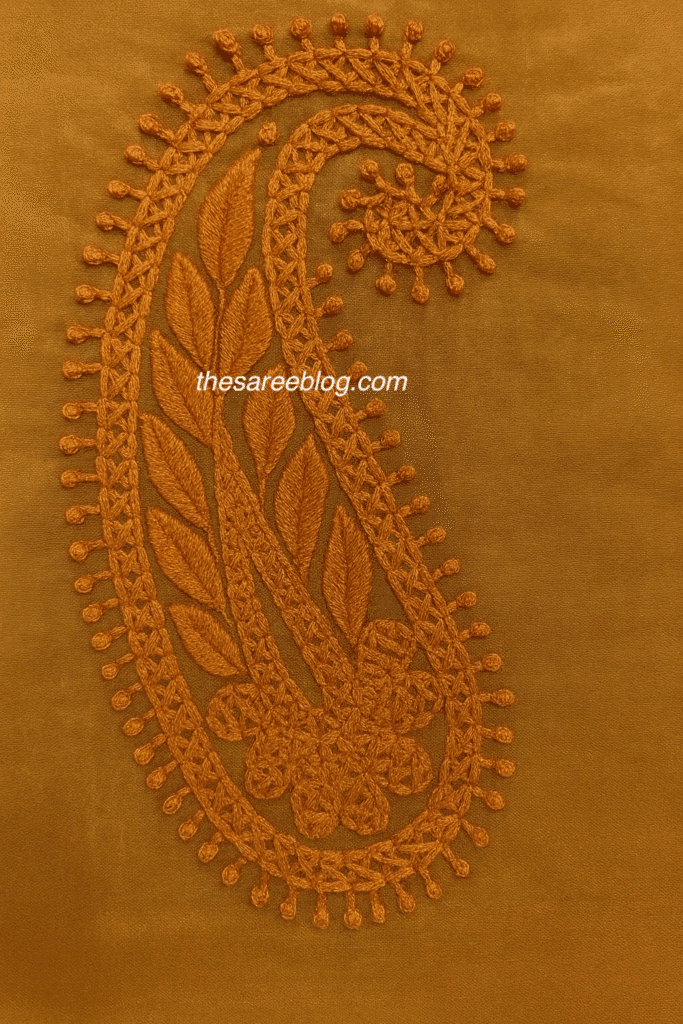
Where it’s seen: Sarees, kurtas, lehengas, dupattas, menswear.
5. West Bengal: Kantha Embroidery
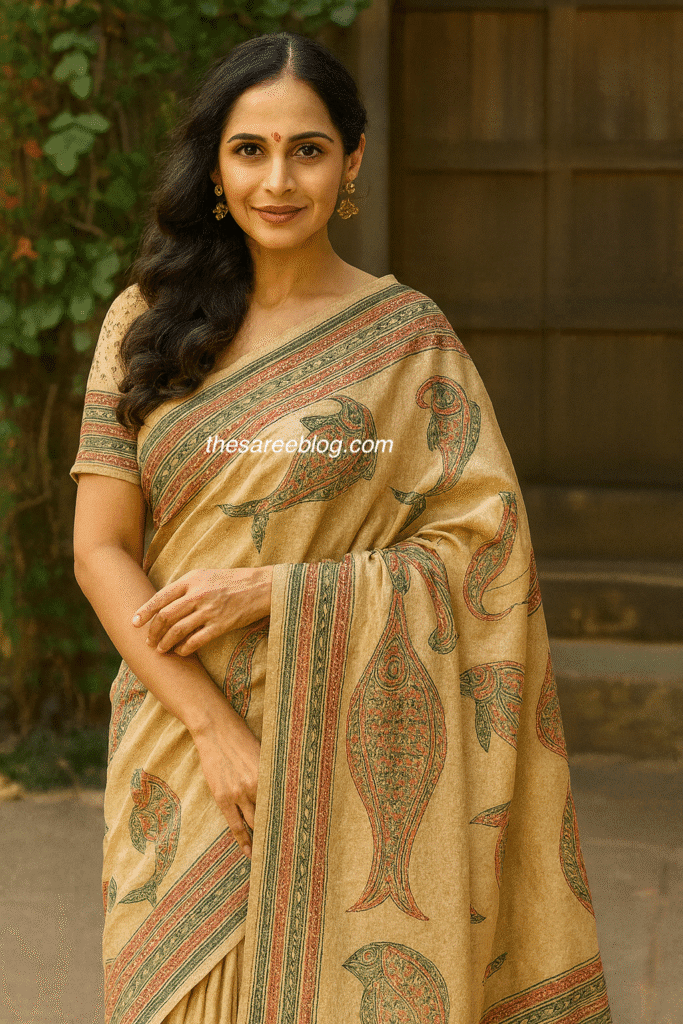
Born from the tradition of repurposing old cloth, Kantha embroidery is characterised by running stitches that form motifs from nature, folklore, and rural life.
Features:
- Simple running stitch used in creative ways
- Motifs: flora, fauna, village scenes
- Light to medium density work
- Usually done on tussar, cotton, silk

Where it’s seen: Sarees, dupattas, bedspreads, stoles, jackets.
6. Bihar: Sujani and Khatwa
Bihar offers two stunning but lesser-known embroideries: Sujani and Khatwa.
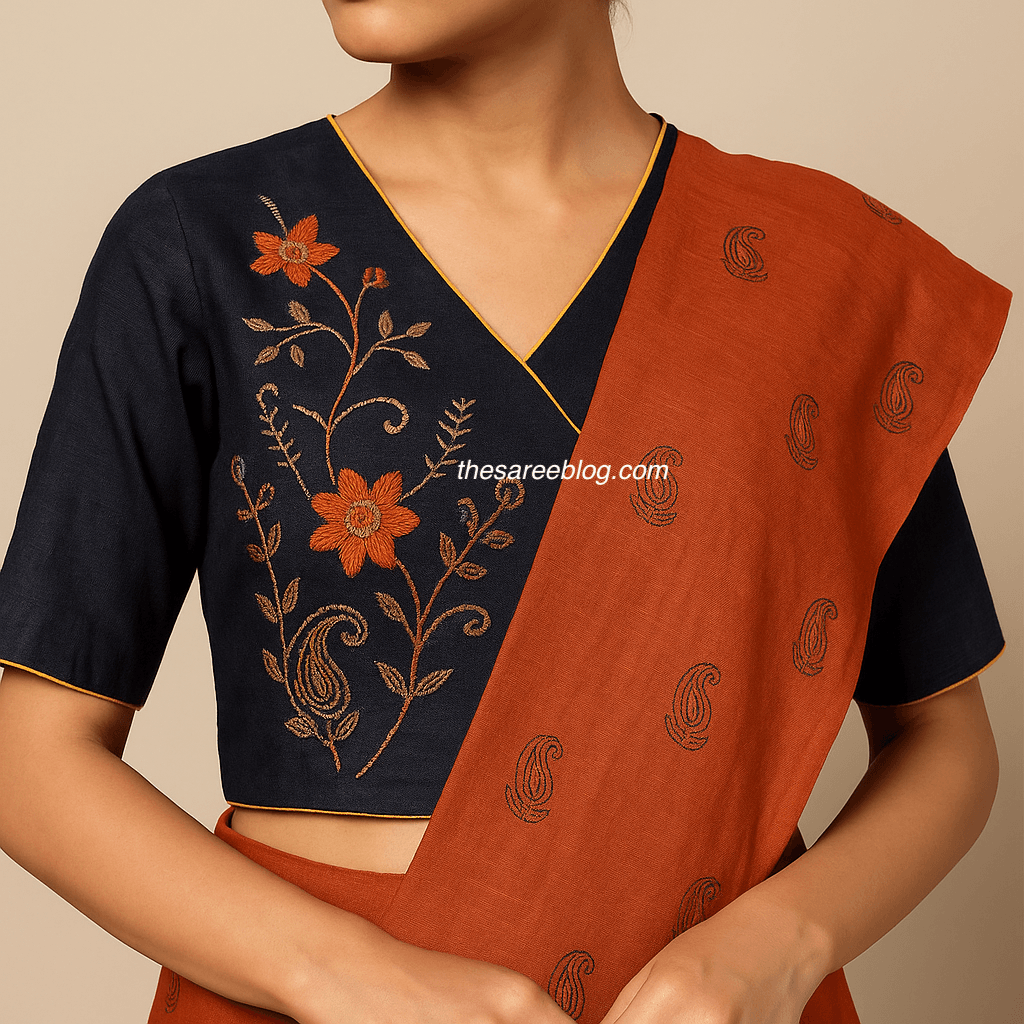
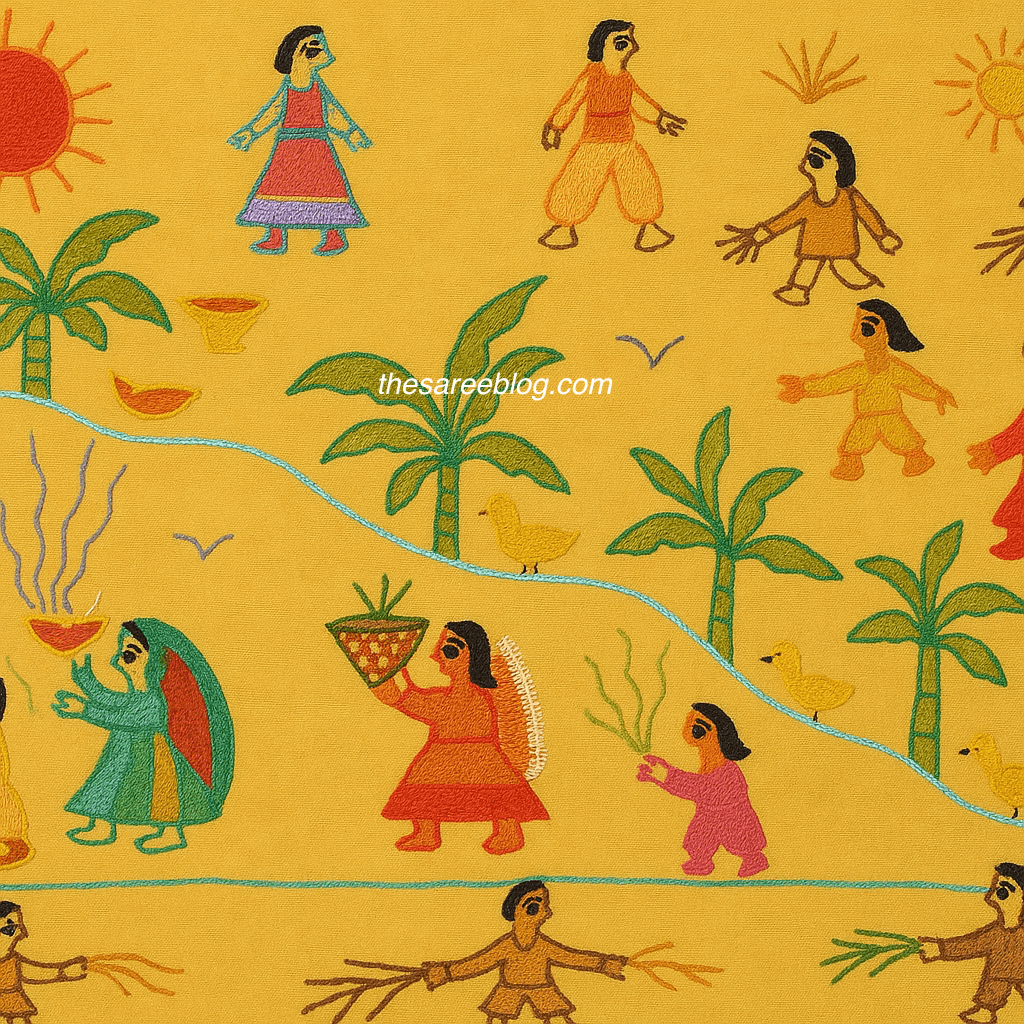
Sujani:
- Running stitches creating narrative artwork
- Traditionally made using leftover fabrics
- Themes: women’s lives, festivals, mythology
Khatwa:
- Appliqué-based embroidery using cut fabrics
- Used in quilt covers, garments, wall hangings
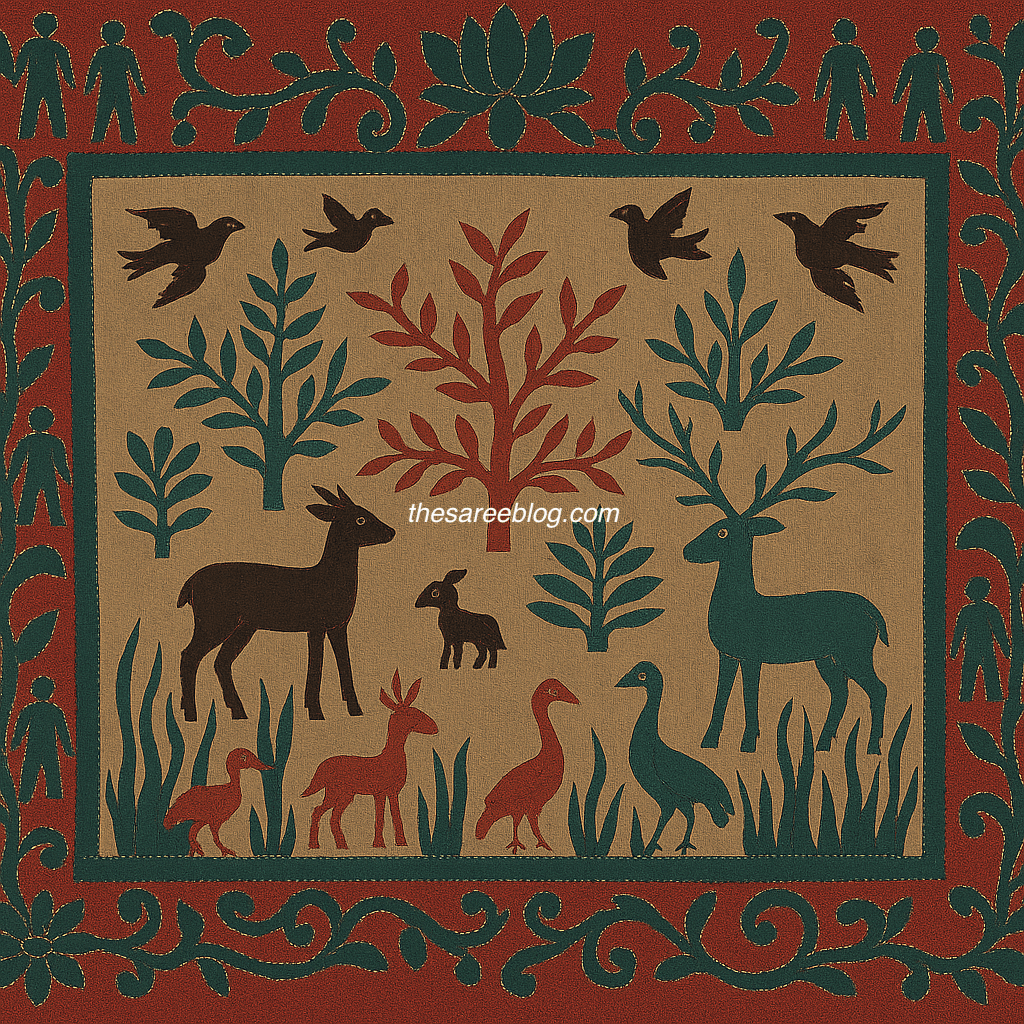
Where it’s seen: Stoles, bedcovers, dupattas, sarees, folk-art textiles.
7. Odisha: Gota, Appliqué, and Pipili Work
Odisha’s famous Pipili appliqué work is vibrant, festive, and architecturally inspired. It is one of India’s oldest appliqué traditions.

Features:
- Bright colours—yellow, red, green
- Bold cutwork motifs: elephants, peacocks, flowers
- Heavy contrast outlines
- Historically used in temple décor
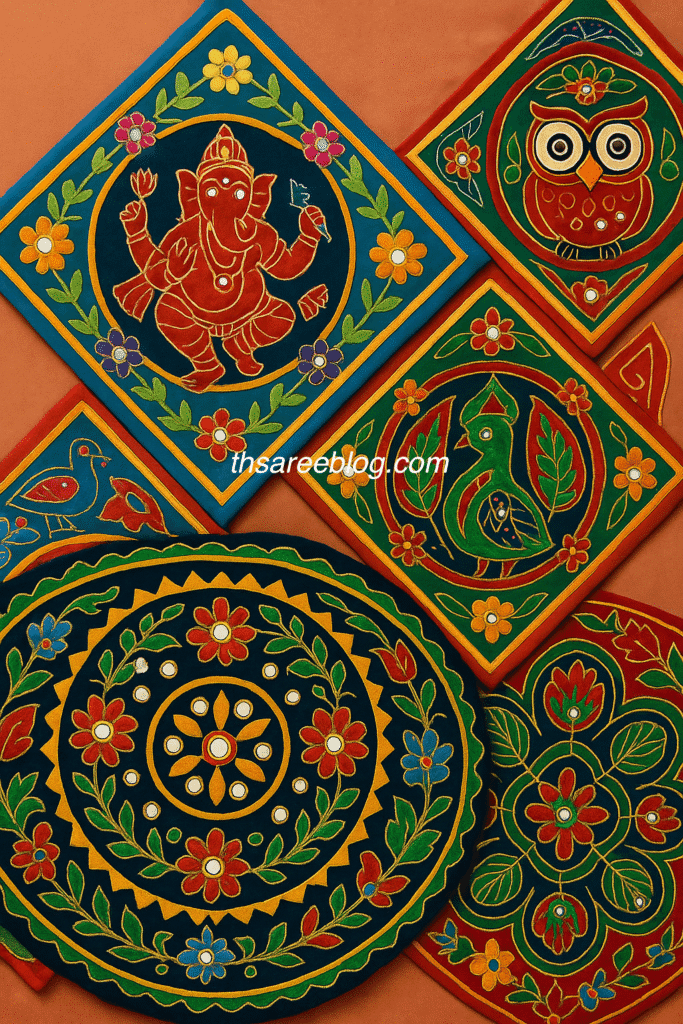
Where it’s seen: Wall hangings, bags, umbrellas, dupattas, saree borders.
8. Karnataka: Kasuti Embroidery
A precise, mathematical embroidery from North Karnataka, Kasuti is worked using counting techniques to form symmetrical patterns inspired by temples and architecture.

Features:
- No knots; very fine stitches
- Motifs: chariots, temples, gopurams, tulsi plants
- Often done on Ilkal and cotton sarees
- Looks elegant and understated
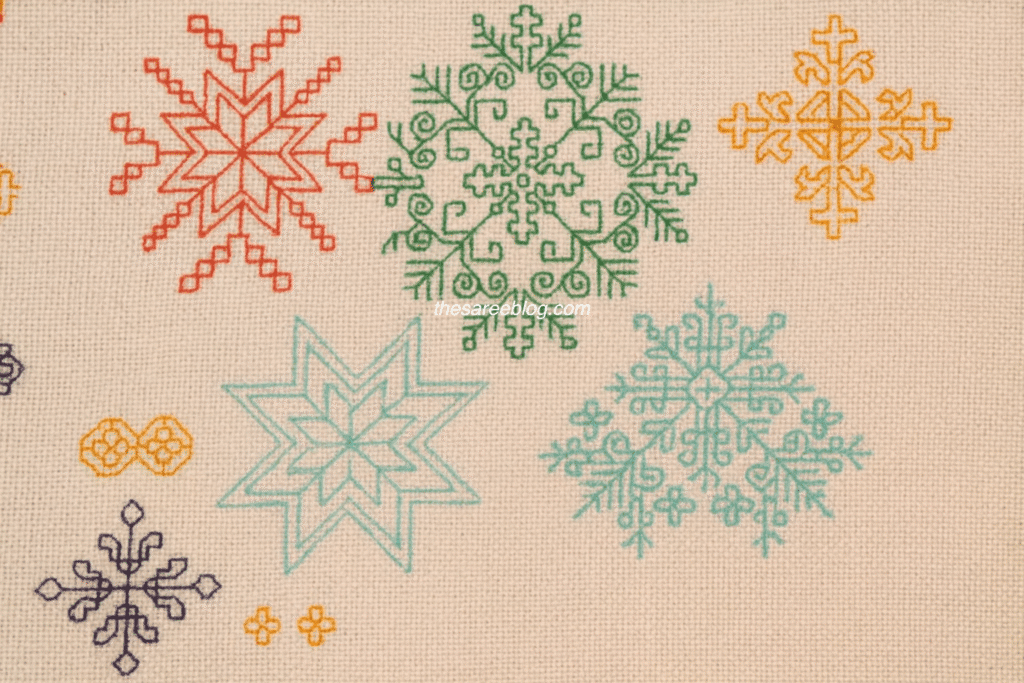
Where it’s seen: Traditional sarees, blouses, home décor linens.
9. Tamil Nadu: Toda, Athangudi & Tribal Needlecraft
Tamil Nadu’s Toda embroidery—created by the Toda tribal community of the Nilgiris—is bold and geometric.
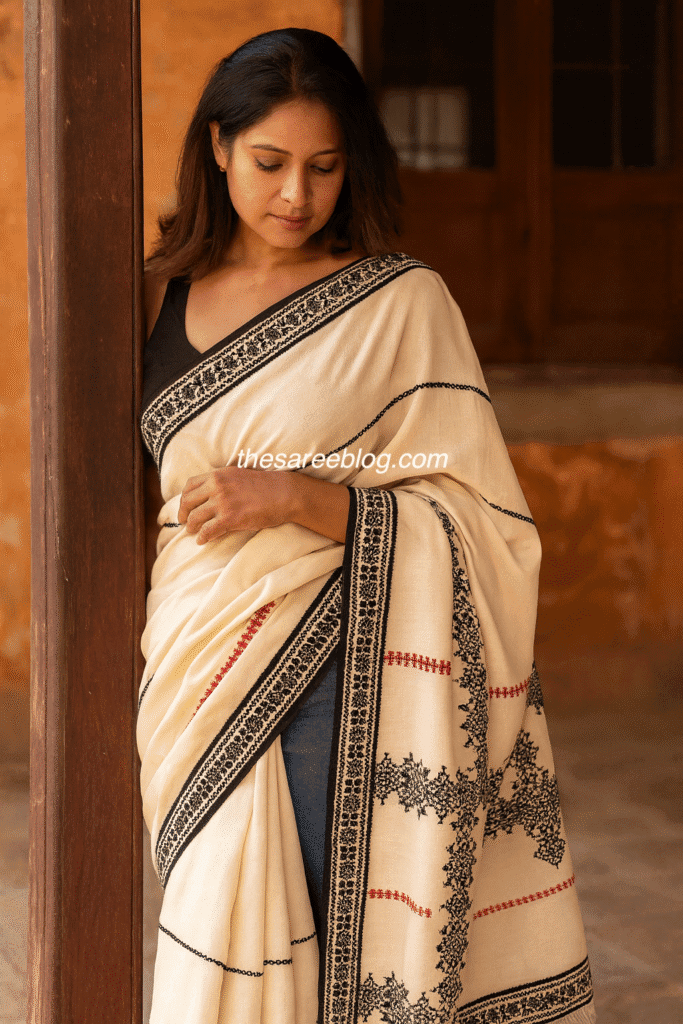
Features:
- Red and black wool threads on white handwoven cloth
- Looks like cross-stitch but with a unique reverse technique
- Symmetrical, symbolic patterns
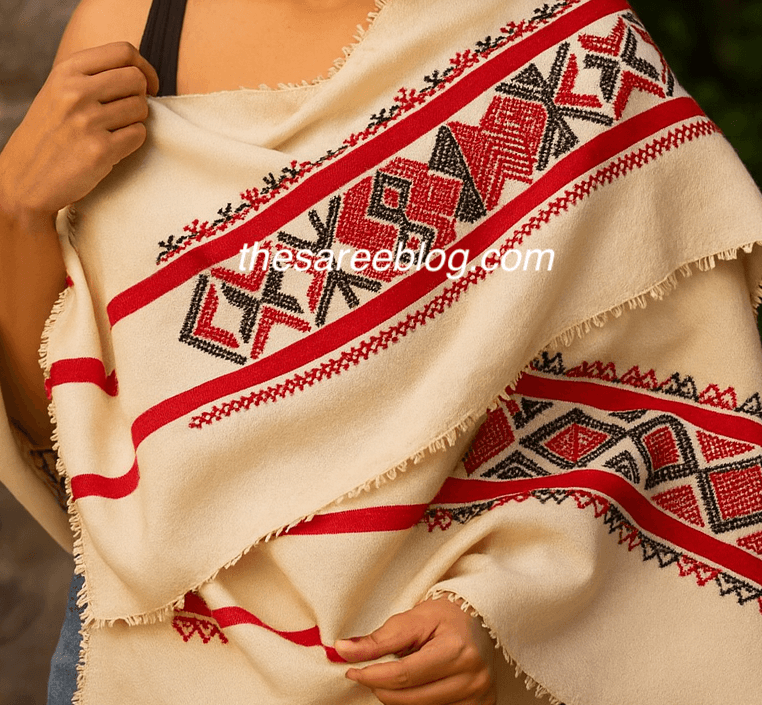
Where it’s seen: Shawls (pukhoor), dupattas, blouses, stoles.
10. Andhra Pradesh & Telangana: Banjara & Aari Work
The Banjara embroidery of Telangana and Andhra Pradesh is bold, colourful, and full of mirrors, shells, and appliqué.
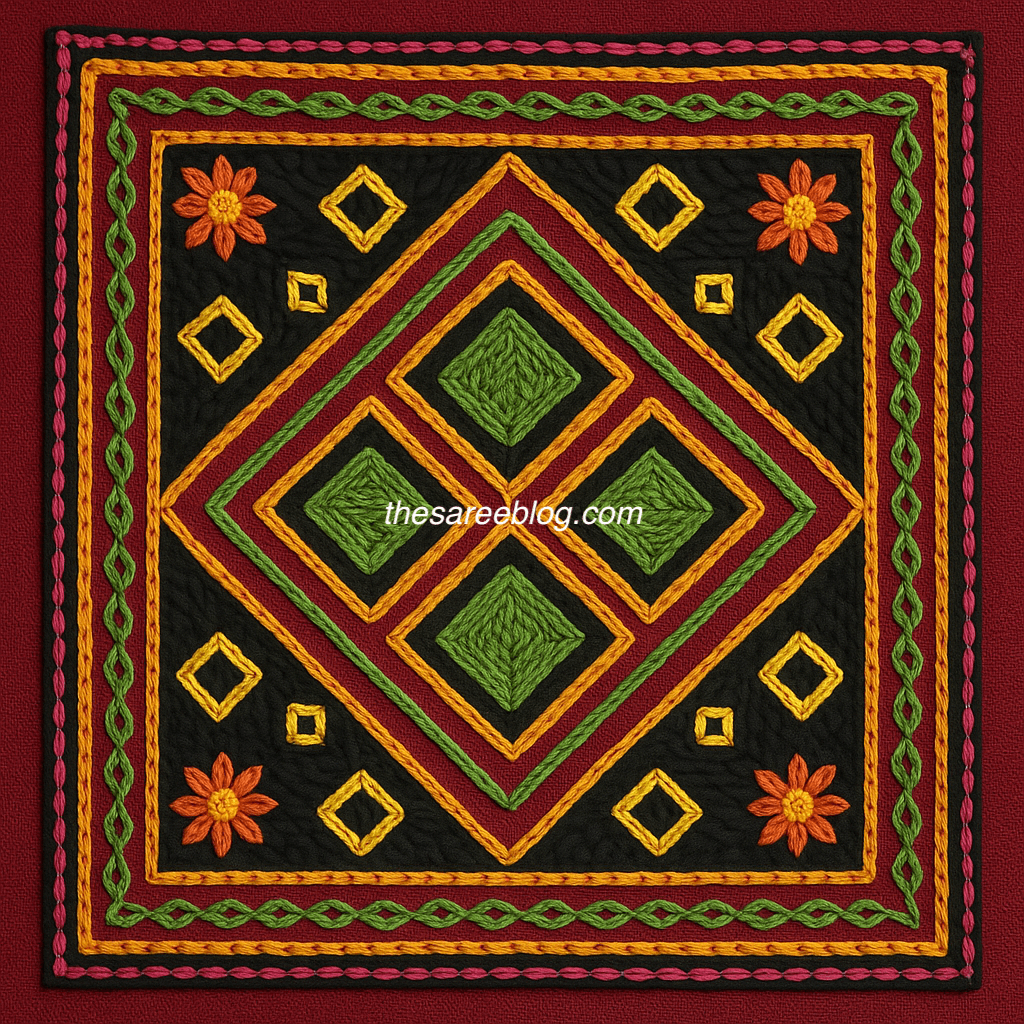
Features:
- Dense patterns
- Mirrors and shells
- Geometric grid-like layouts
- Strong tribal aesthetic
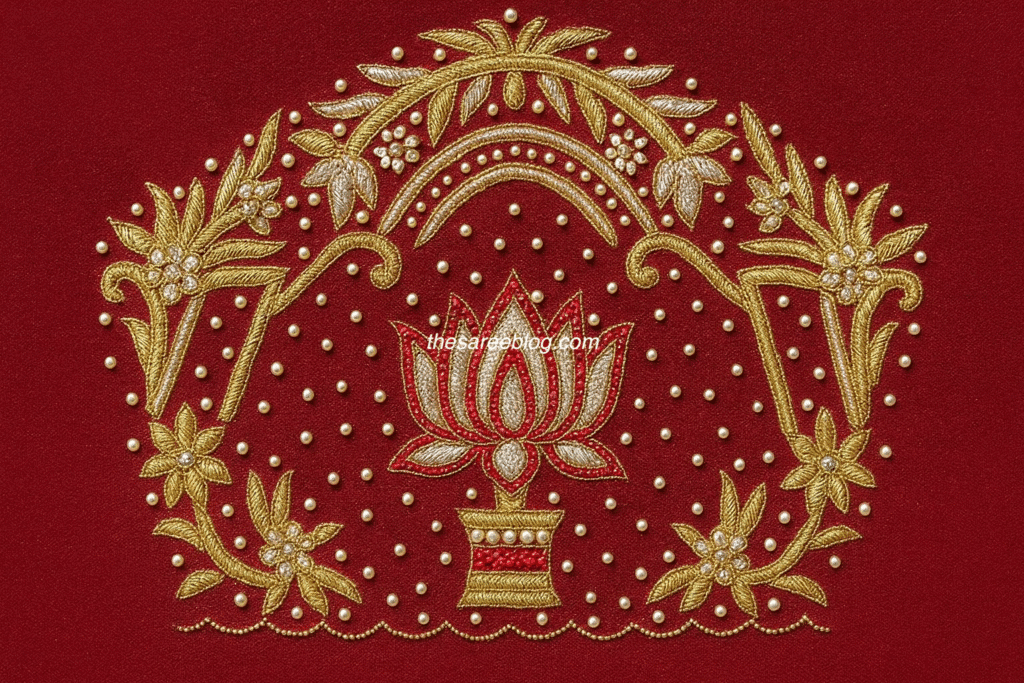
Aari work, popular in Hyderabad, adds fine, detailed embellishment using a hooked needle—ideal for couture bridalwear.
Where it’s seen: Dupattas, blouses, lehengas, bags.
11. Maharashtra: Paithani Embroidery & Himroo Weaves

While Maharashtra is known primarily for its Paithani weave, the paithani hand embroidery on blouses and borders is noteworthy.
Features:
- Peacock, lotus, vine motifs
- Gold thread usage
- Intricate resham work on silk
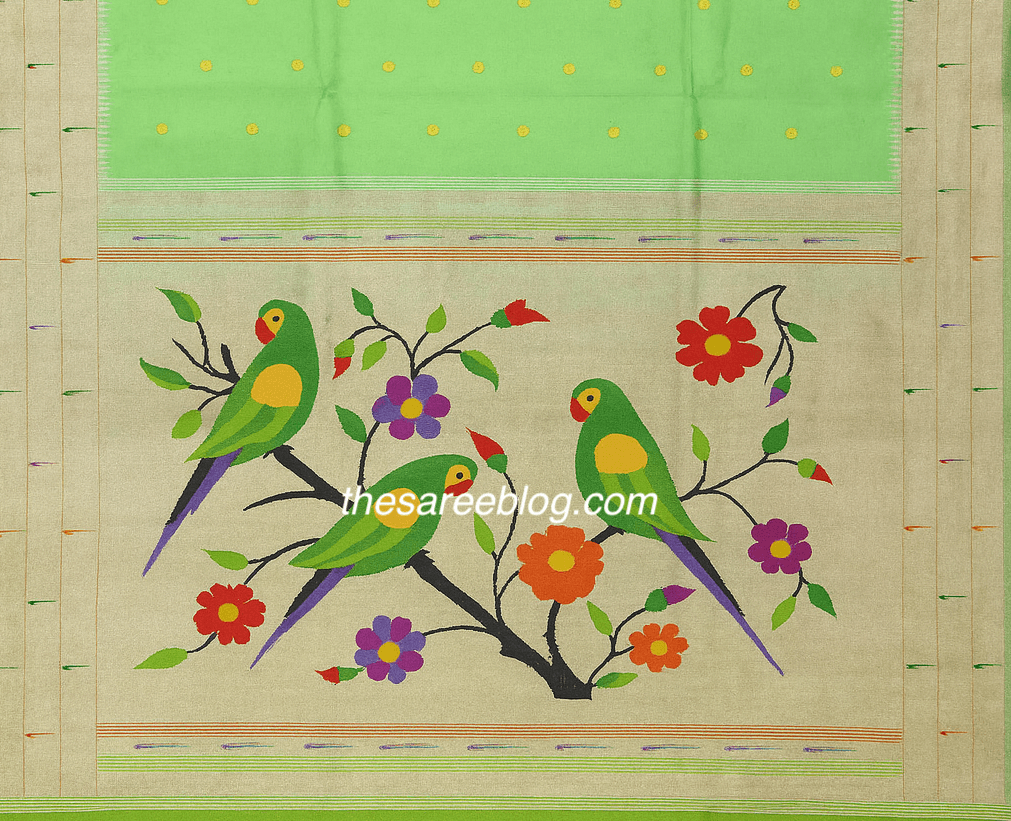
Where it’s seen: Wedding sarees, festive tailoring, designer blouses.
12. Goa: Kunbi & Catholic Chain-Stitch Embroidery
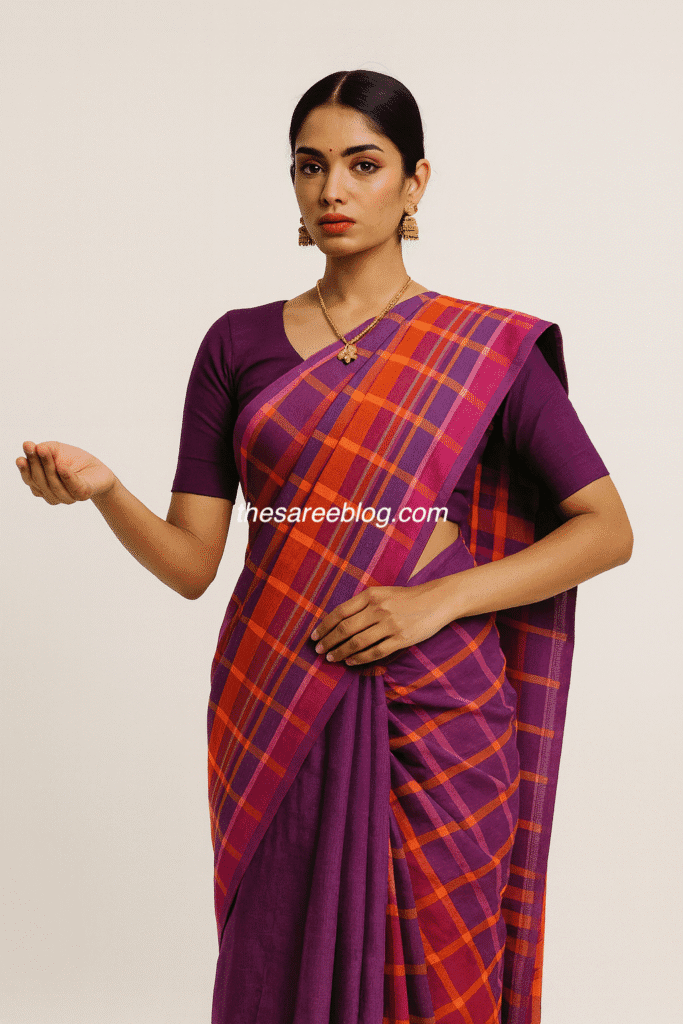
Goa’s traditional Kunbi textiles sometimes feature basic tribal embroidery, while Catholic communities have developed a delicate chain-stitch tradition used in home linens and church garments.

Features:
- Simple motifs
- Red and white base colours
- More folk-textile than couture
Where it’s seen: Stoles, table linens, beachwear fusion garments.
13. Himachal Pradesh: Chamba Rumal
The Chamba Rumal is a masterpiece of miniature-painting-style embroidery.
Features:
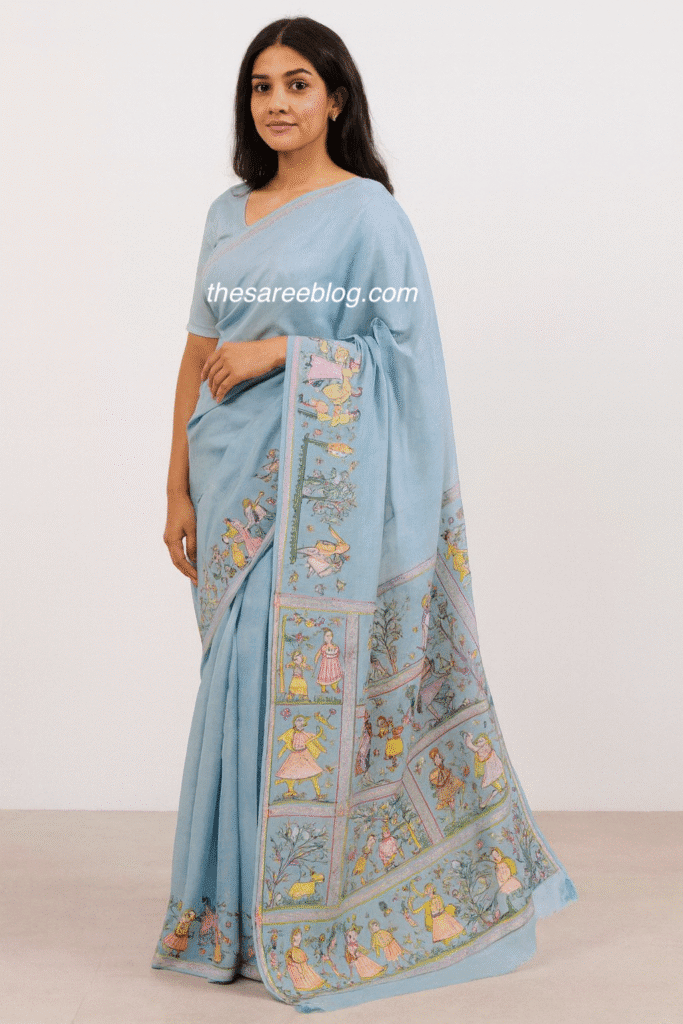
- Double-sided embroidery (same image on both sides!)
- Themes: Mahabharata, Ramayana, royal hunts
- Soft pastel shades
- Precise outlines
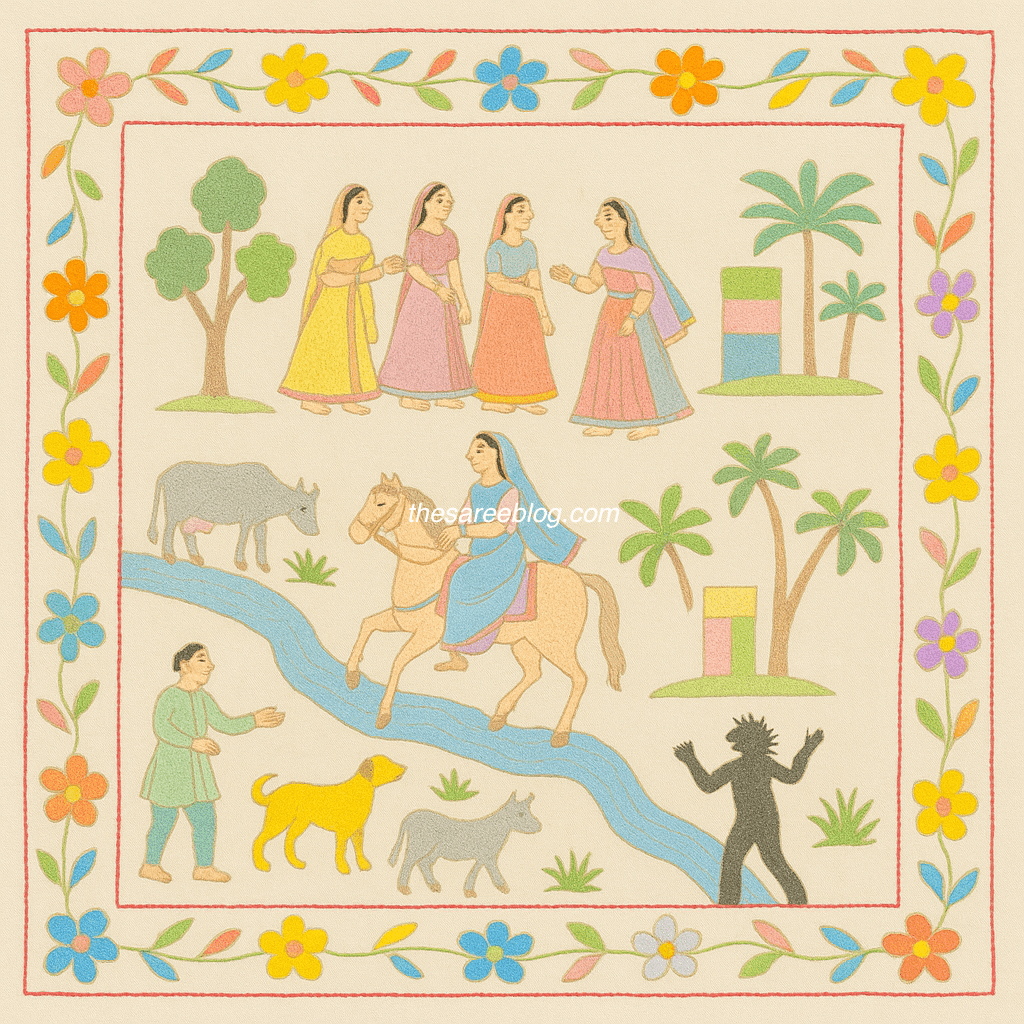
Where it’s seen: Wall art, dupattas, ceremonial textiles.
14. Jammu & Kashmir: Kashida, Sozni, & Aari
Kashmiri embroidery—Kashida and Sozni—is the epitome of refined elegance.
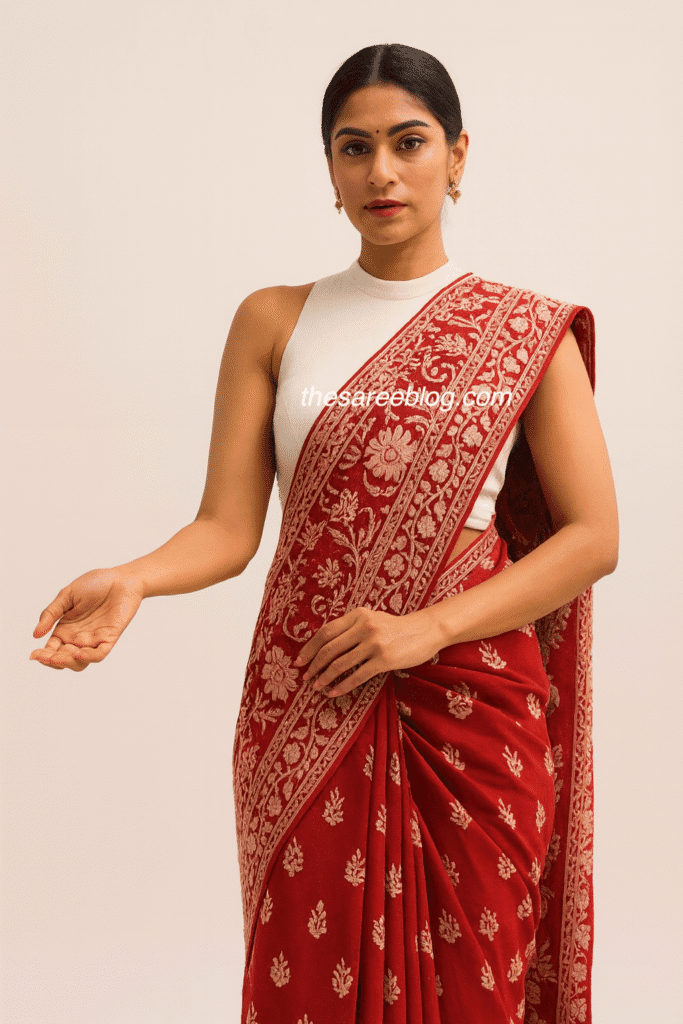
Features:
- Paisleys, chinar leaves, vines
- Soft wool or silk threads
- Fine outlines and shading
- Works beautifully on pashmina, wool, crepe, silk
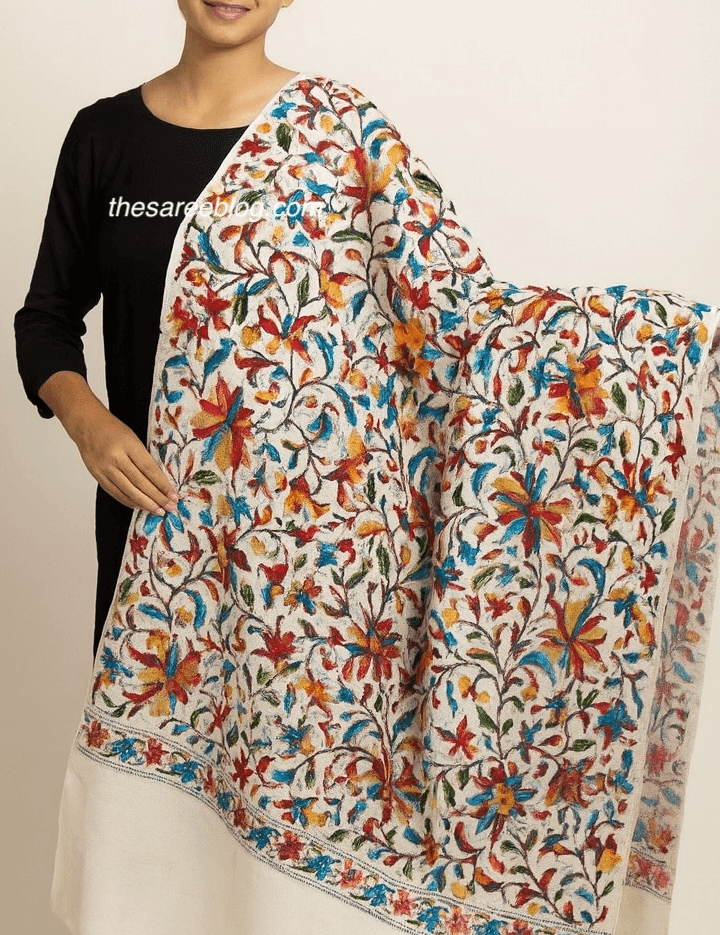
Where it’s seen: Shawls, sarees, jackets, suits, mufflers.
15. Assam: Muga Silk Embroidery & Assamese Motifs
Assam’s embroidery is closely linked to the Mekhela Chador. The motifs—kachari, kolka, tree of life, birds—are either woven or hand-embroidered.
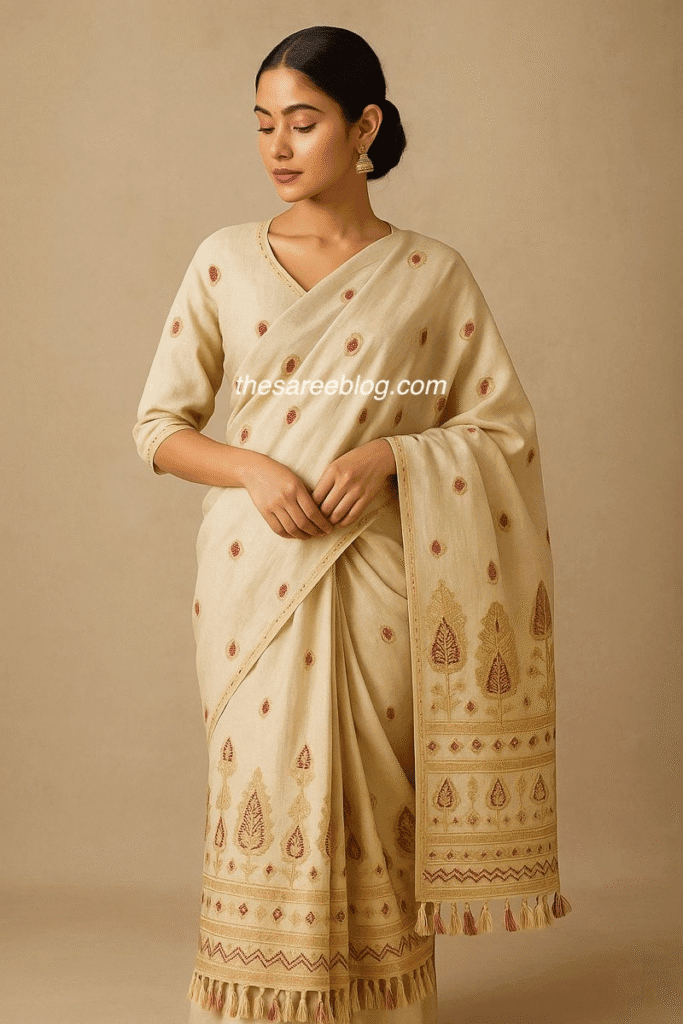
Features:
- Golden Muga silk base
- Red, black, green threadwork
- Tribal meets royal aesthetic

Where it’s seen: Mekhela chadors, sarees, stoles.
16. Meghalaya, Nagaland, Mizoram, Manipur: Tribal Embroidery & Identity Weaves
While weaving is more dominant in the North-East, each state preserves unique embroideries:
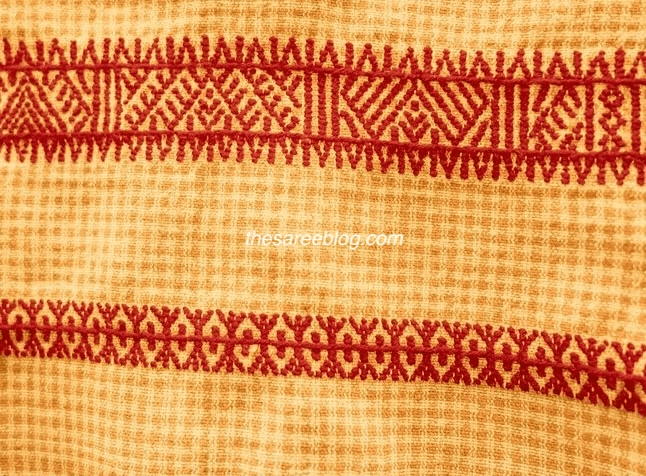
Nagaland:
- Bold geometric forms
- Morung (youth dormitory) symbols
- Used on warrior shawls
Manipur:
- Fine needlework on wedding shawls
- Mythological motifs
Meghalaya & Mizoram:
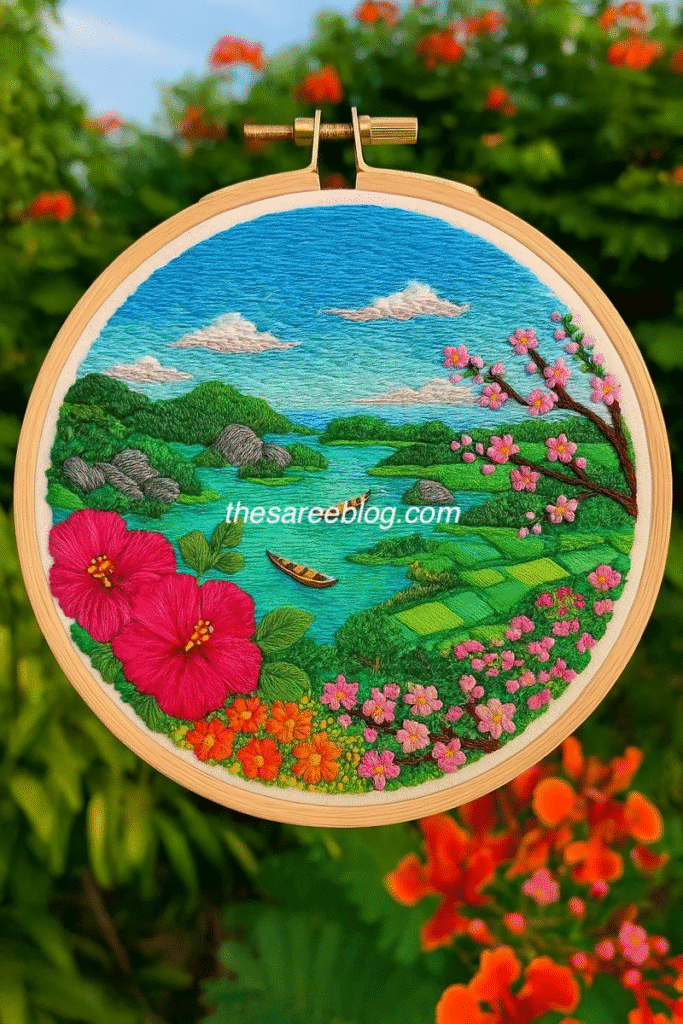
- Minimal embroidery, more motif-based cloth decoration
Where it’s seen: Shawls, wraps, tribal textiles, menswear scarves.
How to Shop Embroidered Beauty: A Quick Guide
Embroidery varies greatly in density, technique, and price. Use these tips to choose the right piece:
1. Check the Back of the Fabric
A neat backside usually indicates hand embroidery. A messy or glued backside often means machine work.
2. Understand Thread Types
- Resham → elegant, subtle
- Zari → festive, rich
- Cotton threads → earthy, artisanal
- Metallic gota → lightweight festive shine
Choose based on the occasion.
3. Evaluate Fabric–Embroidery Compatibility
Heavy embroidery looks best on silk, velvet, raw silk.
Light embroidery suits chiffon, organza, mulmul, cotton.
4. Know the Price Logic
- More time = higher price
- More motifs = higher price
- Handwork > machine embroidery
If something looks very intricate but is extremely cheap, it is likely machine-made.
5. For Sarees: Keep the Palla & Border in Mind
Some embroideries look best concentrated on borders (Kasuti, Kantha), while others shine on pallus (Phulkari, Chikankari, Zardozi).
6. For Blouses: Choose Contrasts
A Kasuti blouse on a plain Ilkal or Kanjeevaram
A gota-patti blouse on chiffon sarees
A Kutch work blouse for festive looks
A Kashmiri sozni blouse for elegance
Where to Shop (Trustworthy Sources)
- Craft clusters: Kutch, Lucknow, Jaipur, Kashmir, Bengal
- Government emporiums: CCIC, Weaver Service Centres
- Authentic online platforms: Gaatha, Okhai, Peepul Tree, Taneira, Jaypore, Craftsvilla, house of chikankari
- Designer stores: Abu Jani–Sandeep Khosla (gota), Anjul Bhandari (chikankari), Raw Mango (heritage crafts)
Final Words
India’s embroidered textiles are more than decorative—they are history, identity, devotion, and storytelling stitched into fabric. Whether you wear a Chikankari kurta, a Phulkari dupatta, a Sozni shawl, or a Kutch blouse, you carry a piece of India’s cultural soul.