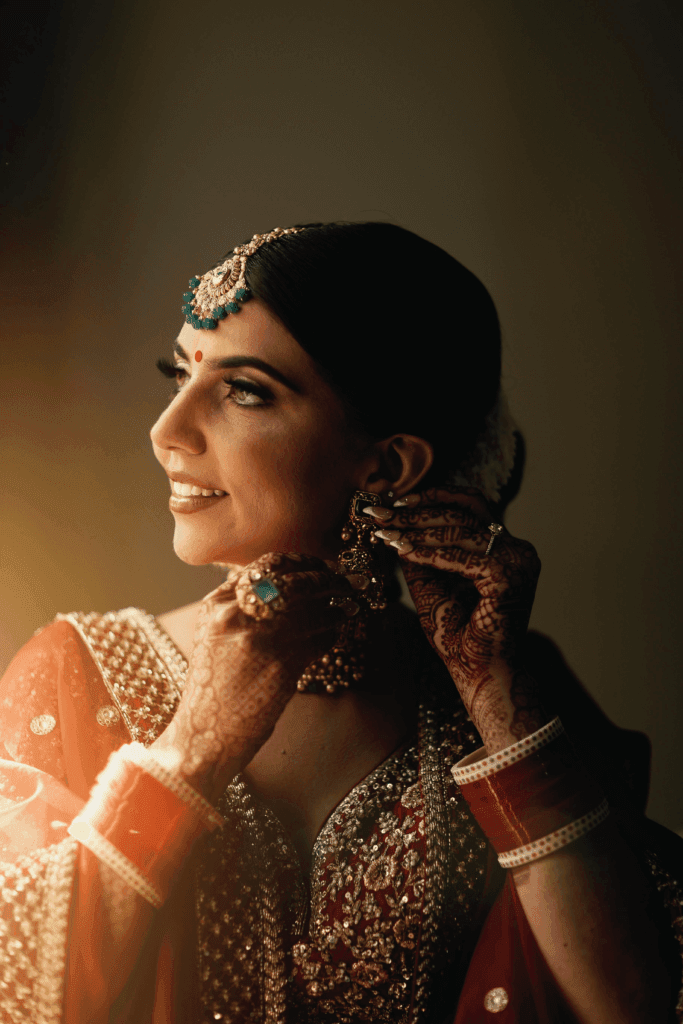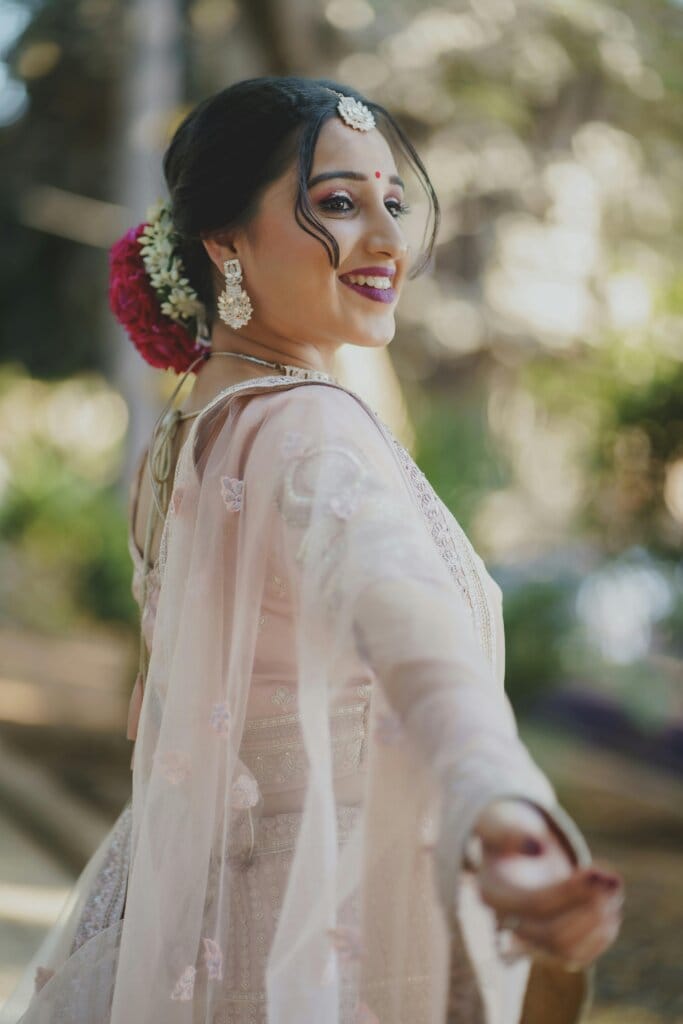
A lehenga may look like a simple circular skirt, but the way it falls is anything but simple. The volume, the movement, and even how flattering it feels on the body all come down to how it is made.At the centre of that construction is the lehenga kali, the stitched panels that form the skirt. The number of kalis decides how much the lehenga flares, how heavy it feels, and how comfortably it moves.Before choosing a lehenga for a wedding or a celebration, understanding its kalis can make all the difference between a beautiful outfit and the right one.
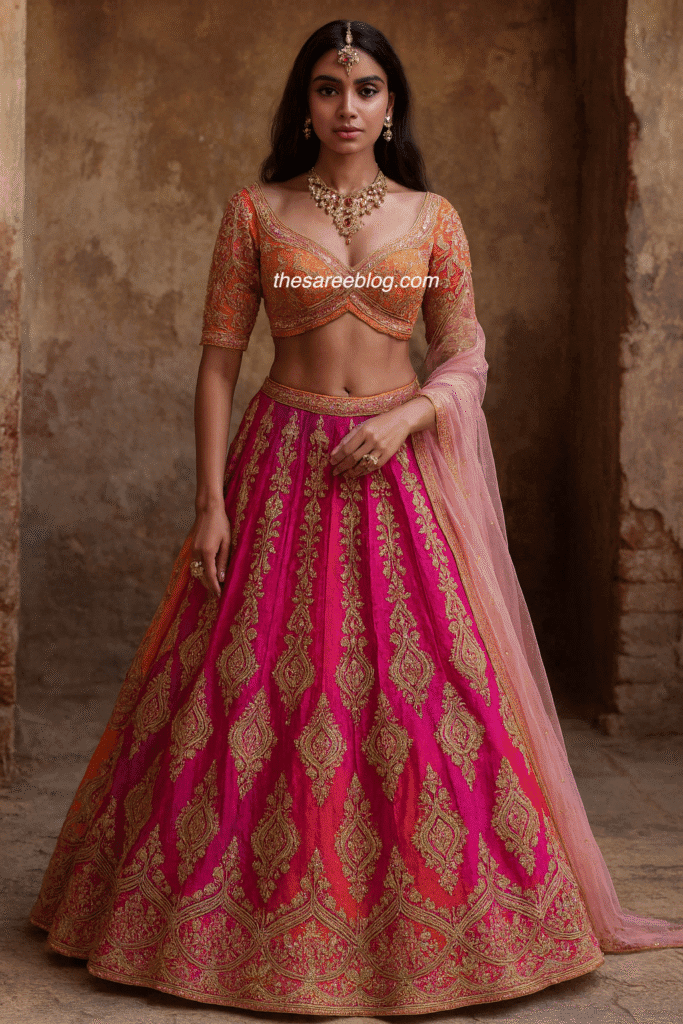
The number of kalis decides how a lehenga falls, flows, twirls, and flatters the body. Choosing the right kali count is not about trends alone. It is about body type, fabric, occasion, embroidery weight, and comfort.
This guide explains how to choose the right number of kalis for a lehenga, step by step.
Whether it is for a wedding, festival, engagement, or festive celebration, this article helps make an informed choice.
What Is a Kali in a Lehenga?
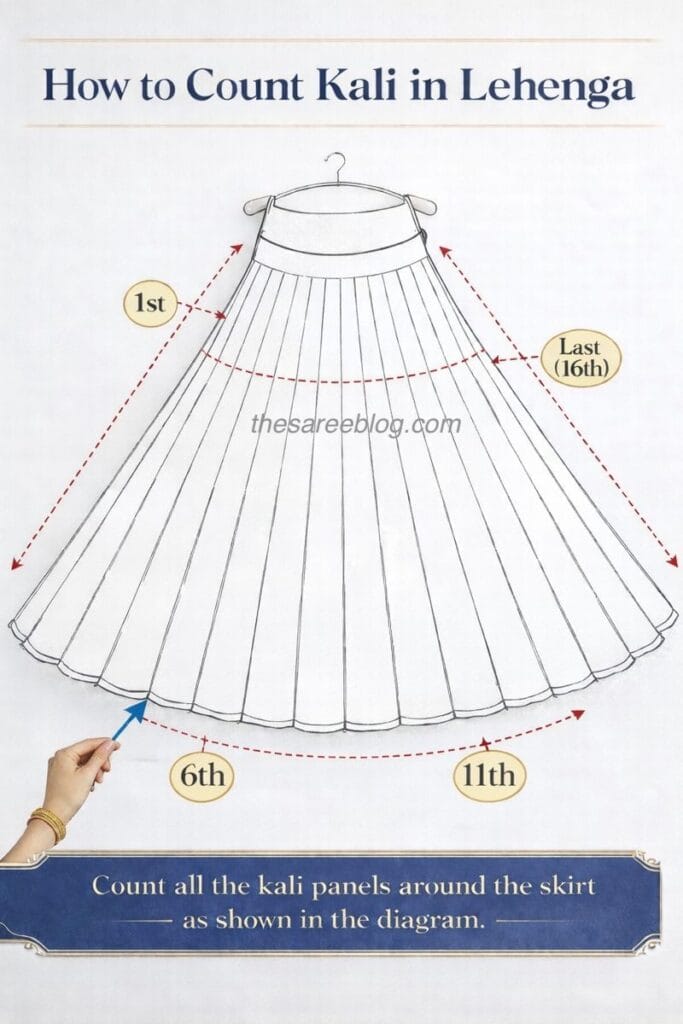
A kali is a vertical panel stitched together to form the lehenga skirt. Each panel adds width at the hem, creating volume and flare.
More kalis = more flare
Fewer kalis = structured and straight silhouette
Traditionally, kalis were hand-cut and hand-stitched. Today, they remain the backbone of well-constructed lehengas.
Why the Number of Kalis Matters
The kali count directly affects:
- Flare and twirl
- Visual balance of the body
- Movement and comfort
- Weight distribution
- How embroidery sits on the skirt
A lehenga with the wrong kali count can look bulky, stiff, or flat—even if the fabric is luxurious.
How to Calculate
- Measure Waist & Desired Flare: Take your waist measurement and decide how much flare (circumference) you want (e.g., 100 inches, 150 inches).
- Choose Kali Dimensions: Decide on the top width (e.g., 2-3 inches) and bottom width (e.g., 10-12 inches) for each kali.
- Calculate Number of Kalis:
- Total Bottom Flare Needed / Bottom Width of one Kali = Number of Kalis.
- Example: For a 30-inch waist needing 150 inches of flare, with each kali having a 10-inch bottom, you’d need 15 kalis (150 / 10 = 15).
- Add Seam Allowance: Add about 0.5 to 1 inch for stitching (seam allowance) to the top and bottom width of each kali before cutting.
Common Kali Counts in Lehengas
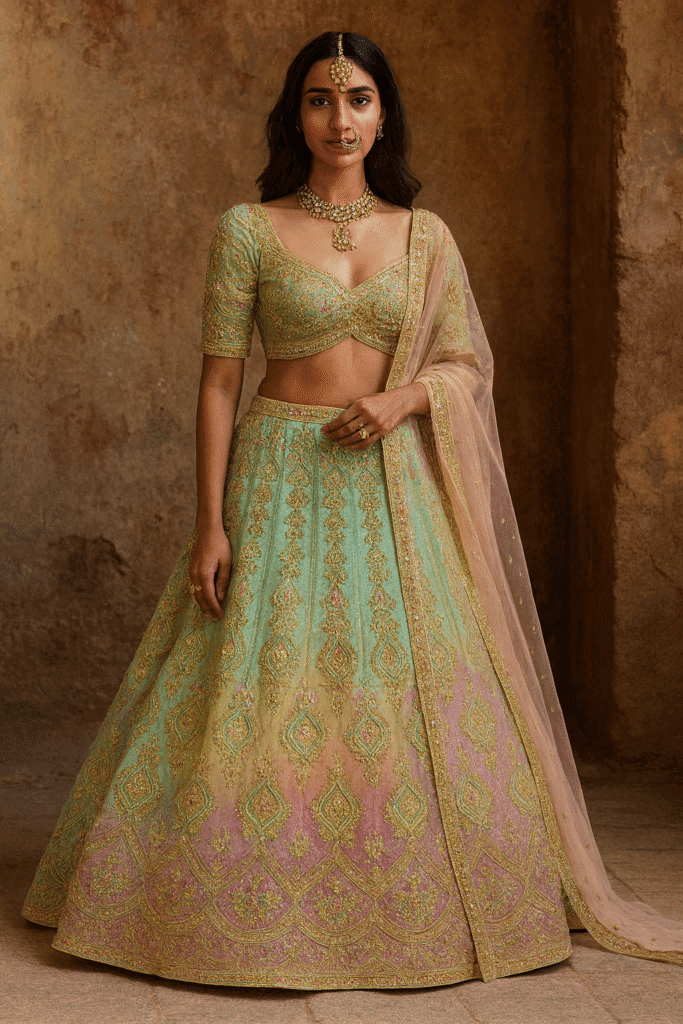
Here are the most commonly used kali counts and what they offer:
8–10 Lehenga Kali
- Minimal flare
- Straight fall
- Light and easy to carry
Best for:
- Petite frames
- Minimal embroidery
- Casual or festive wear
- Printed or cotton lehengas
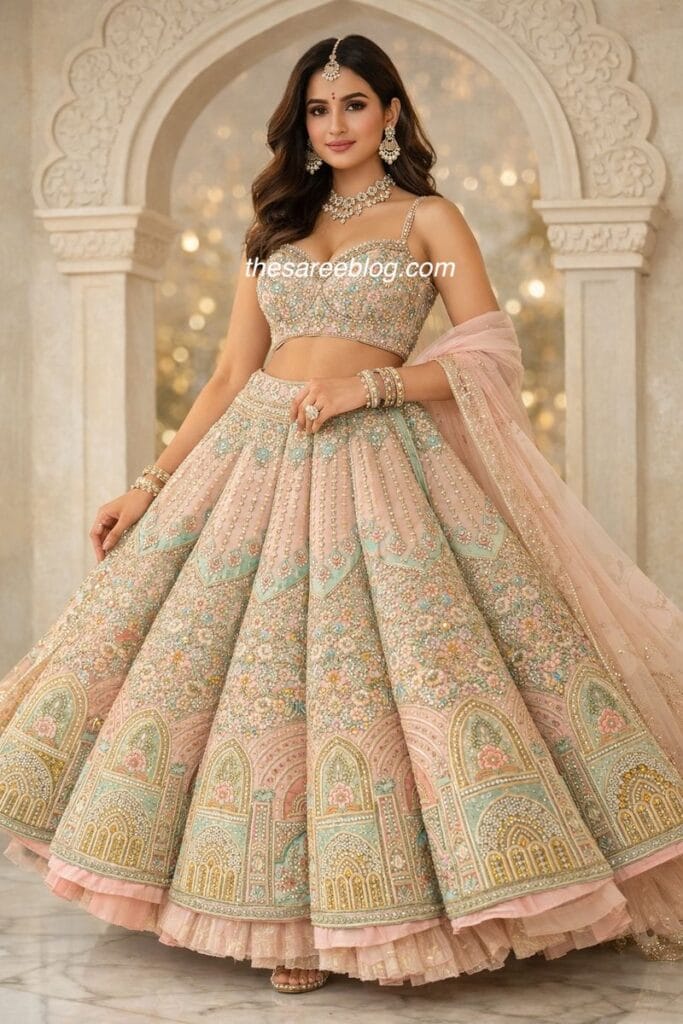
12–16 Lehenga Kali
- Moderate flare
- Balanced silhouette
- Comfortable movement
Best for:
- Engagements
- Mehendi and sangeet
- Light silk or georgette fabrics
- Small to medium embroidery
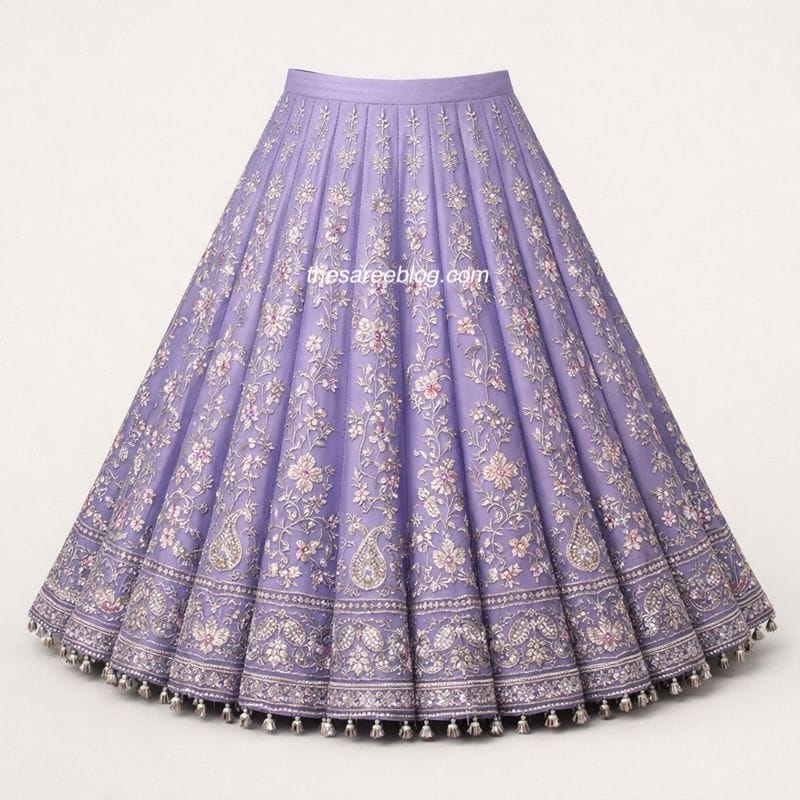
18–24 Lehenga Kali
- Rich traditional flare
- Graceful twirl
- Royal appearance
Best for:
- Weddings
- Heavy festive occasions
- Silk, velvet, and brocade fabrics
- Zardozi or resham embroidery
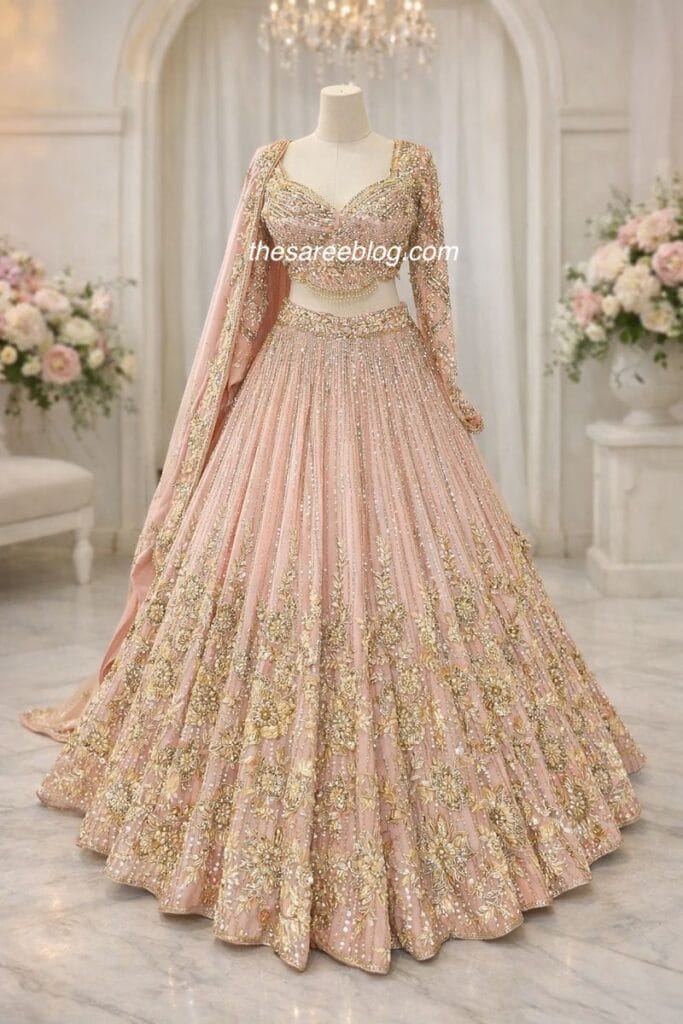
30–36 Lehenga Kali and Beyond
- Dramatic volume
- Statement bridal look
- Maximum movement
Best for:
- Bridal lehengas
- Photoshoots
- Luxury couture designs
- Lightweight fabrics with heavy embellishment
How Body Type Influences Lehenga Kali Selection
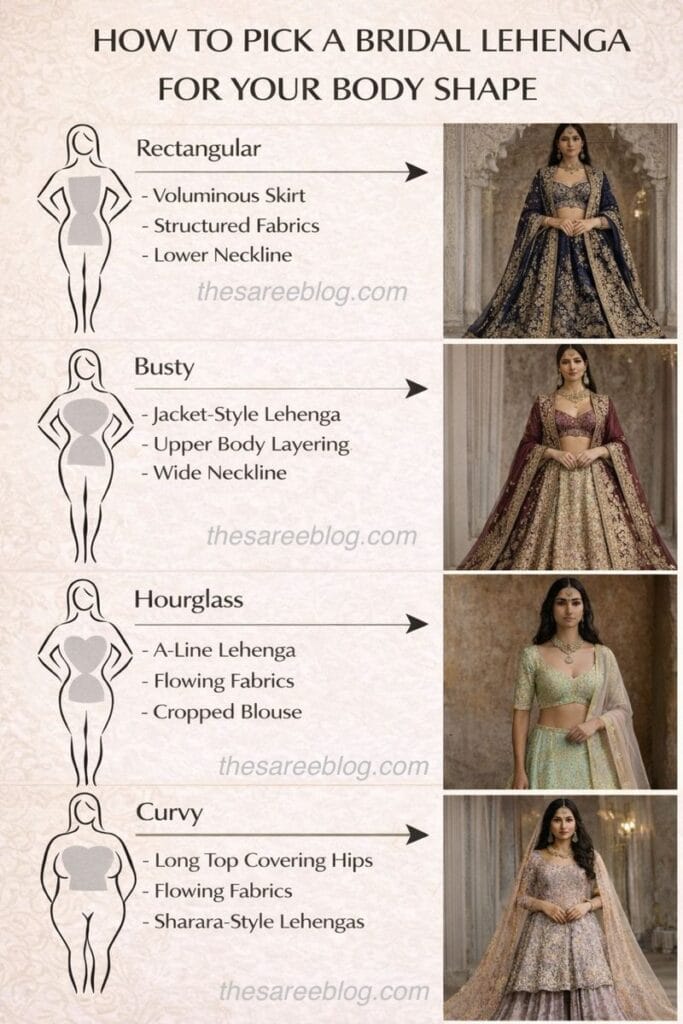
Choosing the perfect lehenga for your body type isn’t child’s play. You need to consider the fabric, flare, fall and yes the kali count too.
Petite Body Types
- Avoid extremely high kali counts
- 10–14 kalis work best
- Too much flare can overwhelm the frame
Pear-Shaped Bodies
- 12–18 kalis balance hips
- Choose structured flare rather than excessive volume
- Vertical panels elongate the body
Tall Frames
- 18–30 kalis enhance height
- Can carry dramatic flare with ease
- Ideal for bridal lehengas
Curvy or Plus-Size Bodies
- Focus on panel width, not just count
- 12–20 kalis with controlled flare
- Avoid stiff fabrics that add bulk
Fabric Plays a Key Role in Lehenga Kali Count
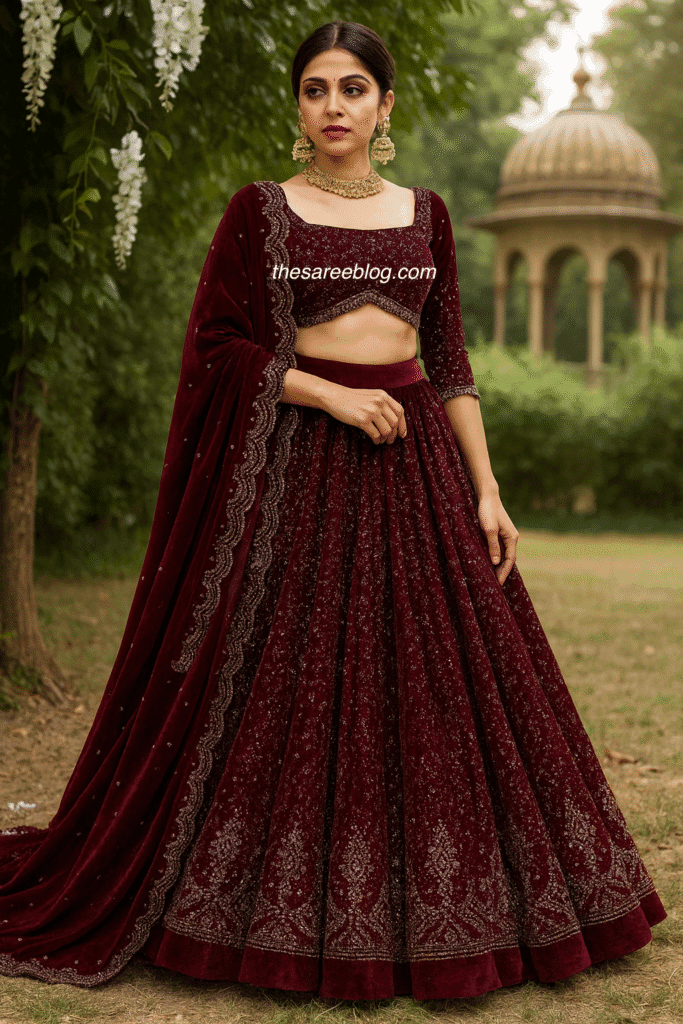
Heavy Fabrics (Silk, Velvet, Brocade)
- Fewer kalis recommended
- 12–18 kalis give regal structure
- Too many kalis add unnecessary weight
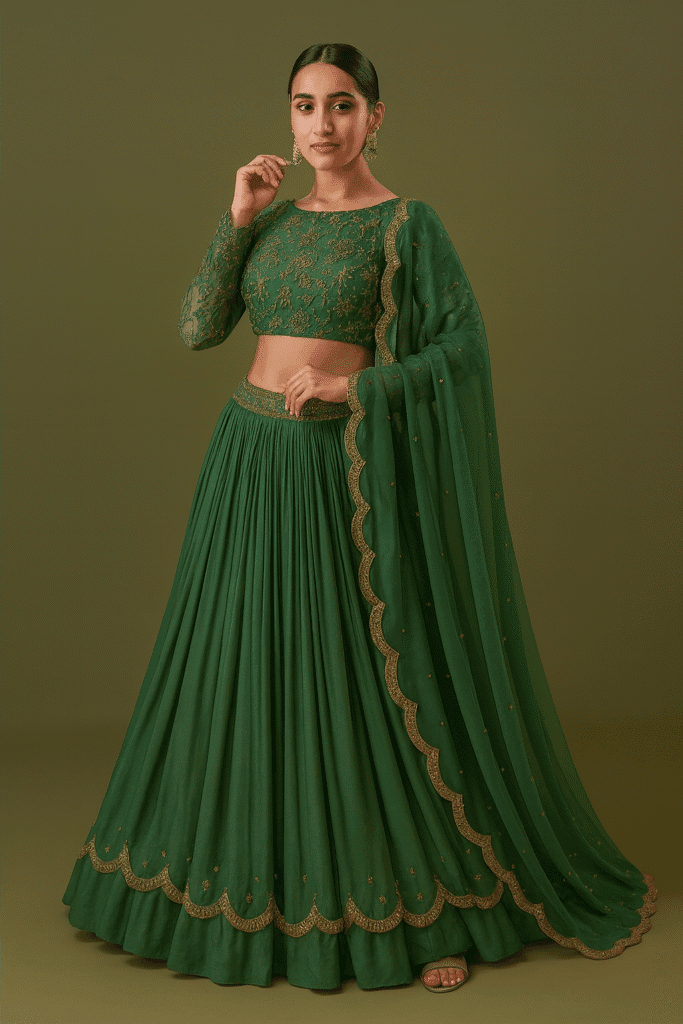
Lightweight Fabrics (Georgette, Chiffon, Crepe)
- Can handle higher kali counts
- 18–30 kalis create fluid movement
- Ideal for twirl-friendly designs
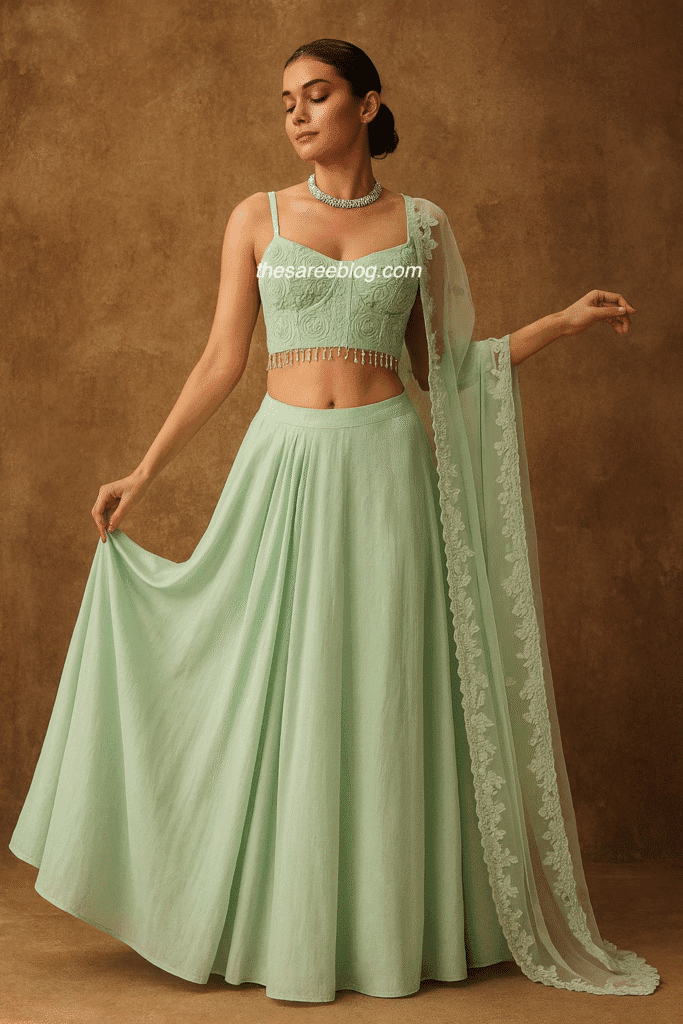
Net and Organza
- Often layered
- Moderate kali count with volume underskirts
- Helps control bulk while adding drama
Embroidery vs Kali Balance
The heavier the embroidery, the more strategic the kali count must be.
Heavy All-Over Embroidery
- Fewer kalis
- Wider panels
- Prevents stiffness
Scattered or Booti Work
- Higher kali count possible
- Adds flow without weight overload
Border-Heavy Lehengas
- Moderate kalis work best
- Too many panels distort border alignment
Occasion-Based Kali Guide
Daily or Festive Wear
- 8–12 kalis
- Comfortable and wearable
- Easy to manage
Pre-Wedding Functions
- 12–18 kalis
- Balanced look
- Suitable for dancing
Wedding or Bridal Wear
- 18–36 kalis depending on fabric
- Designed for grandeur
- Requires proper can-can or lining
Understanding Flare vs Kali Count
More kalis do not always mean better flare.
Flare depends on:
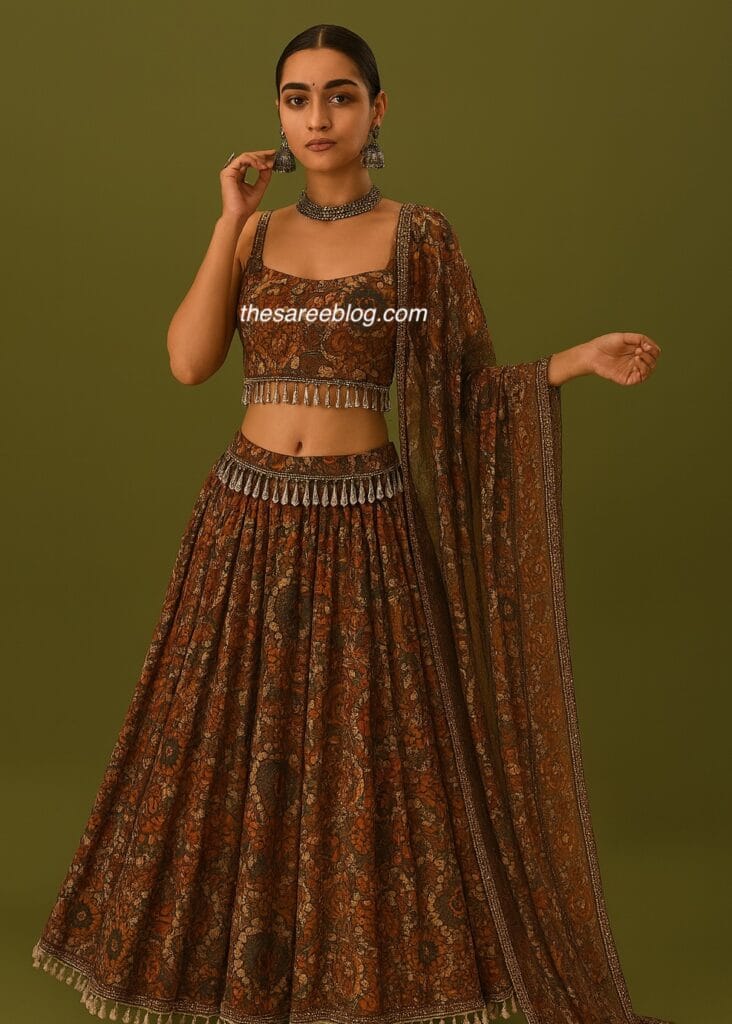
- Number of panels
- Width of each panel
- Fabric stiffness
- Inner lining and can-can
A 12-kali lehenga with wide panels may flare more than a 24-kali lehenga with narrow panels.
Modern Cuts vs Traditional Kali Lehengas
Traditional kalis create:
- Vertical elegance
- Structured movement
- Classic appeal
Modern cuts may:
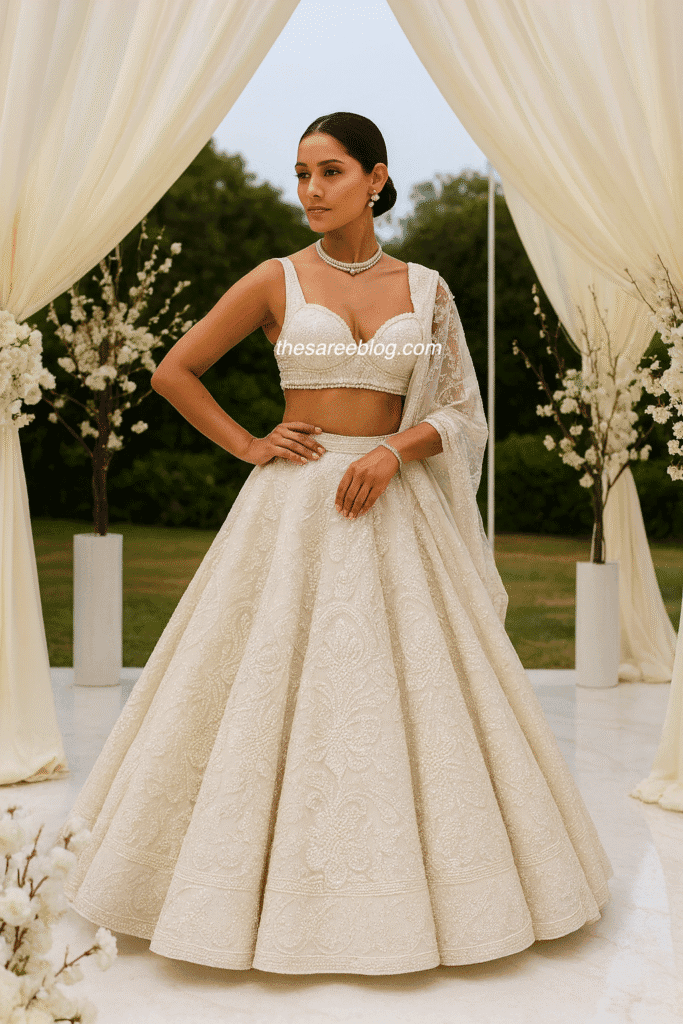
- Reduce panel visibility
- Use circular patterns
- Focus on comfort over tradition
For heritage-inspired looks, kali construction remains unmatched.
Mistakes to Avoid When Choosing Kali Count
- Choosing high kalis only for trend
- Ignoring fabric weight
- Overloading embroidery with too many panels
- Not considering height and frame
- Skipping trial twirls and movement checks
A lehenga should move gracefully, not fight gravity.
Tailor vs Ready-Made: Kali Considerations
Tailor-Made Lehengas
- Kali count can be customized
- Best fit and fall
- Ideal for brides
Ready-Made Lehengas
- Fixed kali structure
- Focus on fit and hem flare
- Always check lining quality
How to Test the Right Kali Lehenga
Before finalizing:
- Walk in it
- Sit comfortably
- Do a slow twirl
- Check weight distribution
- Observe hem flare symmetry
A well-chosen kali lehenga feels effortless, not heavy.
Final Thoughts: Choosing the Perfect Kali Lehenga
A kali lehenga is where skill and smart design come together. The right number of kalis brings out the beauty of the outfit without making it feel heavy or overdone. It works with the body, the fabric, and the occasion, instead of against them.
There isn’t one perfect number that suits everyone. What really matters is how the lehenga moves when it’s worn. When the cut is right and the flow feels natural, the lehenga doesn’t just look good — it feels right too. And that’s when it truly comes alive.