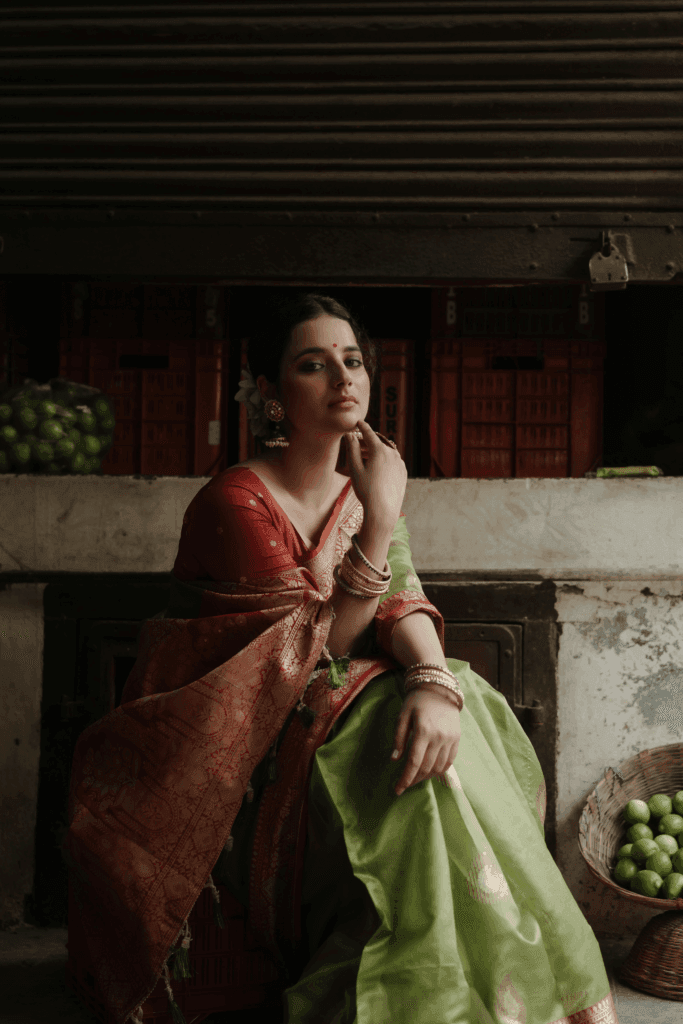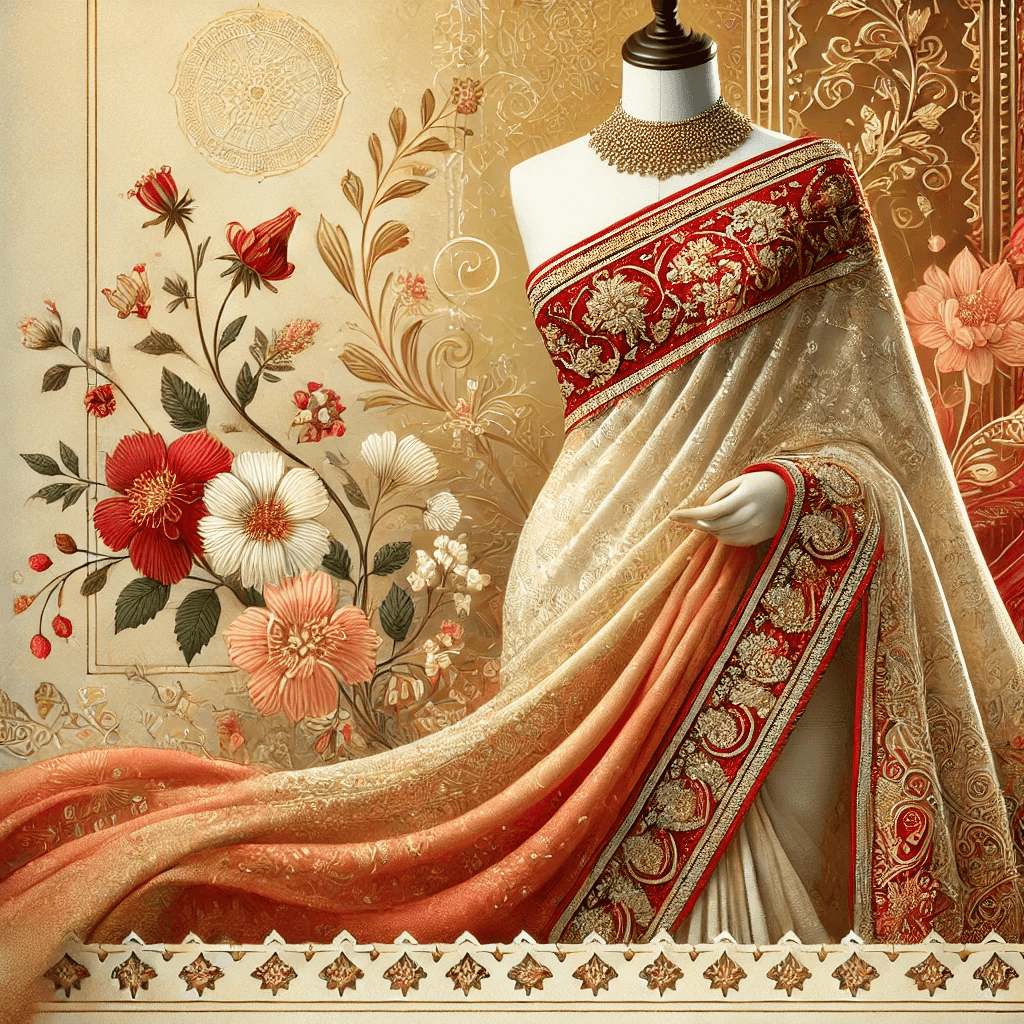
Indian drapes are more than clothing. They are stories, traditions, and identity woven into fabric. Among these, the mekhela chador (also spelled mekhela sador) and the saree stand out as two of the most elegant and culturally rich garments.
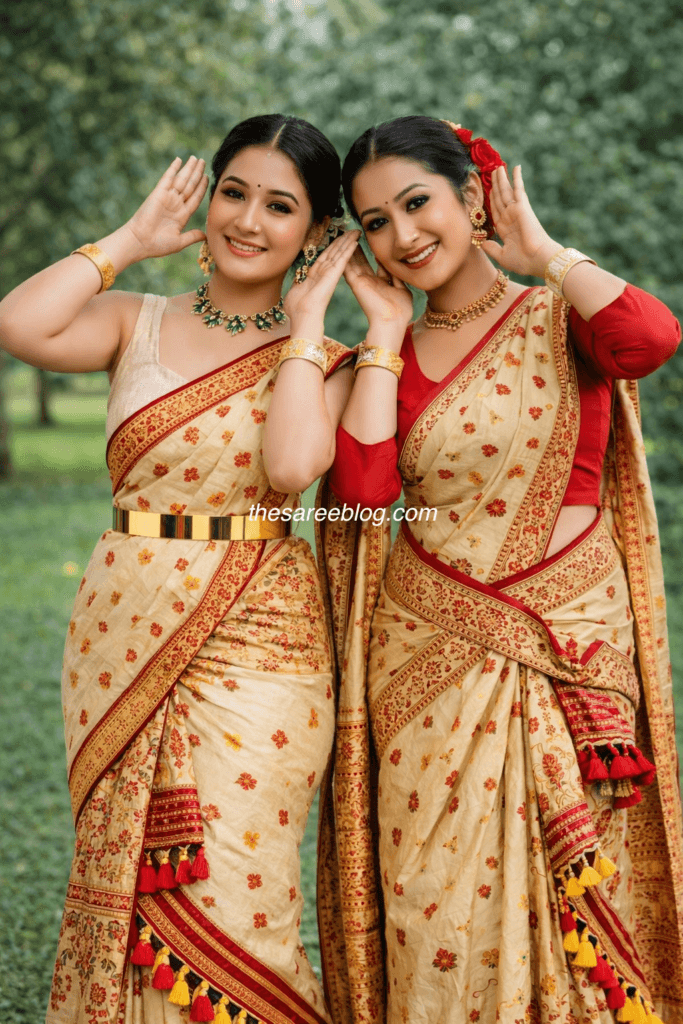
At first glance, both may look similar. Both are draped, graceful and celebrate femininity. Yet, they are fundamentally different in structure, styling, and cultural roots.
This article explores the key differences between mekhela chador and saree, helping you understand their uniqueness, styling, and significance.
What is Mekhela Chador (Mekhela Sador)?
The mekhela chador is a traditional attire from Assam. It is a two-piece draped garment worn by women, especially during festivals and weddings.
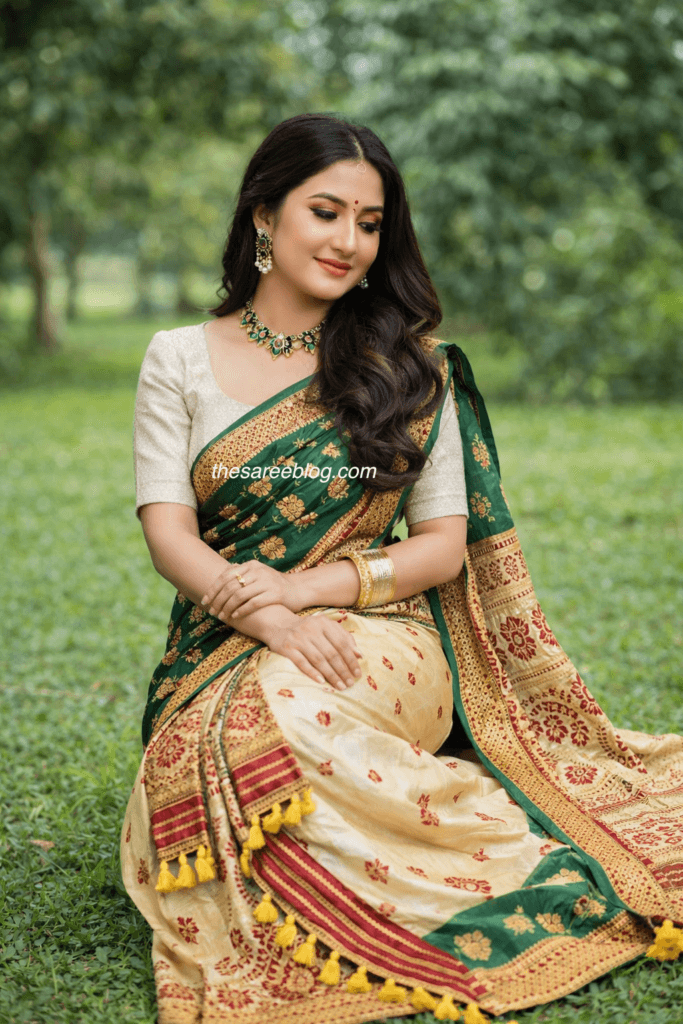
- Mekhela: The bottom cylindrical skirt-like piece
- Chador (Sador): The upper draped cloth
It is most commonly made from Assam silk, including:
- Muga silk (golden sheen)
- Eri silk (soft and warm)
- Pat silk (bright and smooth)
The mekhela chador is known for:
- Minimal pleating
- Elegant motifs inspired by nature
- Lightweight drape with royal appeal
What is a Saree?
A saree is a long, unstitched fabric, usually 5 to 9 yards, draped around the body in various styles across India.
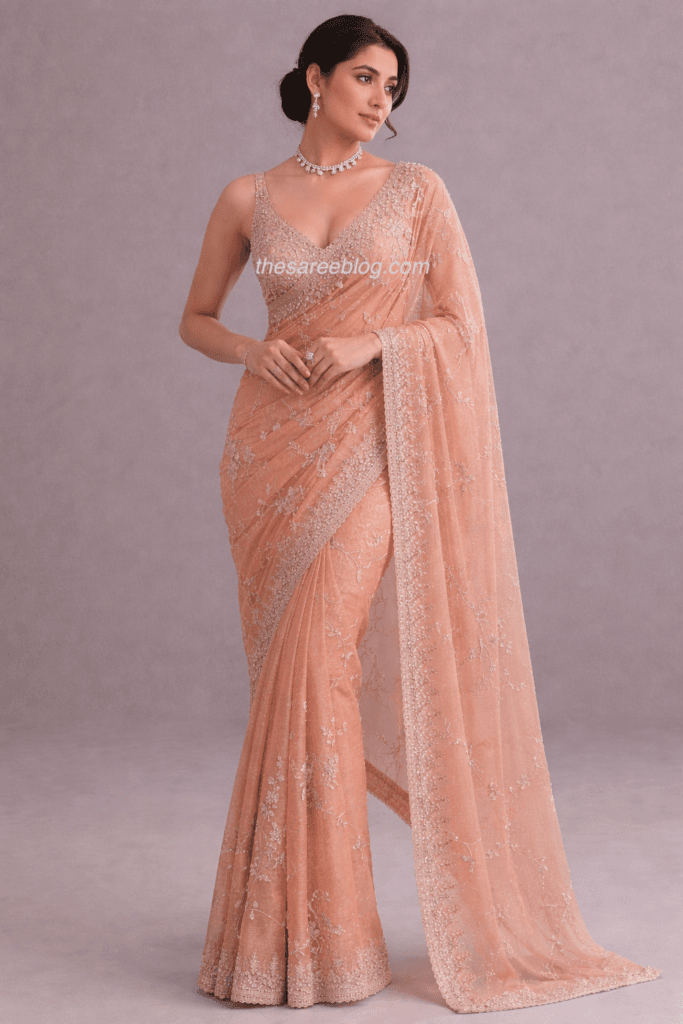
It consists of:
- A single continuous fabric
- A blouse
- A petticoat
From Banarasi to Kanjivaram, Chanderi to Bandhani, the saree exists in countless regional variations.
The saree is known for:
- Versatility
- Complex draping styles
- Wide fabric diversity
Mekhela Chador vs Saree: The Core Difference
The biggest difference lies in structure.
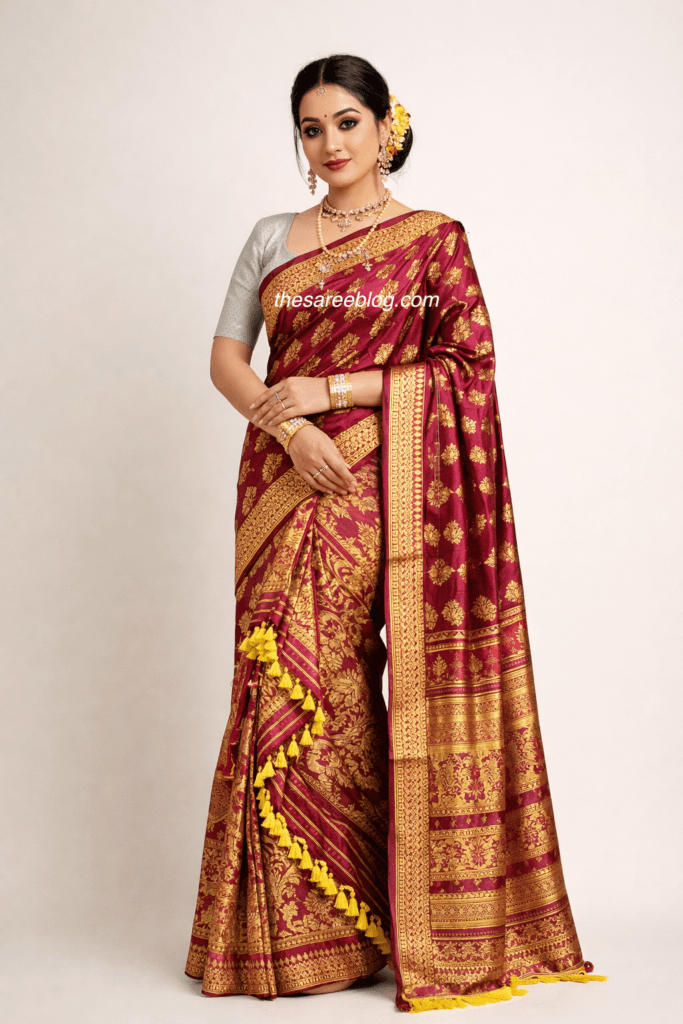
- The mekhela chador is a two-piece garment
- The saree is a single-piece drape
This single difference changes everything—from how they are worn to how they move.
Key Differences: Mekhela chador Vs Saree
| Feature | Mekhela Chador (Mekhela Sador) | Saree |
|---|---|---|
| Origin | Assam | Pan-India |
| Structure | Two-piece (mekhela + chador) | One continuous fabric |
| Fabric Length | Shorter, divided pieces | 5–9 yards long |
| Draping Style | Wrapped skirt + upper drape | Pleats + pallu |
| Pleating | Minimal pleats | Multiple pleats at waist |
| Ease of Wearing | Easier and quicker | Can be complex |
| Movement | More structured and stable | Flowy and flexible |
| Fabric Types | Assam silk (Muga, Eri, Pat) | Cotton, silk, georgette, chiffon, etc. |
| Regional Identity | Strongly Assamese | Diverse across India |
| Occasion Wear | Festivals, weddings | Everyday to bridal wear |
| Blouse Styling | Traditional to modern | Highly experimental |
| Drape Variation | Limited styles | Dozens of draping styles |
1. Structure and Construction
The mekhela chador is pre-structured. The mekhela is stitched or semi-stitched into a cylindrical form. It wraps around the waist like a skirt.
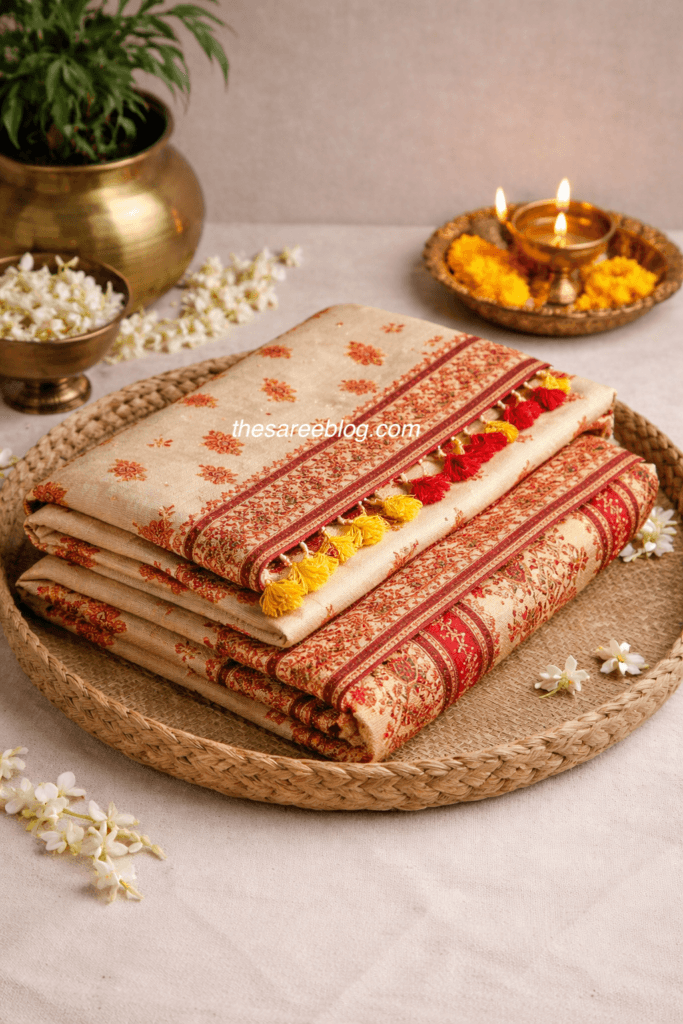
The chador is then draped over the upper body.
In contrast, a saree is:
- A single fabric
- Requires pleating from scratch
- Fully customizable in drape
This makes the mekhela chador more user-friendly, especially for beginners.
2. Draping Style
The draping styles are visually distinct.
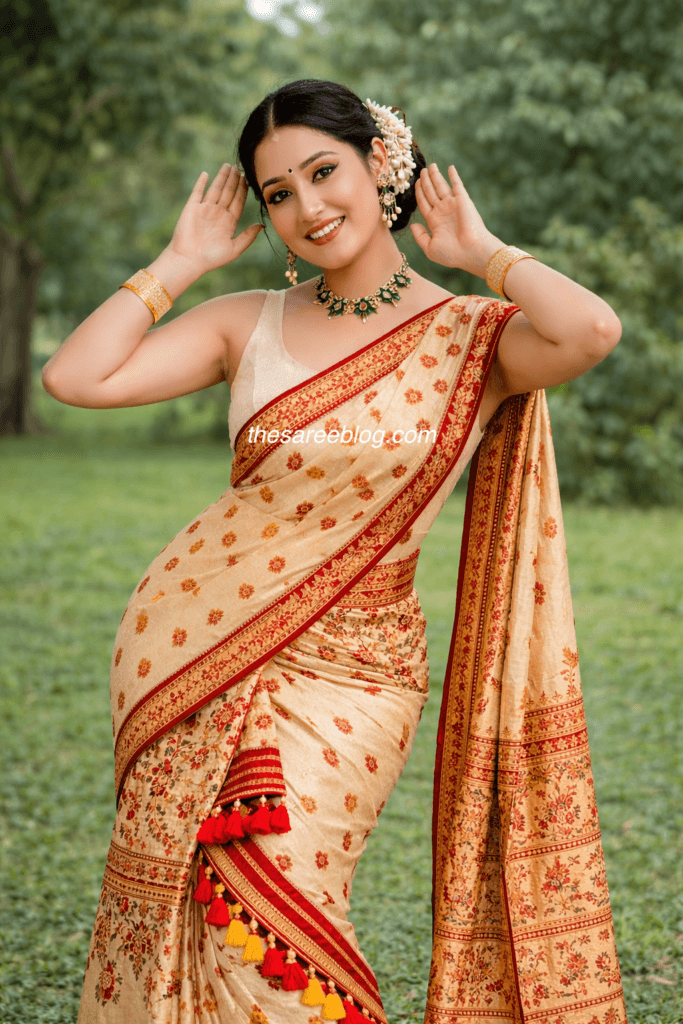
Mekhela Chador:
- Bottom: Wrapped and tucked
- Top: Draped diagonally with neat folds
- No loose flowing pallu
Saree:
- Pleats at the waist
- Pallu draped over the shoulder
- Can be styled in multiple ways
The saree allows creative freedom, while the mekhela chador offers structured elegance.

3. Fabric and Weaving Traditions
The mekhela sador is deeply rooted in Assam silk traditions.
Common fabrics:
- Muga silk: Rare, golden, luxurious
- Eri silk: Soft, eco-friendly
- Pat silk: Smooth and bright
Motifs include:
- Flowers
- Birds
- Traditional Assamese symbols
On the other hand, sarees span the entire Indian textile map:
- Banarasi brocades
- Kanjivaram silks
- Chanderi blends
- Cotton handlooms
Sarees offer diversity, while mekhela sador represents heritage specialization.
4. Ease of Wearing
One of the biggest advantages of the mekhela chador is simplicity.
- No complex pleating
- Less fabric handling
- Faster to drape
Sarees, especially traditional ones, require:
- Practice
- Precision
- Time
For beginners, the mekhela chador feels less intimidating.
5. Movement and Comfort
The mekhela chador has a structured silhouette.
- Stays in place
- Easier to walk in
- Less risk of loosening
Sarees are:
- Flowing and fluid
- Can shift with movement
- Require occasional adjustment
Mekhela sador offers stability, while sarees offer fluid grace.
6. Styling and Versatility
Sarees are unmatched in styling.
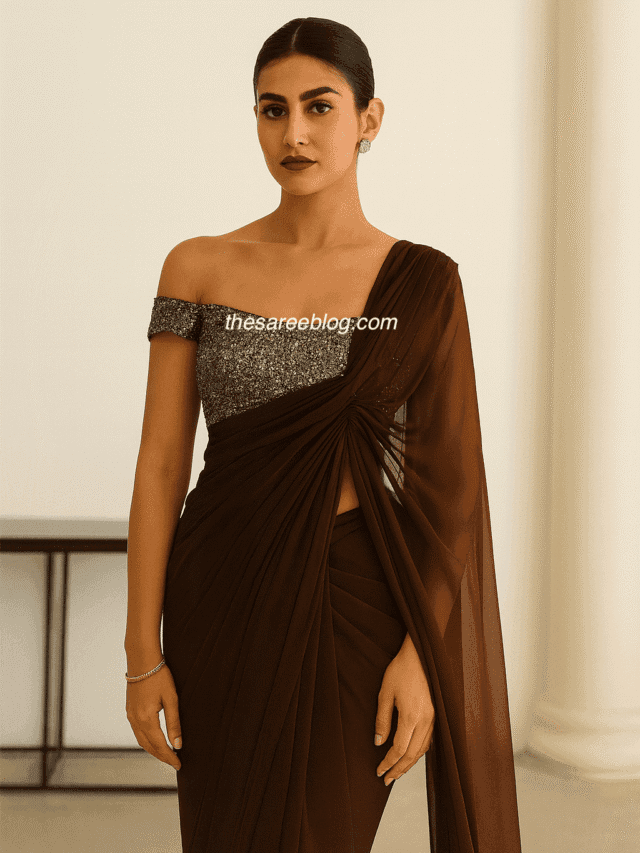
You can experiment with:
- Draping styles (Bengali, Gujarati, Maharashtrian)
- Blouse designs (corset, halter, jacket style)
- Belted sarees
Mekhela chador styling is evolving, but still limited.
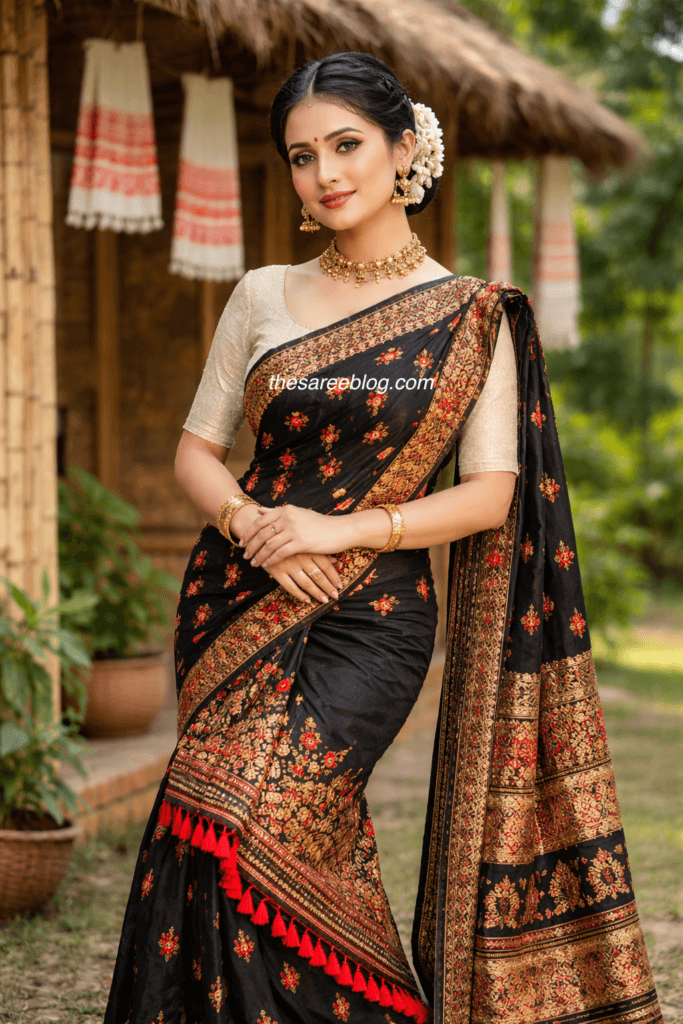
Modern adaptations include:
- Crop blouses
- Contemporary prints
- Fusion draping
Sarees win in versatility, while mekhela sador excels in timeless tradition.
7. Cultural Identity
The mekhela chador is strongly tied to Assam.
It is worn during:
- Bihu festivals
- Weddings
- Cultural events
It represents:
- Assamese identity
- Local craftsmanship
- Heritage pride
The saree, however, is:
- Pan-Indian
- Adaptable to every region
- A symbol of Indian femininity
Mekhela chador is region-specific, while saree is universally Indian.
Modern Appeal: Mekhela Chador vs Saree
Both garments are evolving with time.
Mekhela Chador Today:
- Lightweight designs for daily wear
- Contemporary motifs
- Fusion styling for younger audiences
Saree Today:
- Pre-stitched sarees
- Belted drapes
- Indo-western fusion looks
Both are adapting, but the saree continues to lead in fashion experimentation.
Which One Should You Choose?
Choose mekhela sador if you want:
- Easy draping
- Elegant structure
- Cultural authenticity of Assam
- Comfort with sophistication
Choose saree if you want:
- Styling freedom
- Variety in fabrics
- Dramatic drapes
- Pan-Indian appeal
Styling Tips for Both
Mekhela Chador Styling:
- Pair with statement silver or gold jewelry
- Keep makeup minimal for a traditional look
- Try modern blouses for fusion styling
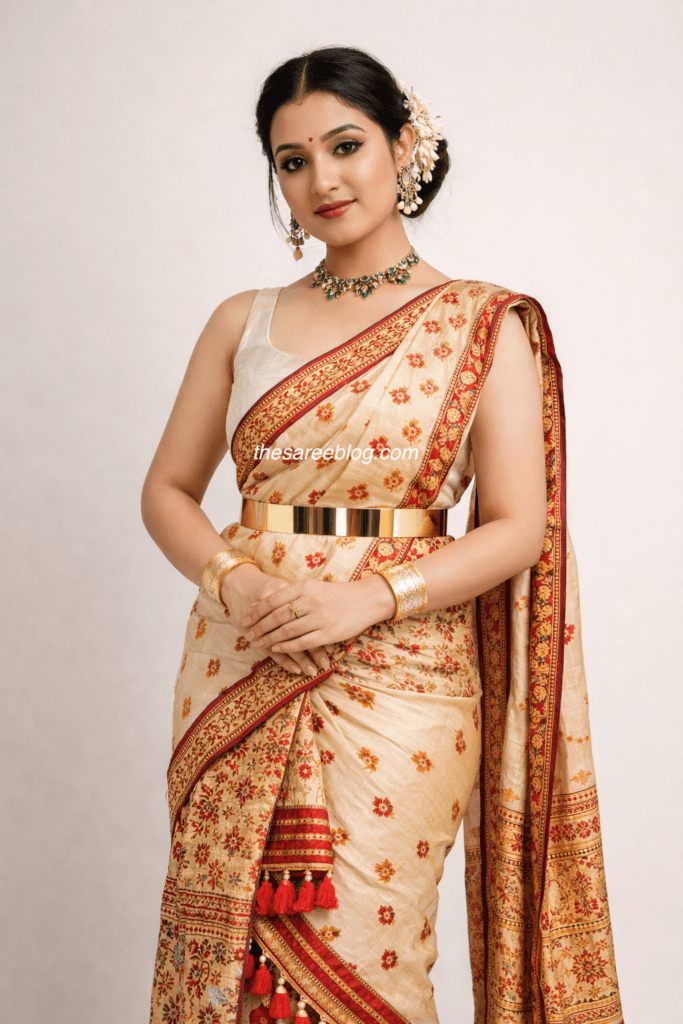
Saree Styling:
- Experiment with blouse cuts
- Use belts for structure
- Play with different draping styles

Where to Buy Mekhela Chador
Finding an authentic mekhela chador (mekhela sador) is easier today, with both online and offline options available.
1. Online Stores
Online platforms offer a wide variety of designs in cotton and Assam silk, from budget-friendly pieces to premium handloom collections. Many options come pre-stitched, making them easy for beginners. This is the best choice for convenience and quick comparison.
Popular platforms include Assam Products Store, ChadorKart, Apaapi, Dheu Designs, Mohi Fashion, and The Silk Chamber, all of which offer a range of traditional and contemporary mekhela chadors online.
2. Assam-Based Handloom Brands
For authenticity, choose brands that source directly from Assamese weavers. These stores offer traditional Muga, Eri, and Pat silk mekhela chadors, ideal for weddings and festive wear while supporting local craftsmanship.
Trusted options include Koina, Brahmaputra Fables, Utkalika Assam Emporium, Sualkuchi Handloom Stores, and Muga Silk Store, all known for their focus on genuine handloom and Assam silk traditions.
3. Local Markets in Assam
Markets in places like Guwahati and Sualkuchi provide the most authentic experience. You can feel the fabric, explore real handloom work, and even customize designs.
Quick Buying Tips
- Choose Muga silk for luxury
- Opt for cotton or Eri silk for comfort
- Check if it is stitched or unstitched
- Look for authentic handloom work
A mekhela chador is not just an outfit—it is a piece of Assam’s living tradition.
Final Thoughts: Mekhela Chador vs Saree
The mekhela sador vs saree debate is not about which is better. It is about understanding their uniqueness.
The mekhela sador is:
- Rooted
- Structured
- Deeply cultural
The saree is:
- Versatile
- Fluid
- Universally adaptable
Both garments celebrate Indian heritage in their own way.
One tells the story of Assam through Assam silk and tradition.
The other tells the story of India through diversity and drape.
In the end, both deserve a place in every wardrobe that values elegance, culture, and timeless style.