Stay stylish this rainy season with the perfect saree.
- Rain or Shine, You Can Still Wear a Saree
- What Makes a Saree Monsoon-Friendly?
- Best Saree Fabrics to Wear During Monsoon
- Saree Fabrics to Avoid During the Rainy Season
- The Best Colours for Monsoon Sarees
- Prints That Work Best During Monsoon
- The Best Drape Styles for Rainy Days
- Complete Your Monsoon Saree Look
- Monsoon Saree Dos
- Monsoon Saree Don'ts
- How to Care for a Saree After Getting Wet
- Frequently Asked Questions
- Final Thoughts
Disclosure: Some links in this article are affiliate links. If you purchase through them, The Saree Blog may earn a small commission at no extra cost to you. We only recommend styles that complement the ideas shared in this guide.
Rain or Shine, You Can Still Wear a Saree
The arrival of monsoon transforms everything—from lush green landscapes to cool breezes and the comforting aroma of rain-soaked earth. But for saree lovers, the season also brings a familiar set of challenges: muddy roads, unexpected showers, high humidity, damp fabrics, and slippery footwear. Many women assume they need to avoid sarees during monsoon. Fortunately, that’s far from the truth.
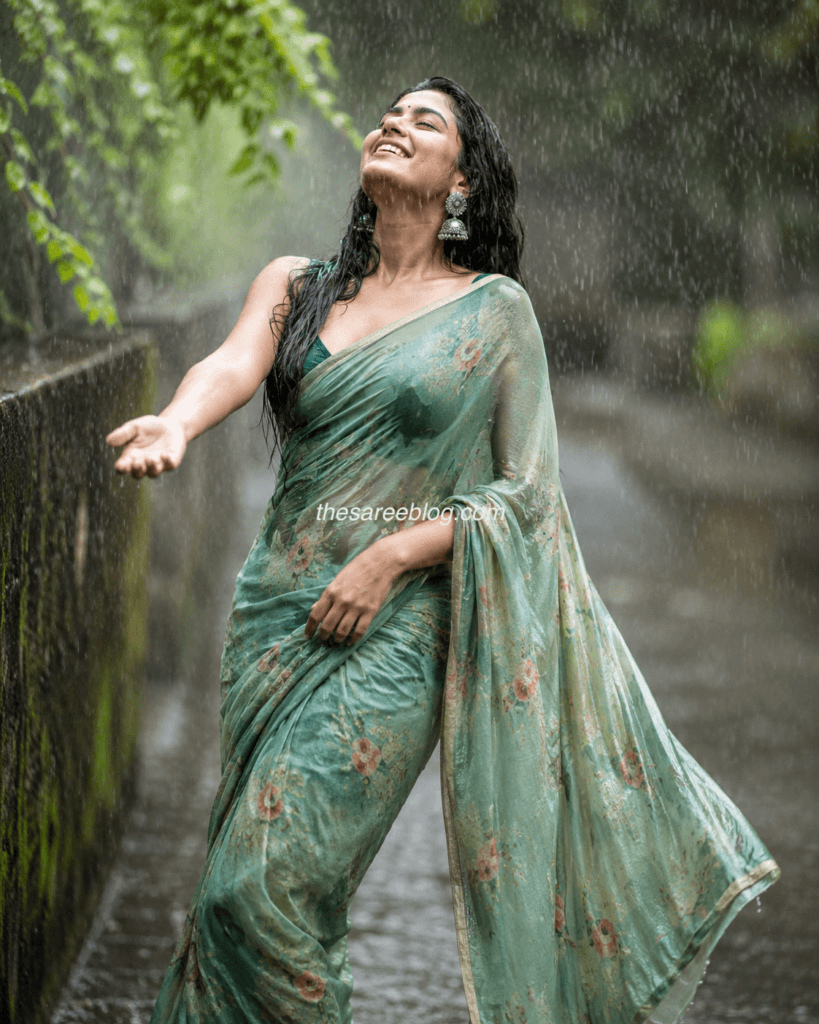
The secret isn’t avoiding sarees—it’s choosing the right ones.
A thoughtfully selected monsoon saree can be just as elegant as a silk drape worn during winter weddings or a breezy cotton saree in summer. The key is understanding which fabrics work best, how to drape them, and what styling mistakes to avoid.
Whether you’re dressing for work, a festive celebration, a family gathering, or simply love wearing sarees every day, this guide covers everything you need to know about monsoon saree styling.
What Makes a Saree Monsoon-Friendly?
During the rainy season, comfort becomes just as important as appearance.
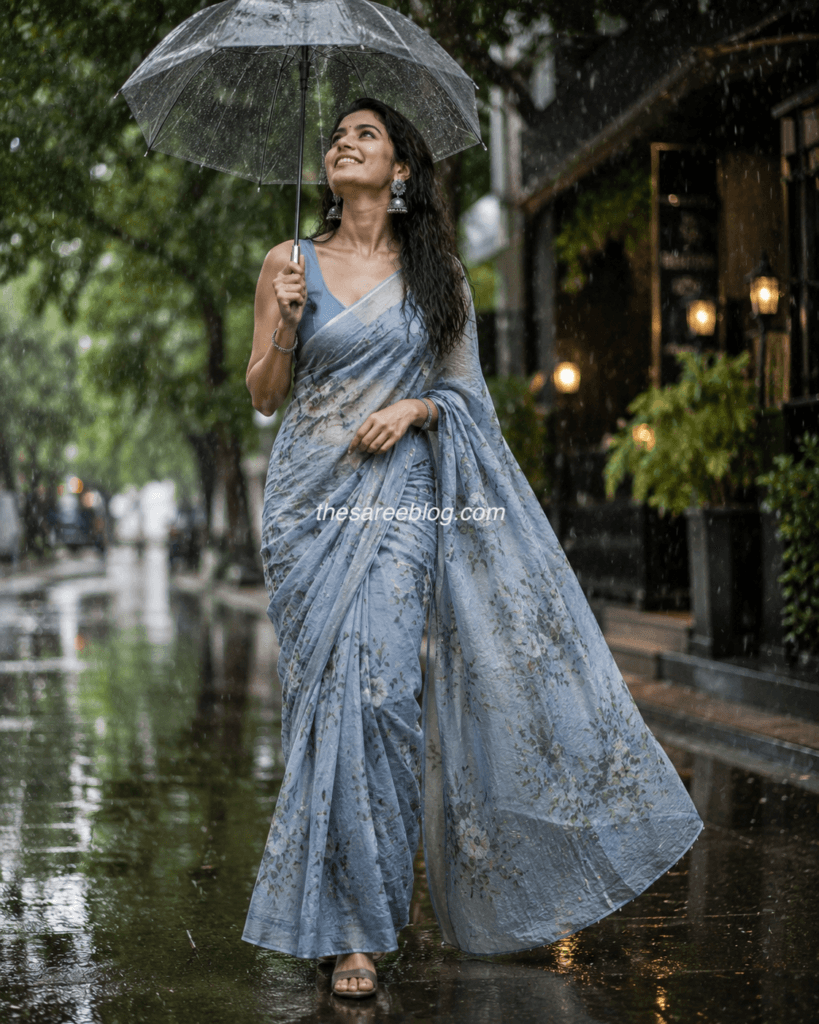
A monsoon-friendly saree should ideally be:
- Lightweight and easy to carry
- Quick drying
- Comfortable in humid weather
- Resistant to wrinkles
- Easy to walk in
- Less likely to collect mud or water
- Simple to maintain after getting slightly damp
Heavy fabrics that absorb water become uncomfortable very quickly. Instead, choose sarees that remain graceful without becoming difficult to manage.
Best Saree Fabrics to Wear During Monsoon
1. Georgette – The Most Reliable Choice
If you could own just one monsoon saree, georgette would be one of the safest options.
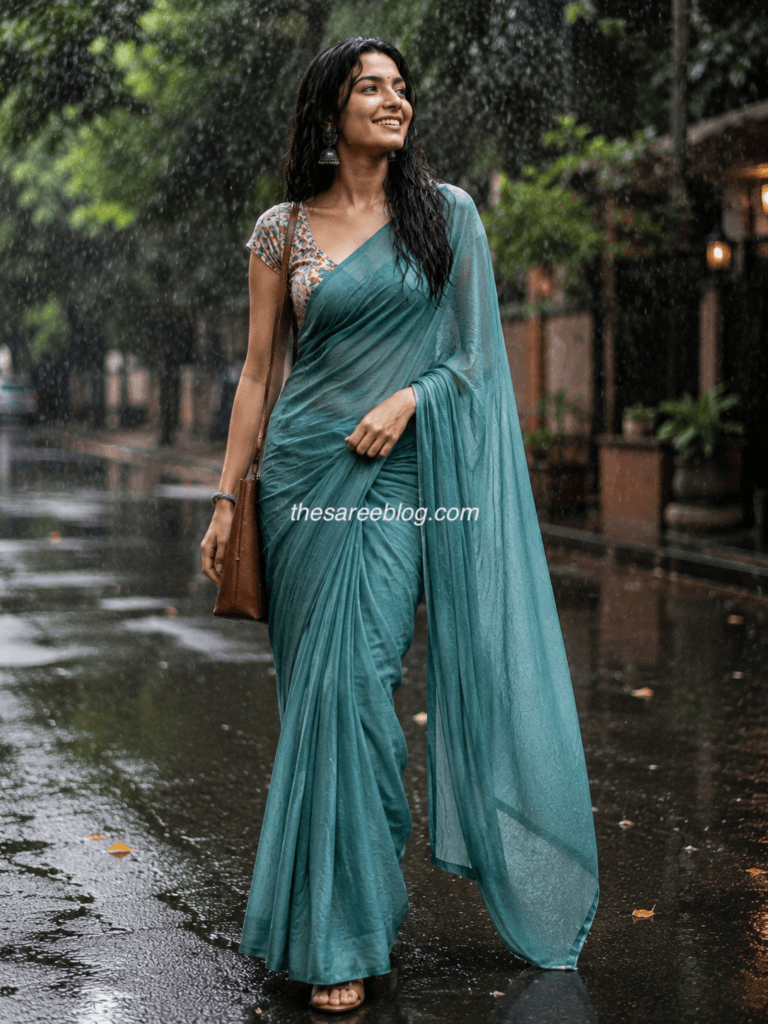
Its lightweight texture doesn’t absorb much water, dries relatively quickly, and falls beautifully without becoming stiff. It also resists wrinkles better than many natural fabrics, making it ideal for long office hours or travel.
Best for:
- Office wear
- Daily wear
- Family gatherings
- Festive occasions
Style Tip: Pair a solid-coloured georgette saree with a printed blouse for a fresh monsoon look.
2. Chiffon – Light as Air
Chiffon has remained a rainy-season favourite for decades.
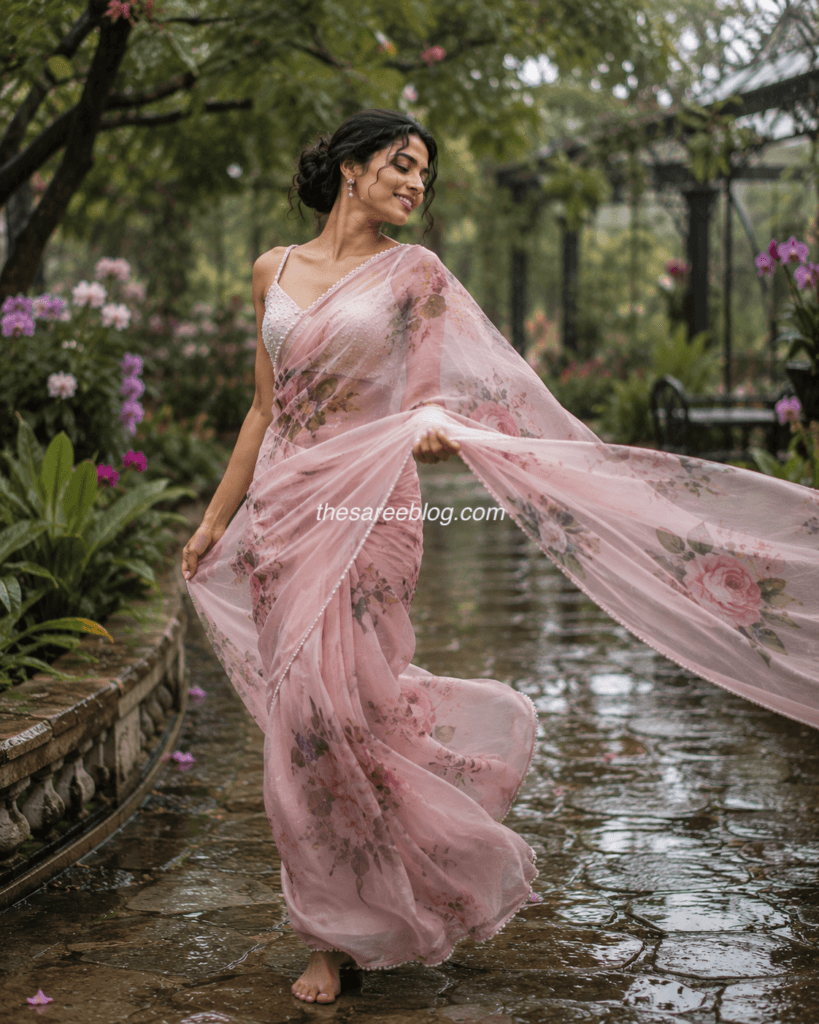
Because it’s incredibly lightweight, it doesn’t feel heavy even if exposed to light rain. The fabric flows beautifully, making it ideal for women who prefer soft, feminine drapes.
However, choose good-quality chiffon that isn’t too transparent and avoid heavily embellished versions for outdoor events.
Best for:
- Brunches
- Casual parties
- Evening dinners
- Travel
3. Linen and Linen Blends
Linen offers exceptional breathability, making it comfortable during humid weather.
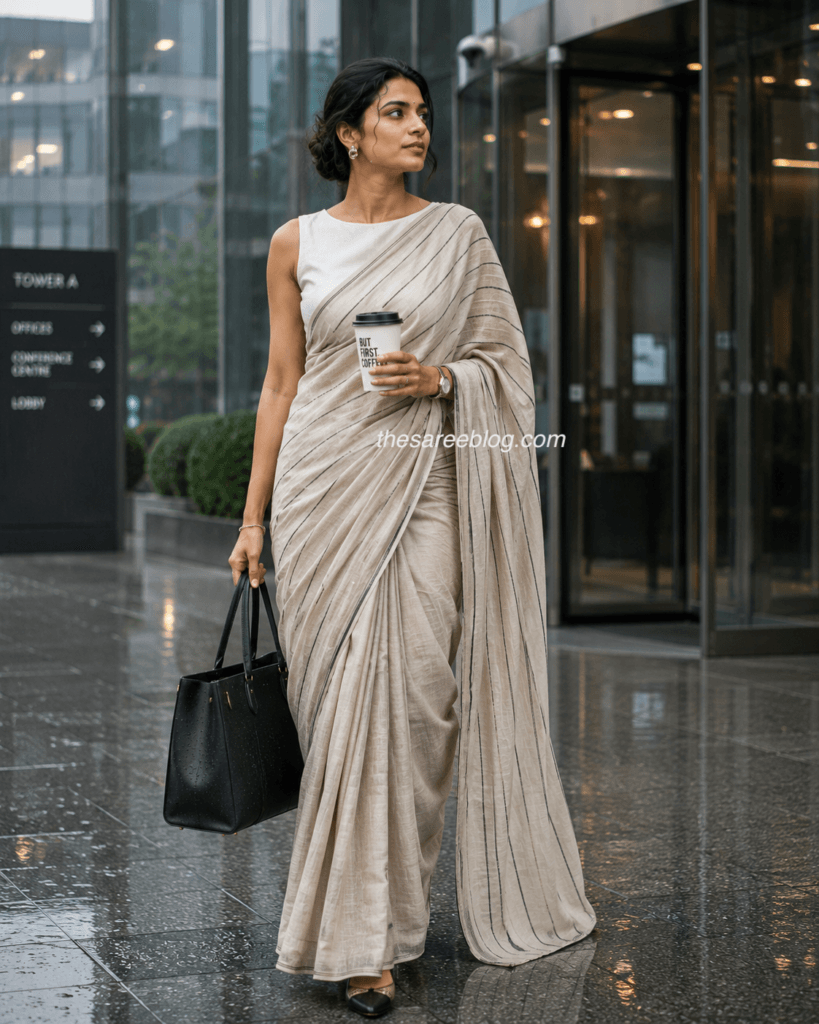
While pure linen wrinkles easily, modern linen blends combine the beauty of linen with improved crease resistance.
These sarees work particularly well for professional settings where you want an elegant yet practical look.
Best for:
- Office
- Meetings
- Smart casual events
4. Cotton Blends
Pure cotton absorbs water quickly, but cotton blends solve this problem by offering breathability without becoming excessively heavy.
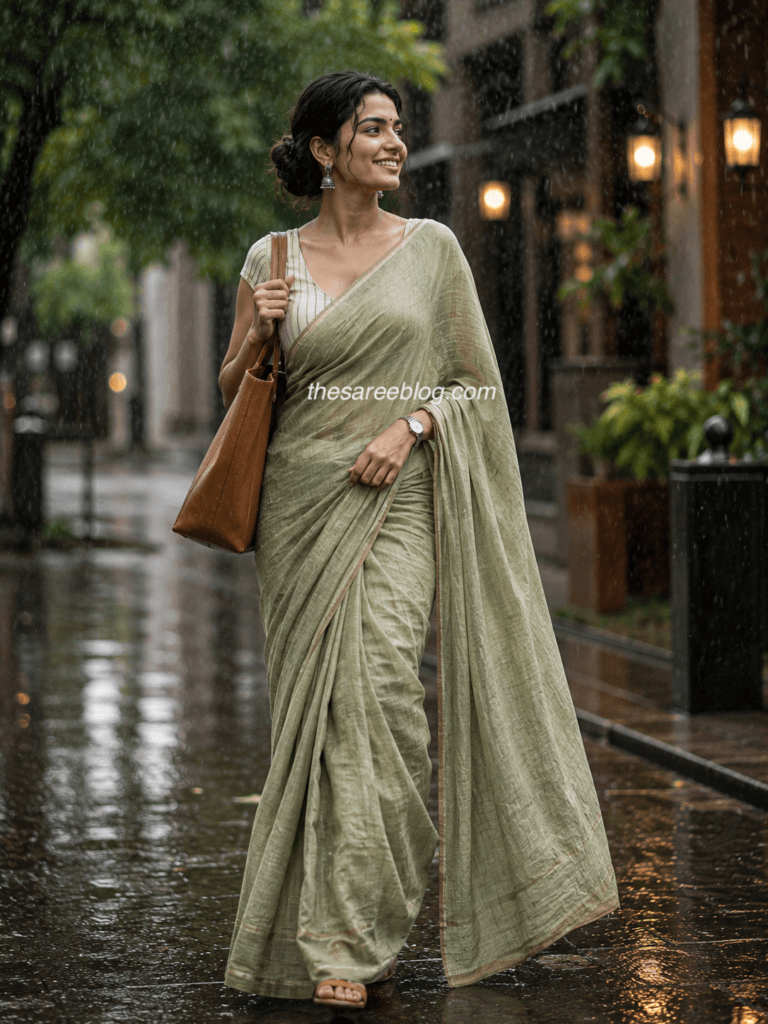
Printed cotton blend sarees are perfect for everyday wear during the rainy season.
They are easy to wash, comfortable to wear, and practical for long hours.
5. Crepe Sarees
Crepe is another excellent monsoon fabric because of its textured finish and natural drape.

It doesn’t wrinkle easily, travels well, and remains elegant even after several hours of wear.
Its slightly structured appearance also makes it suitable for formal occasions.
6. Lightweight Organza
Organza isn’t the first fabric people associate with monsoon, but lightweight versions with minimal embroidery can work beautifully for indoor celebrations.
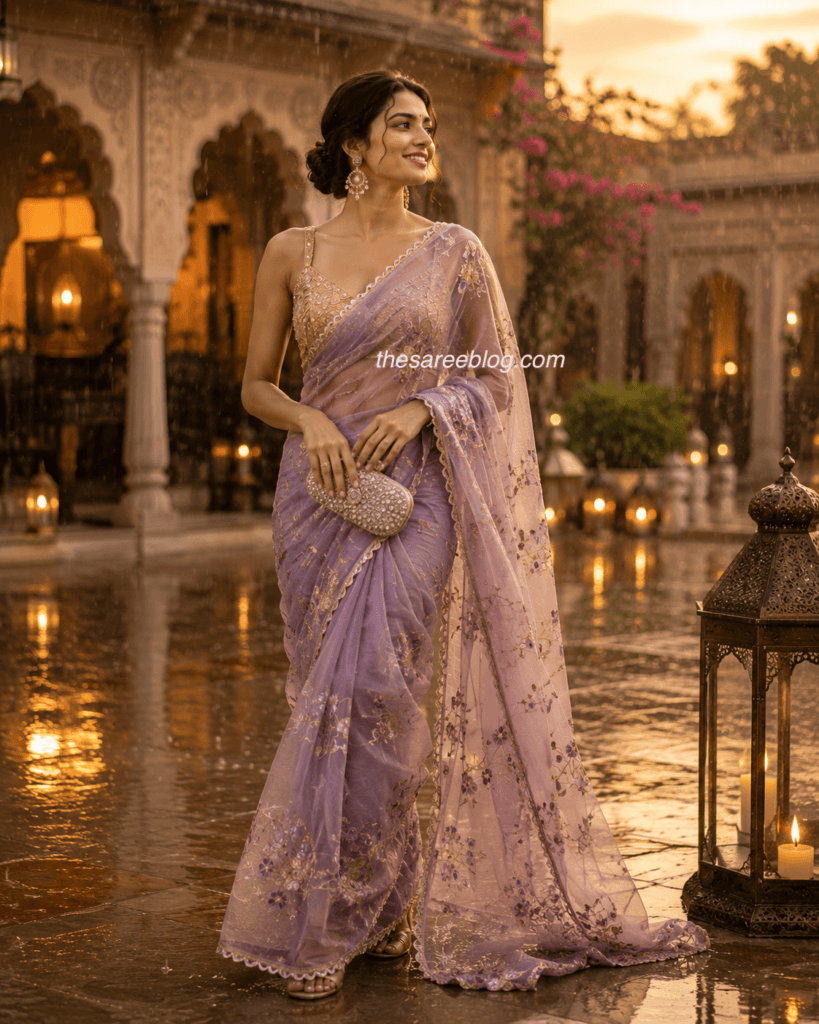
The key is avoiding heavily embellished organza that becomes uncomfortable if exposed to rain.
Save richly embroidered organza sarees for indoor venues where the weather won’t affect them.
Saree Fabrics to Avoid During the Rainy Season
Not every beautiful fabric is suitable for monsoon.
Heavy Silk
Banarasi, Kanjivaram, Paithani, and other heavy silk sarees absorb moisture and become considerably heavier if they get wet.
Water can also affect zari work and require expensive dry cleaning.
Reserve these heirloom sarees for indoor weddings.
Velvet
Velvet and humidity are never a good combination.
The fabric traps heat, feels uncomfortable, and takes a long time to dry.
Tissue Sarees
Although tissue sarees are lightweight, they wrinkle easily when exposed to moisture and require careful handling.
Heavy Handloom Cotton
While breathable, thick cotton absorbs significant amounts of water, making the saree difficult to walk in after even a light shower.
The Best Colours for Monsoon Sarees
Rainy days often create soft, muted surroundings, making rich colours stand out beautifully.
Consider shades like:
- Emerald green
- Teal
- Mustard yellow
- Royal blue
- Wine
- Deep purple
- Coral
- Raspberry pink
- Rust orange
These colours not only brighten gloomy weather but also hide occasional water marks and mud splashes better than lighter shades.
Should You Wear White During Monsoon?
White and ivory sarees certainly look elegant, but they’re less forgiving when roads are muddy.
If you love lighter shades, reserve them for indoor functions or pair them with careful transportation rather than long walks.
Prints That Work Best During Monsoon
Printed sarees are surprisingly practical.
Unlike plain solid-coloured sarees, prints naturally camouflage minor stains and water marks.
Excellent choices include:
- Floral prints
- Ajrakh prints
- Block prints
- Ikat
- Abstract prints
- Digital florals
- Geometric motifs
Smaller, busier patterns are especially forgiving during unpredictable weather.
The Best Drape Styles for Rainy Days
1. Raise the Hem Slightly
One of the simplest yet most effective styling tips is to wear your saree slightly above the ankle.
This prevents the border from dragging through puddles and collecting mud.
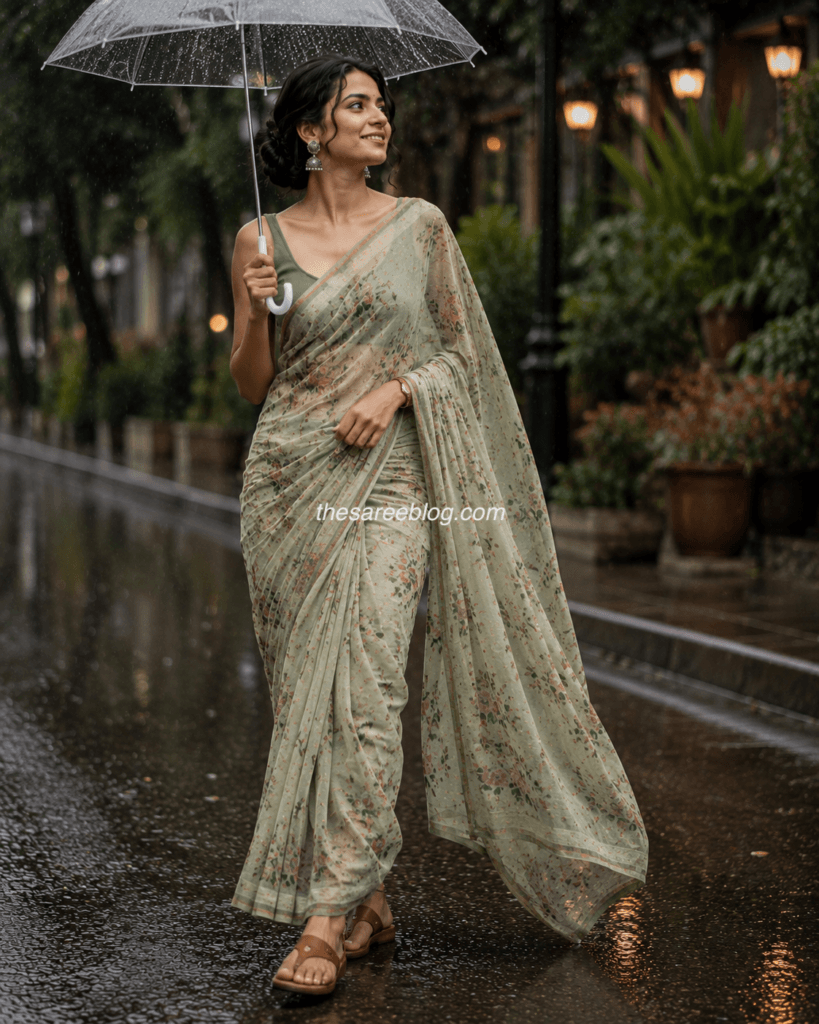
A difference of just an inch or two can protect your saree significantly.
2. Pin Your Pallu
A loose pallu may look dramatic, but it can become difficult to manage on windy, rainy days.
Secure your pallu neatly using a hidden safety pin.
You’ll enjoy greater freedom while commuting, shopping, or attending events.
3. Belted Saree Drape
A slim saree belt helps keep pleats perfectly in place.
This style works especially well if you’re travelling, climbing stairs, or walking frequently.
Choose elegant metallic or fabric belts rather than bulky fashion belts.
4. Seedha Pallu Style
For festive occasions, the Gujarati seedha pallu remains practical because the pallu stays neatly in front instead of constantly slipping behind the shoulder.
5. Keep Pleats Neat
Well-pressed pleats reduce bulk and prevent the saree from clinging awkwardly during humid weather.
Take a few extra minutes while draping—it makes a noticeable difference throughout the day.
Complete Your Monsoon Saree Look
Choose Breathable Blouses
Heavy padded blouses can become uncomfortable in humidity.
Instead, choose:
- Cotton-lined blouses
- Sleeveless designs
- Half sleeves
- Elbow-length sleeves
- Lightweight silk blends
Comfort should always come before excessive embellishment.
Wear Practical Footwear
The wrong footwear can ruin an otherwise perfect outfit.
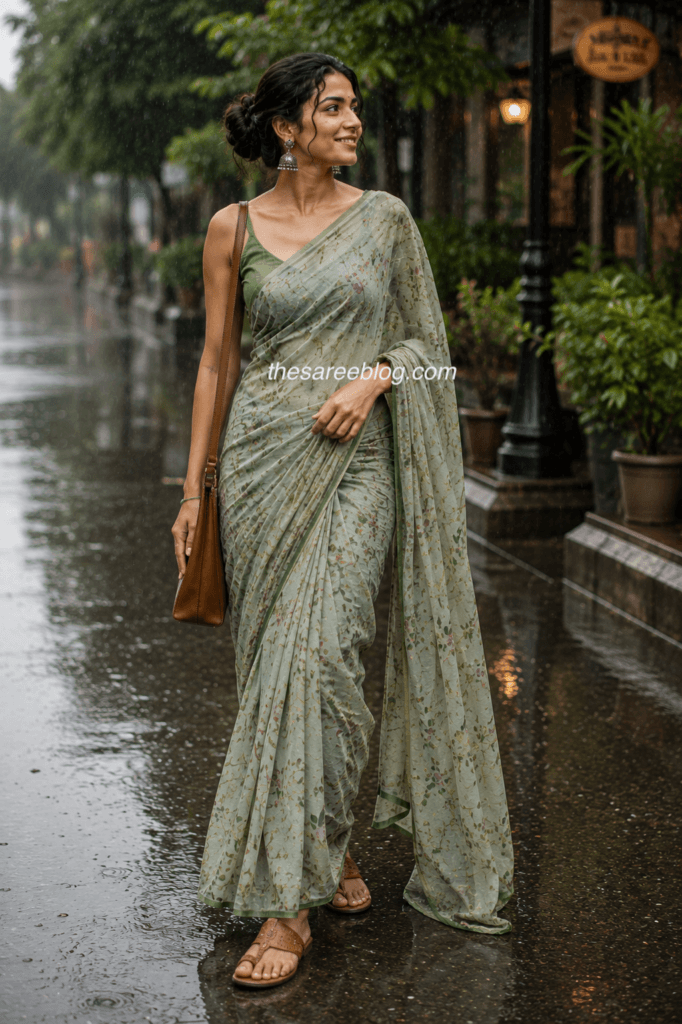
Instead of stilettos, consider:
- Waterproof wedges
- Block heels
- Comfortable sandals with textured soles
- Kolhapuri-style flats with good grip
- Closed-toe flats for office
Always prioritise stability over height.
Keep Jewellery Minimal
Humidity and heavy jewellery rarely go together.
Instead, wear:
- Pearl studs
- Delicate necklaces
- Oxidised silver jewellery
- Small jhumkas
- Slim bangles
The overall look feels lighter and more sophisticated.
Choose Humidity-Friendly Hairstyles
Rain often causes hair to become frizzy.
Protect your hairstyle with:
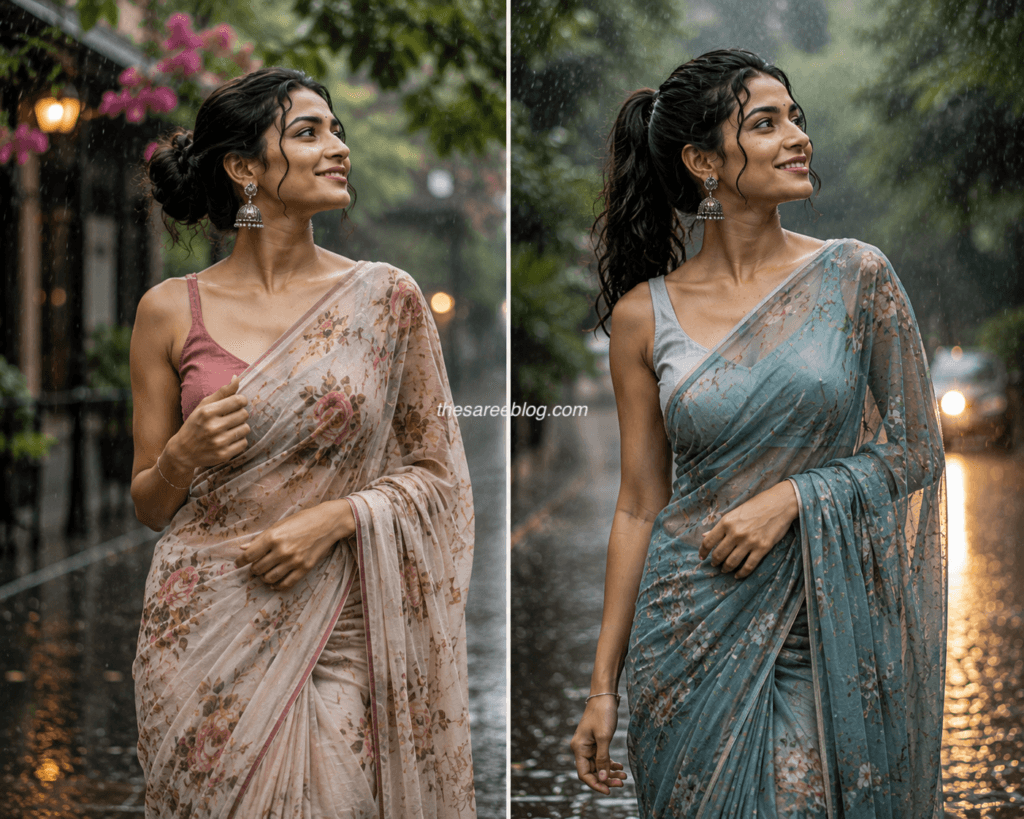
- Sleek low bun
- Braided bun
- Ponytail
- Side braid
- Twisted bun
These styles also prevent wet hair from sticking to your blouse.
Carry the Right Bag
A waterproof tote or structured handbag is much more practical than delicate fabric bags during the rainy season.
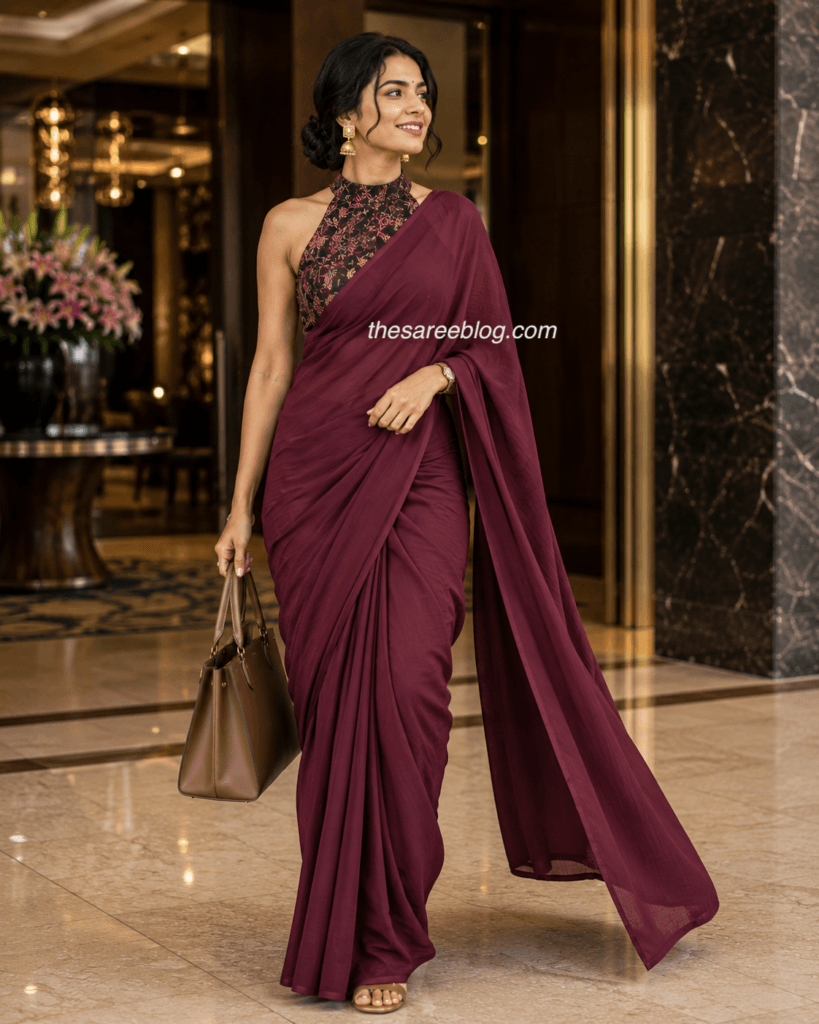
Keep a small pouch containing:
- Foldable umbrella
- Face tissues
- Safety pins
- Compact
- Hair ties
Being prepared makes unexpected showers much less stressful.
Monsoon Saree Dos
- Always Choose lightweight fabrics like georgette, chiffon, linen blends, and crepe.
- The saree hem slightly shorter than usual.
- Secure the pallu with hidden pins.
- Carry an umbrella even if the forecast looks clear.
- Wear comfortable anti-slip footwear.
- Choose darker colours for everyday wear.
- Air-dry your saree completely before storing it.
- Steam or iron only after the fabric is completely dry.
- Pack an extra blouse if travelling for long hours.
- Invest in wrinkle-resistant fabrics if you commute regularly.
Monsoon Saree Don’ts
- Don’t wear expensive heirloom sarees in uncertain weather.
- Never let the border drag along wet roads.
- Don’t wear velvet during humid weather.
- Neveroverload your outfit with heavy jewellery.
- Don’t choose slippery stilettos.
- Never fold or store damp sarees.
- Don’t ignore small stains—clean them promptly.
- Never wear floor-length drapes outdoors.
- Don’t choose fabrics that become transparent when wet.
- Check the weather before planning your outfit.
How to Care for a Saree After Getting Wet
Even the most careful person may get caught in unexpected rain.
Here’s what you should do:
- Gently shake off excess water.
- Hang the saree in a well-ventilated shaded area.
- Avoid wringing delicate fabrics.
- Let the saree dry completely before ironing.
- Store it only after all moisture has evaporated.
- If the saree is silk or heavily embroidered, consult a professional cleaner instead of washing it at home.
Proper care prevents mildew, unpleasant odours, and permanent fabric damage.
Frequently Asked Questions
Which saree fabric is best for monsoon?
Georgette, chiffon, crepe, linen blends, and cotton blends are among the best choices because they are lightweight, breathable, and relatively quick to dry.
Can I wear silk sarees during the rainy season?
Yes, but only for indoor occasions where the saree is unlikely to be exposed to rain. Heavy silk absorbs moisture and requires careful maintenance.
Is organza suitable for monsoon?
Lightweight organza with minimal embellishment can work well for indoor events, but heavily embroidered organza is best saved for dry weather or covered venues.
Which saree colour is best during monsoon?
Rich shades like emerald green, royal blue, mustard, wine, teal, coral, and raspberry pink brighten gloomy weather while being more forgiving of occasional splashes.
How do I prevent my saree from getting dirty in the rain?
Wear the hem slightly above your ankles, pin the pallu securely, choose practical footwear, and avoid dragging the border on wet roads.
Final Thoughts
Monsoon dressing doesn’t require giving up your favourite sarees—it simply calls for smarter choices. By selecting lightweight fabrics, practical draping styles, breathable blouses, and weather-friendly accessories, you can stay comfortable without compromising on elegance.
Whether you’re heading to the office, attending a festive celebration, or enjoying a leisurely day out, the right monsoon saree will help you move with confidence through every drizzle and downpour. After all, the beauty of a saree isn’t just in its fabric or weave—it’s in how effortlessly it adapts to every season, including the rains.