- Madras Checks: The Complete Guide to India's Iconic Checked Fabric and Its Global Legacy
- What Are Madras Checks?
- The History of Madras Checks
- Why Is It Called Madras Checks?
- How Madras Checks Conquered Western Fashion
- The Story of "Bleeding Madras"
- How Madras Checks Are Made
- What Makes Madras Checks Unique?
- Types of Madras Checks
- Madras Checks Sarees
- How to Style a Madras Checks Saree
- Madras Checks Beyond Sarees
- How to Identify Authentic Madras Checks
- Caring for Madras Checks
- Where to Shop Authentic Madras Checks Sarees
- Shop Madras Checks Online
- Shopping Checklist
- Why Madras Checks Is More Relevant Than Ever
- Frequently Asked Questions
- Madras Checks: A Fabric That Wove Its Way Around the World
Disclosure: Some links in this article are affiliate links. If you purchase through them, The Saree Blog may earn a small commission at no extra cost to you. We only recommend styles that complement the ideas shared in this guide.
Madras Checks: The Complete Guide to India’s Iconic Checked Fabric and Its Global Legacy
Few Indian textiles have travelled the world while staying deeply rooted in their heritage quite like Madras Checks. Recognizable for their vibrant plaid patterns, breathable cotton weave, and cheerful colour combinations, Madras Checks have been a wardrobe staple for centuries. From traditional sarees and lungis in South India to preppy shirts and summer jackets in the West, this humble handloom fabric has left an undeniable mark on global fashion.
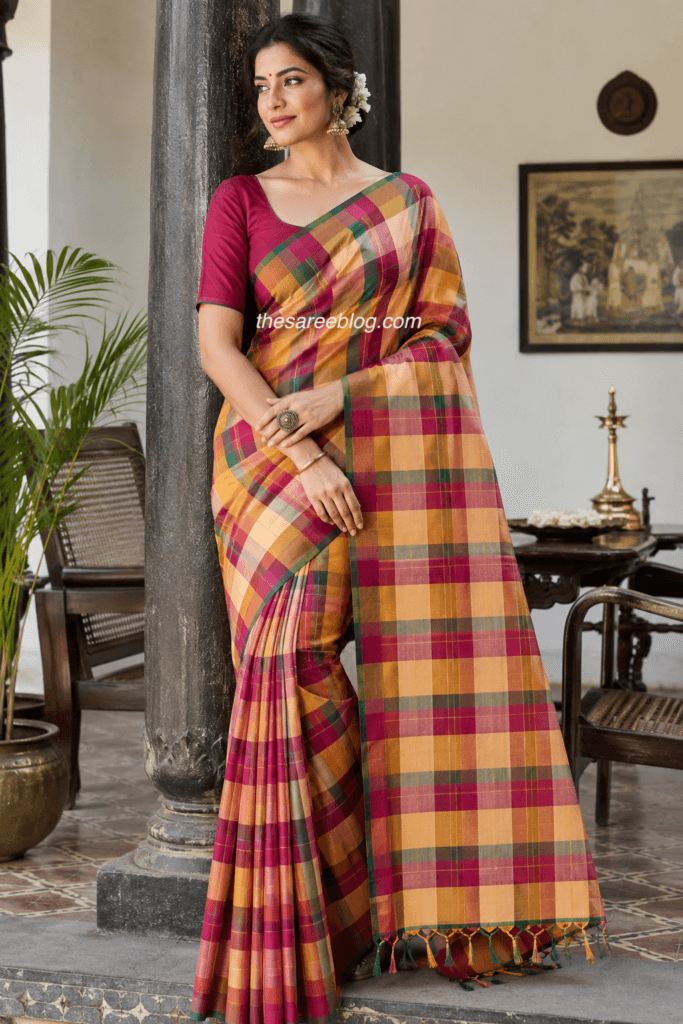
Originally woven in the weaving communities around Madras (now Chennai), this yarn-dyed cotton fabric represents India’s rich textile traditions and exceptional craftsmanship. Today, Madras Checks continue to inspire designers, fashion enthusiasts, and textile lovers across the globe.
Whether you’re looking for a timeless Madras Check saree or simply curious about its fascinating journey, this guide explores everything—from its history and weaving process to styling ideas, authenticity tips, and where to shop.
What Are Madras Checks?
Madras Checks are a yarn-dyed woven cotton fabric featuring colourful crisscross patterns created by interlacing dyed threads in the warp and weft. Unlike printed checks, the design is woven directly into the fabric, making it more durable and giving it depth and character.
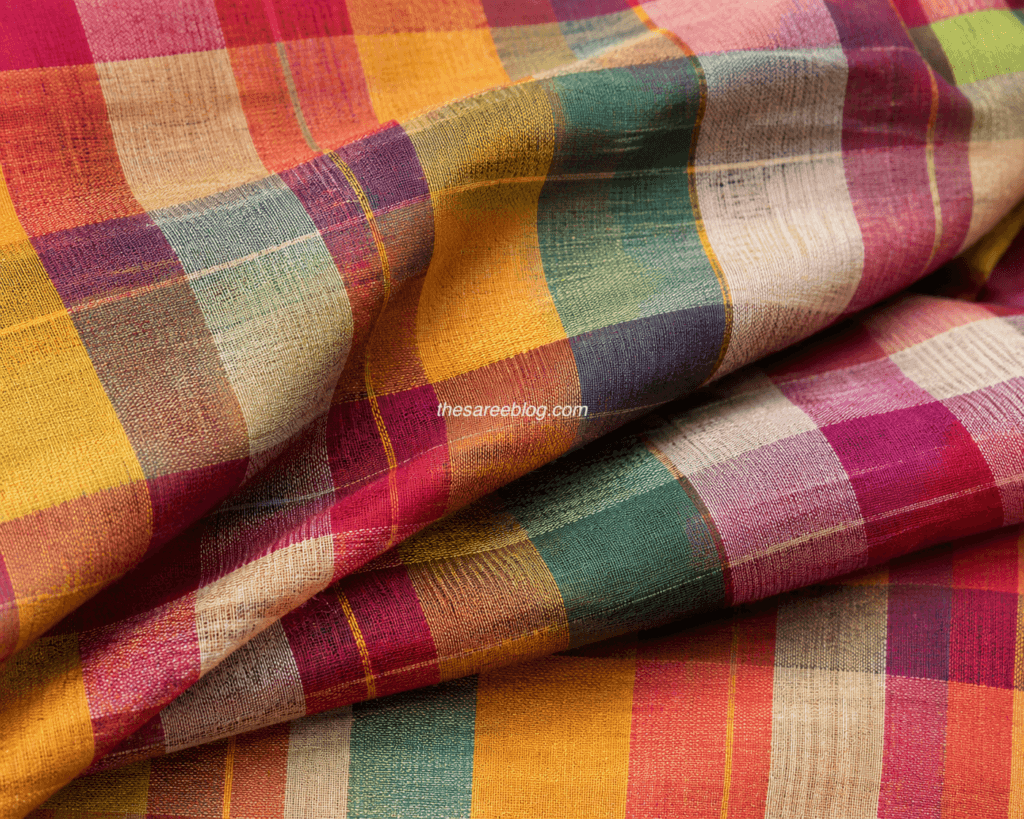
The checks can vary from tiny gingham-style grids to large bold plaids and often combine lively colours such as:
- Red
- Yellow
- Green
- Blue
- Orange
- White
- Black
Traditional Madras Checks are woven using fine cotton yarn, making the fabric exceptionally lightweight, soft, and breathable—perfect for India’s tropical climate.
The History of Madras Checks
The origins of Madras Checks date back several centuries to the weaving communities surrounding present-day Chennai in Tamil Nadu. The region has long been known for producing fine cotton textiles, thanks to its skilled artisans and access to quality cotton.
During the 17th and 18th centuries, European traders—including the British, Dutch, Portuguese, and French—began exporting these colourful checked fabrics from the port of Madras. Their vibrant appearance, soft texture, and suitability for warm climates quickly made them popular overseas.
As trade expanded, Madras Checks became one of India’s most recognized textile exports. While the fabric remained an everyday essential in South India, it was also finding admirers thousands of miles away.
Why Is It Called Madras Checks?
The fabric gets its name from the city of Madras, the former name of Chennai.
Since the checked cotton fabric was exported through the bustling Madras port, international merchants began referring to it simply as “Madras cloth.” Even after the city officially became Chennai in 1996, the textile retained its historic name because of its global recognition.
Today, “Madras Checks” refers not only to a pattern but also to a textile tradition deeply connected to Tamil Nadu’s handloom heritage.
How Madras Checks Conquered Western Fashion
The story of Madras Checks didn’t end at India’s shores. During the colonial era, merchants exported the colourful cotton fabric to Europe and North America, where it soon became associated with relaxed summer dressing.
By the 1950s and 1960s, Madras Checks had become a defining feature of the American Ivy League and preppy fashion movement. Students at prestigious universities embraced colourful Madras shirts, shorts, sport coats, dresses, and skirts for their lightweight comfort and distinctive style. The fabric soon became synonymous with casual sophistication.
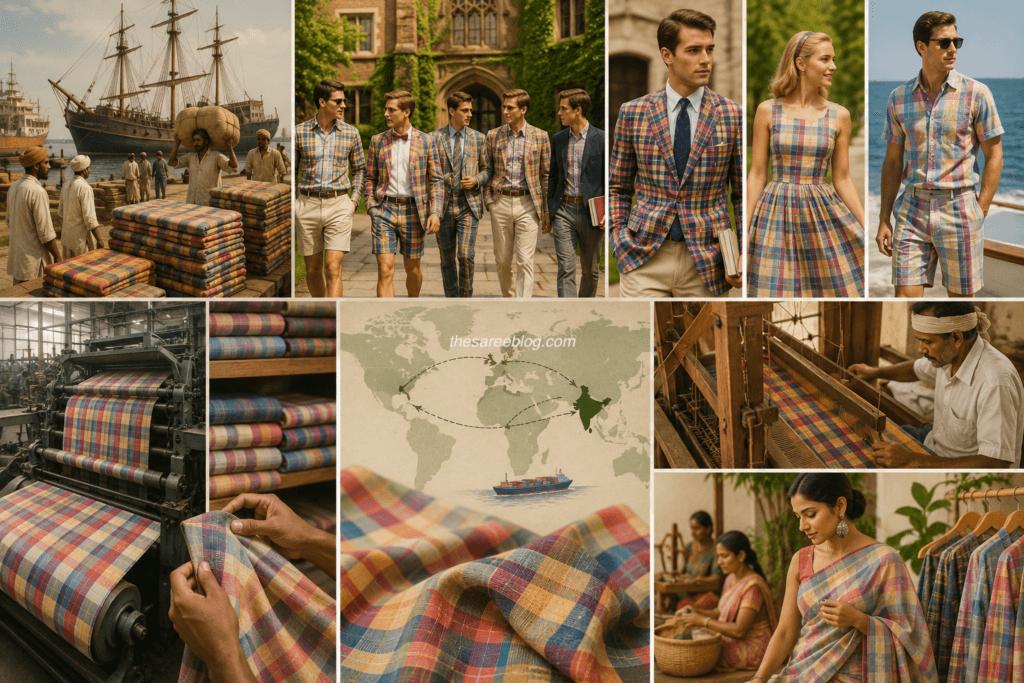
As its popularity soared, many Western clothing manufacturers began producing their own versions of Madras-inspired checks. Instead of importing handwoven cotton from India, factories recreated the patterns using machine-made fabrics. Over time, the term “Madras” became associated with a style of plaid rather than its true Indian origin.
This commercialization brought worldwide recognition to the design but often overlooked the skilled Indian artisans who had developed the fabric over centuries.
Today, textile historians and sustainable fashion advocates are helping restore that connection by highlighting the Indian roots of Madras Checks and encouraging consumers to support authentic handloom weaving communities.
The Story of “Bleeding Madras”
One of the most fascinating chapters in Madras Checks history is the story of “Bleeding Madras.”
In the early 1960s, American retailer Brooks Brothers imported authentic Madras cotton shirts from India. These fabrics were traditionally dyed, and the colours occasionally softened or bled slightly after repeated washing.
Rather than rejecting the shirts, customers embraced the unique fading effect. Each garment developed its own character over time, making every shirt one of a kind.
The unexpected popularity of this phenomenon gave birth to the term “Bleeding Madras,” and many fashion brands later attempted to recreate the faded vintage look—even though modern dyeing techniques are far more colourfast.
How Madras Checks Are Made
Authentic Madras Checks require patience, planning, and remarkable weaving skill.
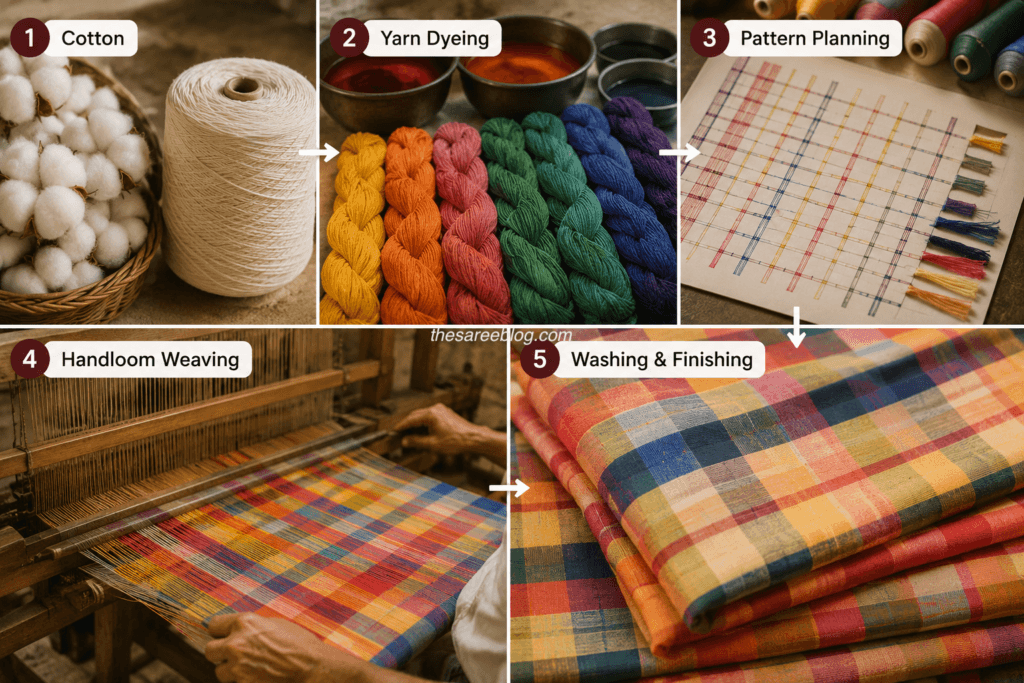
1. Selecting Fine Cotton
The process begins with premium-quality cotton yarn chosen for its softness, strength, and breathability.
2. Dyeing Individual Yarns
Unlike printed fabrics, Madras Checks are yarn dyed. Each thread is dyed separately before weaving.
Traditional colour palettes often draw inspiration from temple architecture, festivals, flowers, and the vibrant landscapes of South India.
3. Planning the Pattern
The arrangement of coloured warp and weft yarns determines the final check pattern.
Depending on the sequence, artisans can create:
- Small checks
- Windowpane checks
- Large plaids
- Multicolour tartans
- Contemporary pastel checks
4. Handloom Weaving
The dyed yarns are carefully woven together on handlooms.
As the warp and weft intersect, the checks emerge naturally within the fabric—without any printing.
5. Washing and Finishing
The finished fabric is washed, softened, and prepared for use in sarees, shirts, dresses, home textiles, and accessories.
What Makes Madras Checks Unique?
Breathable
Its open cotton weave keeps the wearer cool even in humid climates.
Lightweight
The fabric drapes beautifully without feeling heavy.
Yarn-Dyed Design
The pattern is woven into the fabric rather than printed on the surface.
Softens Over Time
Every wash makes genuine cotton Madras even softer.
Colourful Yet Timeless
Its lively checks remain fashionable generation after generation.
Sustainable
Traditional handloom production supports artisan livelihoods while promoting environmentally conscious fashion.
Types of Madras Checks
Madras Checks are available in several variations.
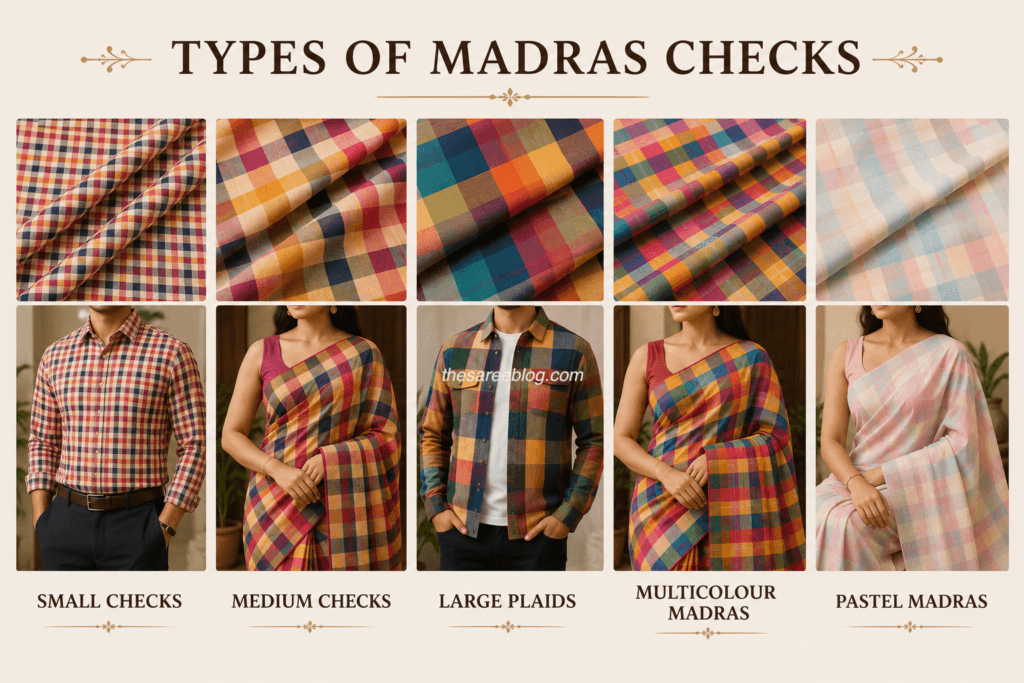
Small Checks
Perfect for office wear, kurtas, and children’s clothing.
Medium Checks
A versatile choice for sarees, dresses, and everyday outfits.
Large Plaids
Popular in jackets, overshirts, and contemporary fashion.
Multicolour Madras
The classic vibrant style associated with traditional Madras fabric.
Pastel Madras
Modern designers have introduced softer shades for minimalist wardrobes.
Madras Checks Sarees
Among all garments made from this fabric, the Madras Check saree remains one of the most elegant.
Lightweight and comfortable, these sarees are ideal for:
- Everyday wear
- Office dressing
- Temple visits
- Summer weddings
- Cultural festivals
- Travel
Their understated elegance makes them suitable for women of all ages.
How to Style a Madras Checks Saree
Classic South Indian Look
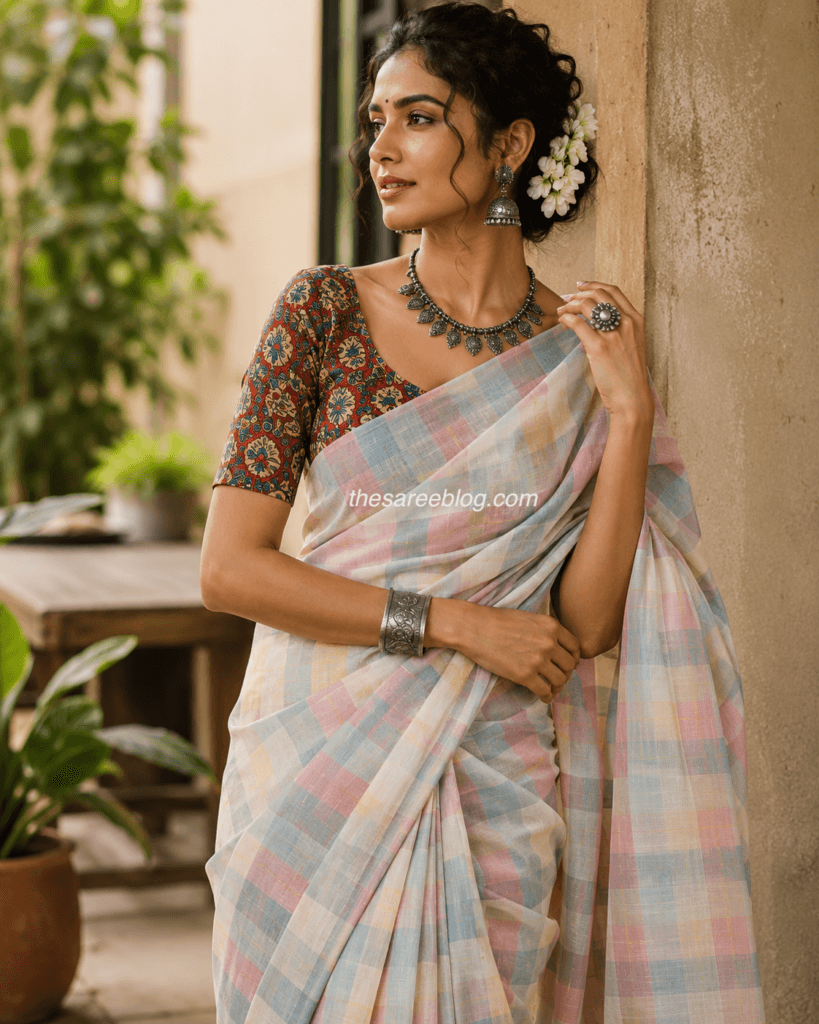
Pair it with a plain contrast blouse, temple jewellery, fresh jasmine flowers, and a neat bun.
Office Chic
Choose muted checks with a linen blouse, leather watch, structured handbag, and block heels.
Contemporary Fusion
Wear a bold checked saree with a sleeveless blouse, oxidized jewellery, and minimalist sandals.
Weekend Casual
Style with a Kalamkari or Ikat blouse and handcrafted silver jewellery.
Madras Checks Beyond Sarees
Today, the fabric is used in a wide variety of garments, including:
- Shirts
- Dresses
- Tunics
- Skirts
- Jackets
- Shorts
- Men’s kurtas
- Children’s wear
- Dupattas
- Home furnishings like cushion covers and table linen
Its versatility allows it to move effortlessly between traditional and contemporary wardrobes.
How to Identify Authentic Madras Checks
Since many machine-made imitations exist, it’s important to know what to look for.
The Pattern Appears on Both Sides
Because the checks are woven, both sides of the fabric should display the design clearly.
Look for Yarn-Dyed Fabric
Printed checks usually have a flatter appearance, while woven checks show colour depth created by intersecting threads.
Feel the Fabric
Authentic Madras cotton is lightweight, soft, and breathable.
Minor Variations Are Normal
Tiny irregularities in the weave are signs of genuine handloom craftsmanship—not defects.
Check the Label
Look for Handloom Mark or India Handloom Brand certification whenever available.
Caring for Madras Checks
To preserve the beauty of your Madras Check saree:
- Wash separately during the first few washes.
- Use mild detergent.
- Avoid bleach.
- Dry in shade to retain colour.
- Iron on medium heat.
- Store in a cool, dry place.
With proper care, the fabric becomes softer while maintaining its charm.
Where to Shop Authentic Madras Checks Sarees
If you’re investing in a Madras Check saree, choosing authentic handloom sources ensures better quality while supporting India’s weaving communities.
1. Co-optex
Tamil Nadu’s government-backed handloom cooperative is among the most trusted places to buy authentic Madras cotton sarees directly from weaving societies.
Best for: Traditional handloom sarees and certified authenticity.
2. Nalli Silks
Established in Chennai in 1928, Nalli is renowned for preserving South India’s textile heritage. Their cotton collection frequently includes elegant Madras Check sarees.
Best for: Heritage craftsmanship and premium quality.
3. Sundari Silks
Known for curating traditional South Indian handlooms, Sundari Silks offers beautifully woven Madras Check sarees in classic and contemporary colour palettes.
Best for: Elegant everyday cotton sarees.
Shop Madras Checks Online
4. Tulsi Silks
Tulsi Silks regularly features lightweight cotton sarees inspired by Tamil Nadu’s weaving traditions.
Best for: Comfortable office and daily wear sarees.
5. Weaver Cooperatives and Artisan Brands
Buying directly from artisan-led brands, exhibitions, or weaving cooperatives helps preserve traditional weaving while ensuring authenticity.
Shopping Checklist
Before purchasing a Madras Check saree, look for yarn-dyed woven checks rather than printed patterns, as authentic checks are created during the weaving process. Choose pure cotton for its softness, breathability, and lightweight comfort. The check pattern should be clearly visible on both sides of the fabric, indicating that it has been woven instead of printed.
A genuine Madras Check saree will have a soft, airy hand feel and may even feature slight irregularities that reflect handloom craftsmanship. Whenever possible, buy from sellers who provide transparent information about the weaving cluster and look for the Handloom Mark or India Handloom Brand certification to ensure authenticity.
Why Madras Checks Is More Relevant Than Ever
As fashion moves toward sustainability and slow craftsmanship, Madras Checks has found renewed appreciation.
Consumers today increasingly value:
- Natural fibres
- Artisan-made products
- Timeless design
- Ethical fashion
- Breathable clothing
- Heritage textiles
Madras Checks embodies all these qualities. It is a fabric that tells a story—not just through its colourful checks, but through the generations of weavers who continue to preserve this remarkable craft.
Frequently Asked Questions
Is Madras Checks the same as plaid?
No. Plaid is a general term for checked patterns, while Madras Checks specifically refers to the lightweight yarn-dyed cotton fabric that originated in Madras (Chennai), India.
Why is Madras fabric so popular?
Its breathable cotton weave, vibrant colours, and timeless appeal make it ideal for warm climates and versatile styling.
Are Madras Checks suitable for everyday wear?
Yes. They are lightweight, comfortable, easy to drape, and perfect for offices, casual outings, and summer occasions.
How can I tell if my Madras Checks are authentic?
Look for woven (not printed) checks, visible patterns on both sides, pure cotton fabric, slight handloom irregularities, and trusted handloom certifications.
Does Madras fabric fade?
Modern Madras fabrics are generally colourfast, although traditional “Bleeding Madras” was famous for developing a soft, faded look over time.
Madras Checks: A Fabric That Wove Its Way Around the World
From the handlooms of Tamil Nadu to Ivy League campuses in America, Madras Checks has travelled an extraordinary path. What began as a practical, breathable cotton fabric woven by skilled Indian artisans became a global fashion icon embraced by designers, retailers, and style enthusiasts across continents.
Yet, the true essence of Madras Checks lies not in its worldwide popularity but in the craftsmanship behind every woven thread. Its colourful checks tell a story of India’s textile heritage, centuries-old weaving traditions, and the communities that have preserved this art through generations.
Choosing an authentic Madras Check saree is more than adding a beautiful garment to your wardrobe. It is a way to celebrate Indian craftsmanship, support handloom weavers, and invest in a timeless textile that values quality, sustainability, and culture over fleeting fashion trends.
Whether you wear it as a classic cotton saree, a contemporary dress, or a relaxed summer shirt, Madras Checks remains a perfect example of how traditional Indian textiles continue to inspire the world—while reminding us to honour the artisans who created them.