Tissue sarees are soft. They are luminous. They have a natural shine that instantly feels festive. For weddings, they are a perfect choice. They are not too heavy. They are not too plain. They sit beautifully between traditional and modern styling. But wearing a tissue saree is not just about the fabric. The real impact comes from how it is styled. Especially the pallu drape. A small change in the pallu can completely transform the look. It can make the saree feel minimal, structured, playful, or regal. This guide explores elegant ways how to style a tissue saree for a wedding, along with the best pallu styles, colour combinations, and practical styling tips.
Why Tissue Sarees Are Ideal for Weddings
Tissue sarees are known for their sheer texture and subtle shimmer. The fabric reflects light in a soft way. This gives a glowing effect without looking too heavy. They are also lightweight. This makes them easy to carry during long wedding functions like haldi, mehendi, sangeet, or reception.
Another reason they are popular is versatility. A single tissue saree can be styled in multiple ways. It can look traditional or modern depending on the drape and accessories. This is why learning different pallu styles becomes important.
5 Elegant Pallu Styles for Tissue Sarees
1. The Effortless Open Pallu
The open pallu is timeless. It is soft and graceful.
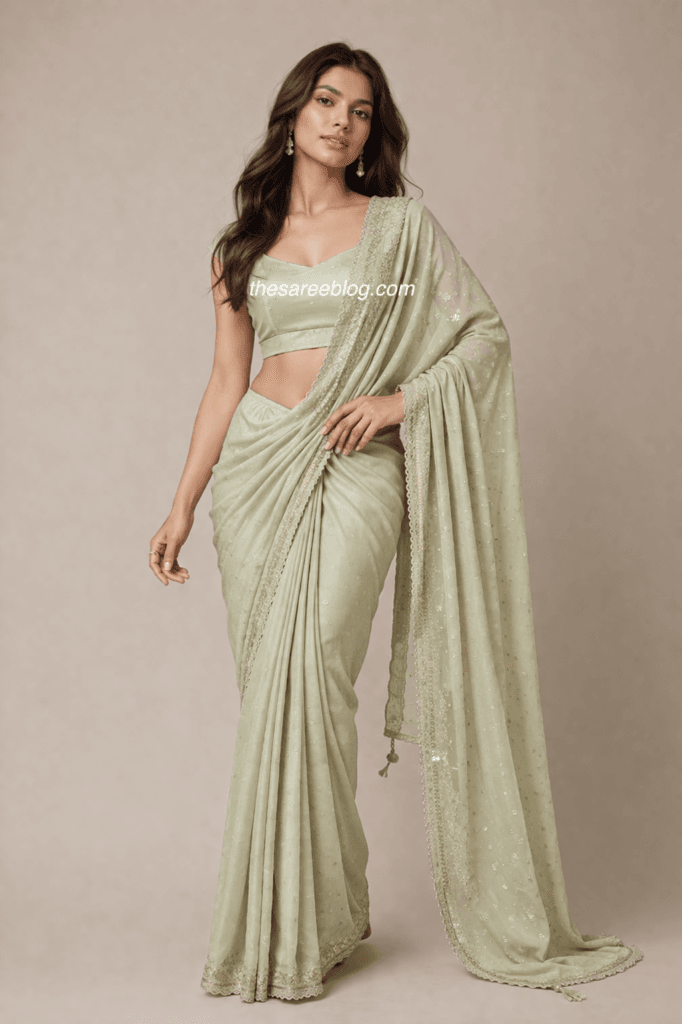
In this style, the pallu is left loose over the shoulder. It is not tightly pinned. The fabric falls naturally. This allows the tissue saree to show its true beauty. The shine, the texture, and the movement become visible.
This style works best when:
- The saree has a soft shimmer
- The border is delicate
- The look is minimal
Pair it with:
- Sweetheart or sleeveless blouse
- Open hair or soft curls
- Light jewellery
Best for: Day weddings and intimate functions
This drape feels effortless. It is simple, yet very elegant.
2. The Polished Pleated Pallu
This is a more structured and refined style.
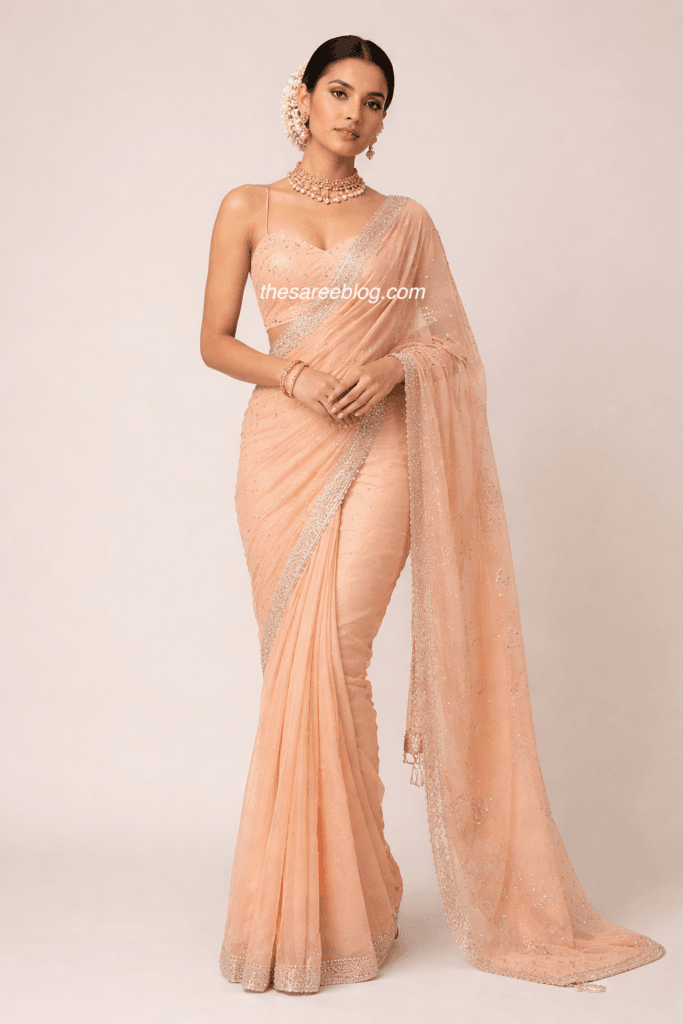
The pallu is neatly pleated and pinned on the shoulder. The pleats are aligned evenly. The fall is clean. This creates a sharp and polished look. It also highlights the border and detailing of the saree.
This style is ideal when:
- The saree has embroidery or sequins
- You want a formal appearance
- You prefer a neat silhouette
Pair it with:
- Statement blouse
- Choker or traditional jewellery
- Bun with gajra
Best for: Haldi, mehendi, and formal day events
This drape adds definition and balance to the outfit.
3. The Sleek Pinned Pallu
This is a modern version of the pleated drape.
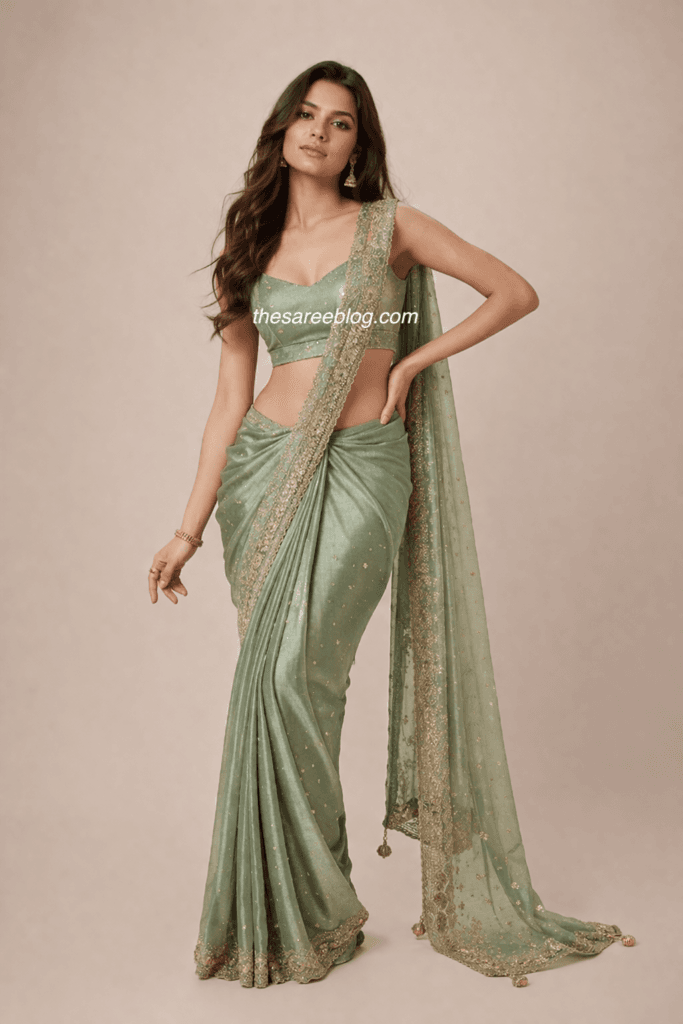
The pallu is kept narrow and pinned close to the body. It does not spread out. Instead, it creates a clean line. This gives a structured and contemporary look. It also keeps the focus on the blouse and waist.
This style works well when:
- You want a sharp silhouette
- The blouse design is detailed
- The saree colour is deep or rich
Pair it with:
- Structured blouse or corset blouse
- Minimal jewellery
- Sleek hair or bun
Best for: Evening functions and modern wedding styling
This drape feels confident and refined.
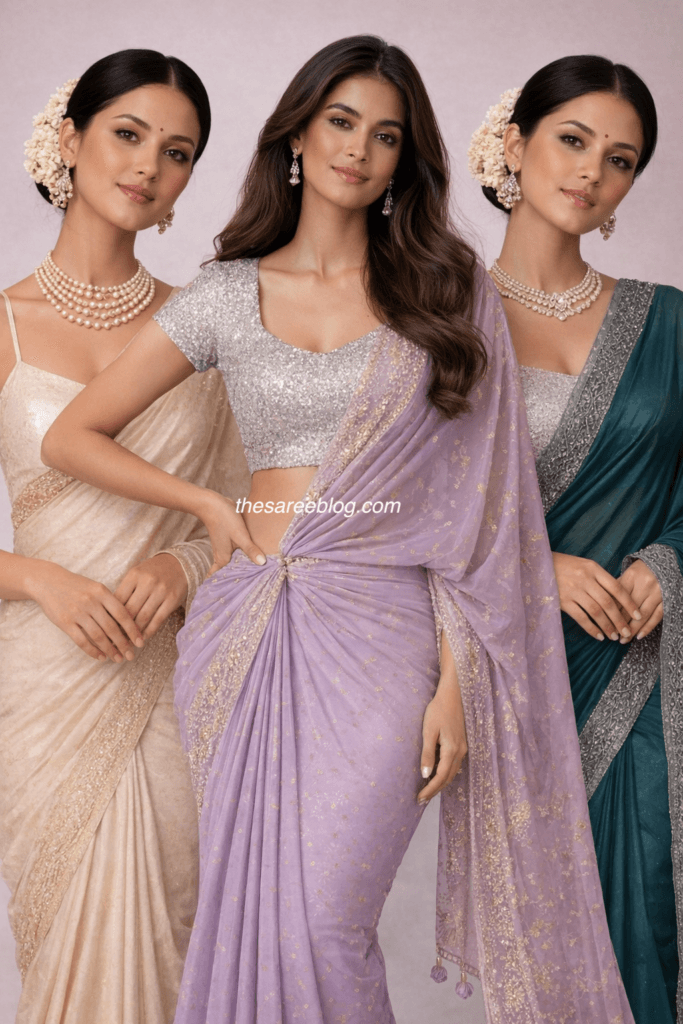
4. The Waist Knot Pallu
This is a playful and stylish drape.
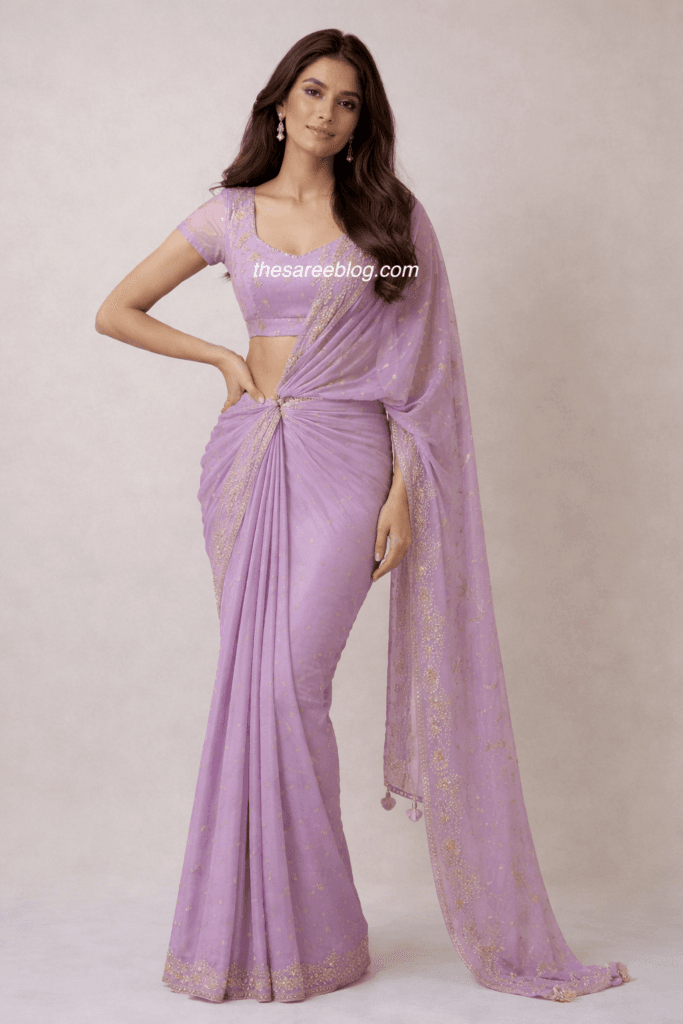
The pallu is gathered and tied into a soft knot at the waist. It can be tucked or left slightly loose. This creates a cinched effect. It defines the waist and adds a modern touch.
This style is perfect when:
- You want something different
- The saree is lightweight
- The look is fun and experimental
Pair it with:
- Short sleeve or modern blouse
- Light jewellery
- Soft waves or textured hair
Best for: Sangeet, cocktail, or pre-wedding events
This drape stands out. It feels fresh and fashionable.
5. The Statement Neck Wrap
This is a bold and elegant style.
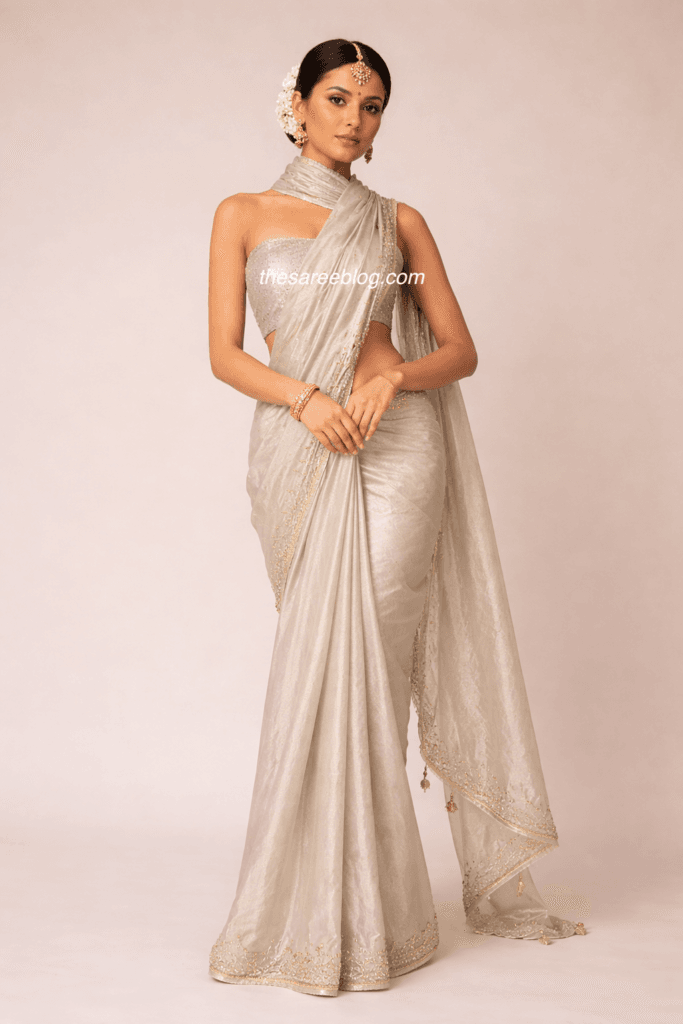
The pallu is wrapped around the neck like a dupatta. It can be layered or left flowing. This creates a strong visual element. It adds depth and structure to the outfit.
This style works best when:
- The saree is in a neutral or metallic tone
- You want a statement look
- The occasion is formal
Pair it with:
- Traditional jewellery
- Clean pleats
- Structured blouse
Best for: Reception and evening functions
This drape feels regal and modern at the same time.
Best Colour Combinations for Tissue Sarees
Colour plays an important role in styling. The right colour can make a tissue saree look even more elegant.
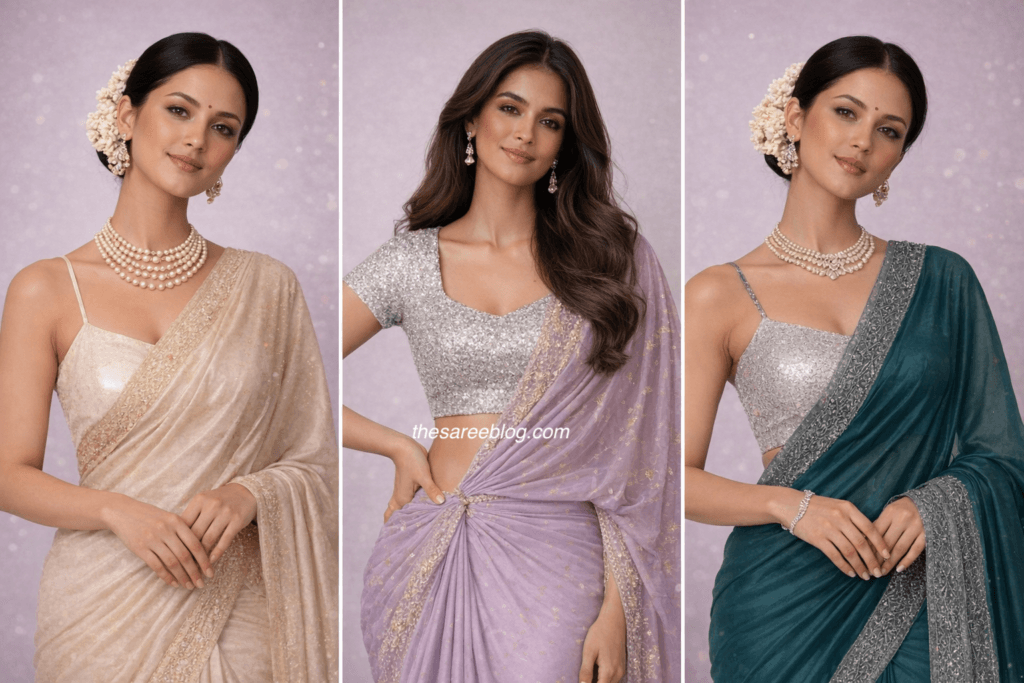
1. Pastel Combinations
Pastels look soft and refined. They are perfect for daytime weddings.
- Peach with gold
- Lilac with silver or antique gold
- Sage green with muted gold
These combinations create a light and fresh look.
2. Champagne and Neutrals
Neutral tones look subtle but luxurious.
- Champagne with ivory blouse
- Beige with gold accents
- Soft gold with pearl jewellery
These shades are ideal for receptions and formal events.
3. Deep Elegant Tones
Darker shades add richness.
- Olive with antique gold
- Wine with metallic accents
- Deep teal with silver
These colours work well for evening functions.
4. Monochrome Styling
Monochrome looks are modern and clean.
Wearing the same colour for saree and blouse creates a seamless effect.
- Peach saree with peach blouse
- Lilac saree with tonal blouse
This makes the outfit look polished and well put together.
Styling Tips for a Tissue Saree
1. Focus on the Drape
The drape is the most important part.
Even a simple saree can look elegant with the right pallu.
2. Keep Pleats Neat
Clean pleats make the saree look refined.
Messy pleats can ruin the overall look.
3. Choose the Right Blouse
The blouse adds personality to the outfit.
- Sweetheart neckline for softness
- Structured blouse for sharp look
- Short sleeve for modern styling
4. Balance Jewellery
Do not overdo jewellery.
- Minimal saree → statement jewellery
- Heavy saree → subtle jewellery
5. Hair and Makeup
Hair completes the look.
- Open hair for soft styling
- Bun for traditional feel
- Sleek bun for modern touch
6. Let the Fabric Shine
Tissue sarees reflect light.
Keep the styling clean so the fabric stands out.
Final Thoughts
A tissue saree is elegant on its own. But styling makes it special.
The pallu is where the saree truly comes alive. It holds movement, mood, and intention. Left fluid, it whispers softness. Structured into pleats, it speaks of quiet precision. Twisted, draped, or knotted—it transforms tradition into something strikingly personal.
A tissue saree, with its luminous lightness, responds to every nuance of styling. The same drape can feel ethereal or sculpted, understated or statement-making—simply through the way it is worn. And that is where the artistry lies. In the choices that are not loud, but deliberate. In the details that do not demand attention, yet command it.
Because elegance is never just about the saree itself. It is about the way it is carried, interpreted, and ultimately, owned.